

AC Cars
AC Cars is one of the oldest surviving automobile manufacturers in the world — a British company whose 120-year history spans hand-built pre-war roadsters, the legendary Shelby Cobra, and a continuing tradition of low-volume sports car production. No single vehicle in automotive history has been replicated, cloned, or celebrated more fervently than the AC Cobra, making the marque an enduring symbol of raw, unfiltered performance.
Origins & Heritage
AC Cars was founded in 1901 by John Weller and John Portwine under the name Autocarriers Ltd, initially producing a three-wheeled delivery vehicle before transitioning to passenger cars. Renamed AC Cars in 1922, the company established itself in Thames Ditton, Surrey, where it would continue producing cars for decades. In the pre-war era, AC built stylish touring cars with hand-crafted aluminium bodies, earning a reputation for quality and longevity — some of their pre-war chassis designs remained in production for decades.
The company's international fame was secured in 1962 when American racing driver Carroll Shelby approached AC Cars with an idea: transplant a powerful Ford V8 engine into the lightweight AC Ace sports car chassis. The result was the AC Cobra — a ferociously fast roadster that would go on to beat Ferrari at Le Mans and become one of the most coveted collector cars ever built. The Cobra 427, with its 7.0-litre Ford V8, remains one of the most powerful and visceral road cars ever produced in any era.
After the Cobra's production concluded, AC Cars continued building sports cars through various partnerships and ownership changes across the following decades. The brand survived multiple near-extinctions, producing models including the AC 3000ME, Ace, Aceca, and various Cobra continuations. Today, AC Cars remains active, producing modern electric sports cars and continuation Cobras for the collector market — maintaining a lineage that spans more than 120 years of British sports car manufacturing.
Key Milestones
Model Lineup
AC Cars has produced a diverse range of vehicles across 12 decades, from pre-war tourers to the legendary Cobra. Today the brand serves both the heritage collector market and modern performance enthusiasts.
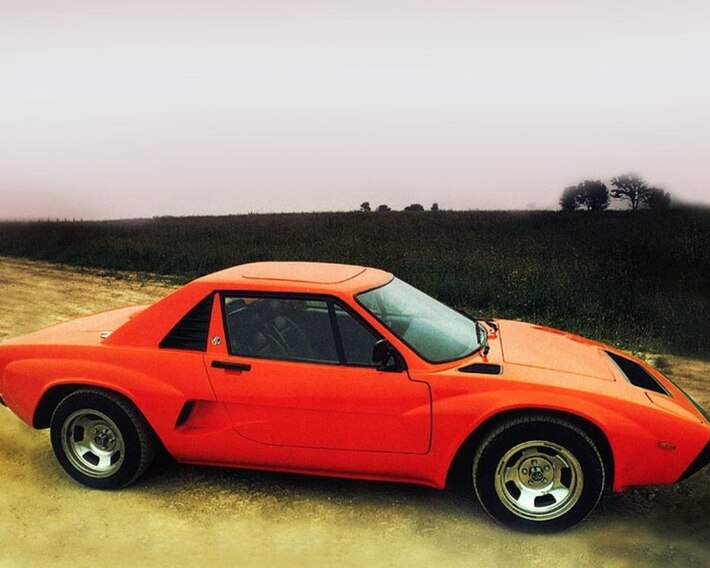
AC Cars in Pictures
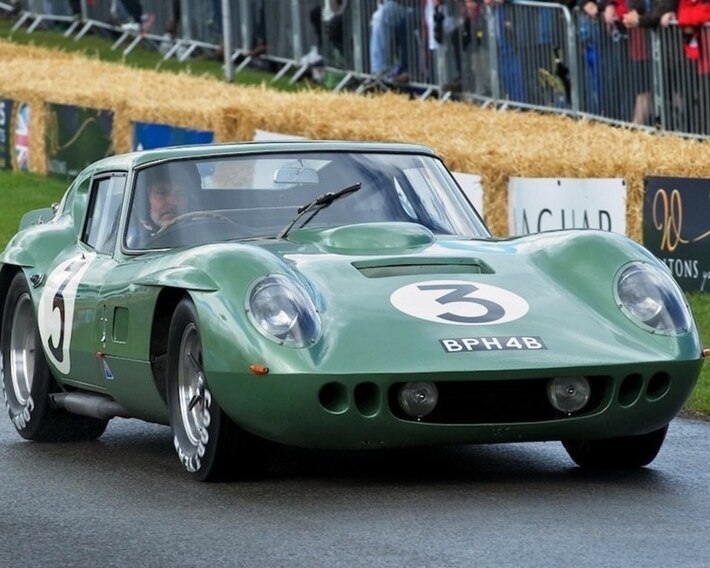
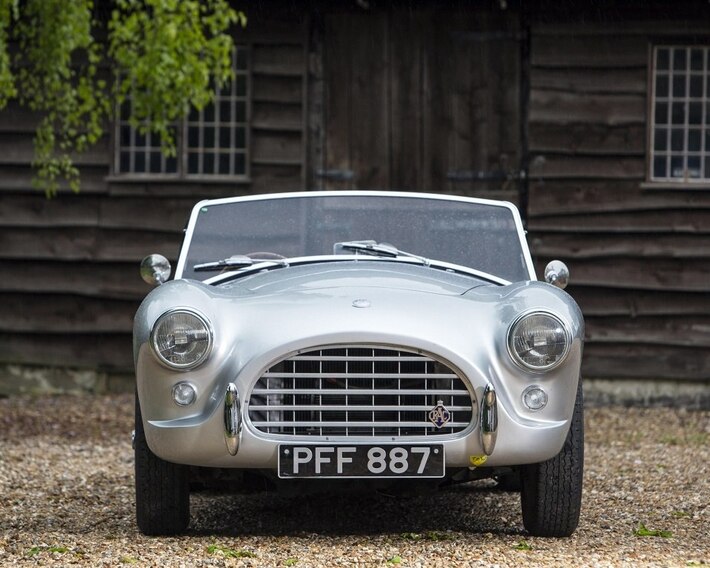
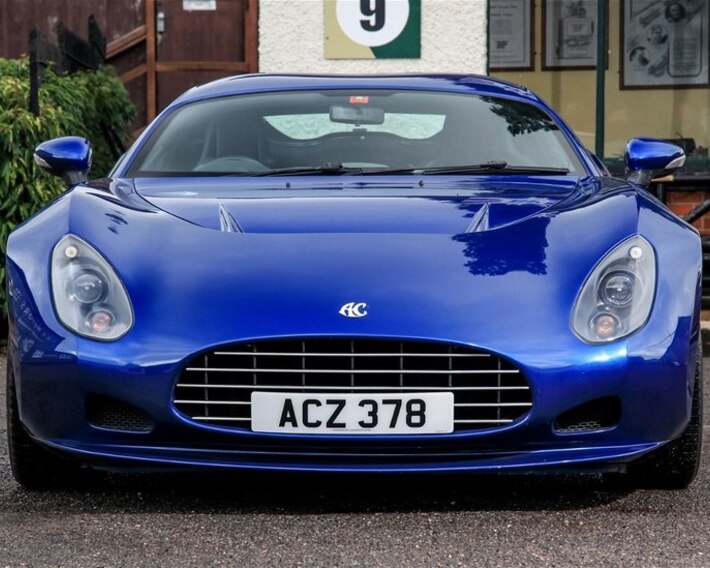
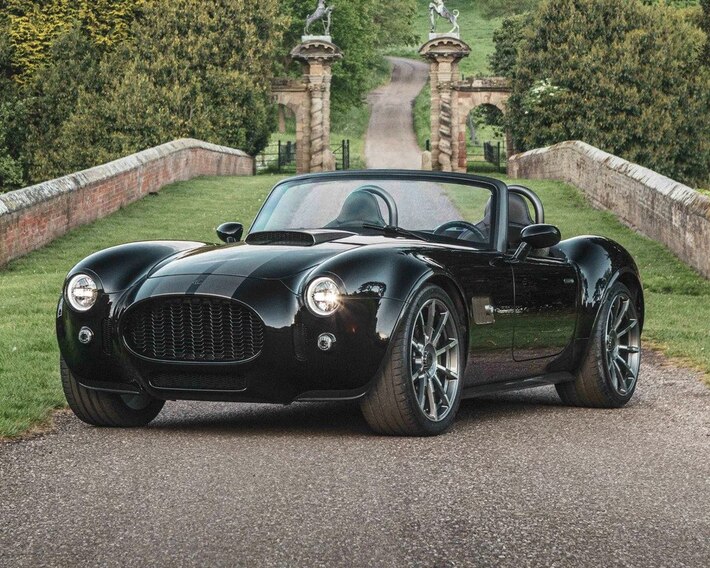
From the elegant pre-war tourers to the ferocious Cobra 427, the AC Cars story is one of transformation — from a modest British manufacturer to the creator of one of the most celebrated performance cars in history.
Engineering Legacy
The AC Ace, introduced in 1953, was already a landmark car before Shelby's intervention: its tubular steel chassis, independent suspension at all four corners, and lightweight aluminium body gave it a sophistication that domestic British rivals could not match. These were qualities that made the Ace an ideal candidate for Carroll Shelby's V8 transplant — the platform was capable enough to handle the enormous torque the Ford engines would provide.
The engineering achievement of the Cobra lies in its simplicity. Rather than complex aerodynamics or electronic assistance, the Cobra used brute force balanced by a well-sorted chassis — a combination that proved so effective that it dominated American and international racing, defeating purpose-built Ferrari and Aston Martin racing cars. That philosophy of effective simplicity continues to define AC Cars' approach to performance.
- Tubular steel chassis — the Ace's ladder-frame chassis provided rigidity and repairability with minimal weight, a configuration that the Cobra inherited and exploited to maximum effect
- Aluminium body construction — hand-formed aluminium panels kept weight low while allowing craftspeople to form complex curves unavailable with pressed steel construction methods
- Ford V8 partnership — the decision to use Ford's proven, readily available V8 engines gave the Cobra performance impossible with British six-cylinder options, at a cost that Ferrari could not approach
- Race-proven suspension — the Ace's all-independent suspension gave the Cobra handling that matched its straight-line performance, making it as effective on circuits as on roads
- Continuation philosophy — AC Cars' commitment to building authentic continuation Cobras for collectors ensures that the original design remains in production, maintaining craft skills that might otherwise be lost
AC Cars in Azerbaijan
Original AC Cobras, particularly the 427 variant, are among the most valuable collector cars in the world. Their combination of historic racing provenance, celebrity association, and unmatched character has driven values to extraordinary levels — genuine Shelby-era Cobras routinely sell for well over $1 million at major auction houses. In Azerbaijan, where enthusiasm for classic and prestige automobiles has grown significantly, awareness of the AC Cobra's place in automotive history is well established among collectors and enthusiasts.
For Azerbaijani buyers interested in the AC Cobra story, BakuWheels connects enthusiasts with specialist importers who can source both original examples and modern continuation models. The AC GT Roadster, available in V8 or electric form, offers a contemporary way to experience the Cobra bloodline. Given the brand's extraordinary heritage, any AC Cars example represents both a driving experience and a piece of automotive history.
Why AC Cars?
- <strong>The Cobra legacy:</strong> No other manufacturer can claim to have created a car as comprehensively celebrated, replicated, and historically significant as the AC Cobra — the most copied car in automotive history, whose template defined the muscle car concept.
- <strong>120 years of continuous identity:</strong> AC Cars has maintained a recognisable character — lightweight, driver-focused, aluminium-bodied sports cars — across 12 decades of upheaval in the automotive industry, a consistency that few manufacturers can match.
- <strong>Extraordinary collector appeal:</strong> Original Cobra examples are among the most eagerly sought collector cars on earth; a genuine Shelby-era AC Cobra is as much a financial asset as an automotive experience.
- <strong>Authentic British craftsmanship:</strong> Modern AC Cars vehicles are hand-built in small volumes to customer specification, maintaining a tradition of bespoke craftsmanship that connects directly to the company's pre-war origins.
- <strong>Available in the modern era:</strong> The new AC Cobra GT Roadster means that buyers can experience the Cobra silhouette and spirit in a new car — with either a traditional V8 or a fully electric powertrain for contemporary usability.
BakuWheels uses cookies to improve your experience, analyse site traffic, and personalise content. By clicking Accept All, you consent to our use of cookies. Learn more in our Cookie Policy.