

Invicta
The Cobham-built British marque that produced some of the most beautiful and capable luxury sports cars of the inter-war period — a name that represented the pinnacle of high-performance British engineering before the Second World War reshaped the automotive landscape.
Origins of Invicta
Invicta Cars was founded in 1925 by Noel Campbell Macklin and Oliver Lyle in Cobham, Surrey, with a clear and ambitious philosophy: to produce cars that combined the smooth, effortless high-speed cruising capability of a quality American car with the handling, refinement, and prestige of the finest European sporting machines. Macklin had previously founded Eric-Campbell and Silver Hawk automobiles, bringing considerable experience to the new venture. The name Invicta — Latin for 'unconquered' — reflected the founders' confident aspirations for their new creation.
Invicta's approach was technically straightforward but philosophically distinctive: the cars used large-displacement, low-revving American-sourced engines — notably the Meadows 4.5-litre six-cylinder — tuned and installed in chassis engineered for genuine sporting performance. This philosophy produced cars of remarkable character: vehicles that could cruise effortlessly at high speed without mechanical stress, yet handle with the precision and feedback of a sports car. The resulting machines attracted wealthy, discerning buyers who wanted performance without the mechanical fussiness of more highly-tuned sports cars.
The S-Type of 1930 became Invicta's most celebrated creation and one of the landmarks of inter-war British automotive design. With its dramatically low chassis, long bonnet, and powerful 4.5-litre engine, the S-Type offered genuine 100 mph performance at a time when such speeds required exceptional engineering courage. Donald Campbell drove an Invicta S-Type in competition, and the model achieved success in the Monte Carlo Rally. However, Invicta's small scale and the economic devastation of the Great Depression made sustained commercial success impossible, and production ceased in 1935. Various revival attempts in subsequent decades never achieved lasting success.
Key Milestones
Notable Models
Invicta's model range was deliberately focused — a small number of models built to an uncompromising standard rather than a broad range aimed at maximising volume.
Technology & Engineering
Invicta's engineering philosophy prioritised the quality of the driving experience over technical innovation — using proven, reliable components chosen for their refinement rather than their novelty.
- Meadows 4.5-litre six-cylinder engine — a well-proven unit chosen for its smooth, torque-rich power delivery at low revs, enabling the effortless high-speed cruising that was central to Invicta's character
- Low-chassis S-Type configuration — achieving a dramatically low centre of gravity through careful chassis engineering, improving handling and giving the S-Type its distinctive, purposeful visual presence
- Rigidity and quality construction — Invicta's relatively small production scale allowed a level of attention to quality in chassis and body construction that larger-volume manufacturers struggled to match
- Valve timing and carburation — Invicta's engineers paid careful attention to the tuning of carburation and valve timing to achieve the smooth power delivery that distinguished Invicta engines from more highly-stressed competitors
Invicta in Azerbaijan
Invicta automobiles have no presence in Azerbaijan's current market. As pre-war British classics produced in very small numbers between 1925 and 1935, surviving Invictas are among the rarest and most valuable British automobiles in existence, held almost exclusively in specialist collections and museums in the United Kingdom and Western Europe.
For Azerbaijani automotive enthusiasts, Invicta represents a fascinating chapter in British automotive history: a small, ambitious marque that briefly achieved a level of excellence in the inter-war period that rivalled far larger manufacturers. The S-Type in particular stands as evidence of the extraordinary quality that determined British craftsmen could achieve when working at the highest level of their art.
Why Invicta Matters
- Inter-war British excellence: Invicta represents the pinnacle of British luxury sports car engineering in the period between the two World Wars — a time when British marques such as Bentley, Rolls-Royce, and Invicta led the world in producing vehicles of exceptional quality and character.
- The S-Type legacy: The Invicta S-Type of 1930 is one of the great British cars of any era — its combination of dramatic styling, powerful engine, and genuine high-speed capability producing a vehicle whose quality and character is acknowledged by all who have experienced it.
- Engineering philosophy: Invicta's approach — using large, understressed American-sourced engines in meticulously engineered British chassis — represented a thoughtful response to the demands of high-speed touring that influenced subsequent British car design.
- Rarity and collectibility: Fewer than 100 Invicta S-Types were built, making surviving examples among the most sought-after pre-war British automobiles in the world — their rarity ensuring that Invicta retains a significance in automotive history far exceeding what its small production numbers might suggest.
Iconic Models in Pictures
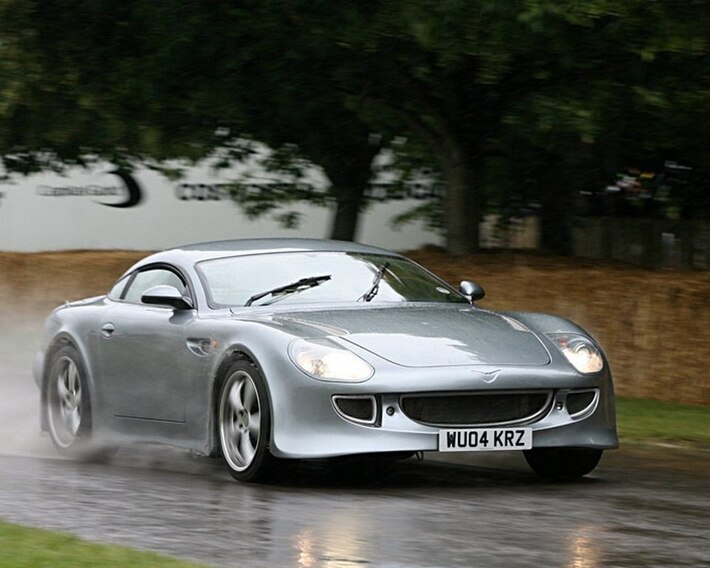
Invicta vehicles — a visual selection of the iconic models produced by this manufacturer.
BakuWheels uses cookies to improve your experience, analyse site traffic, and personalise content. By clicking Accept All, you consent to our use of cookies. Learn more in our Cookie Policy.