

Mercury
Ford's Mid-Range Brand: 73 Years Bridging Everyday Fords and Premium Lincolns.
Origins & Heritage
Mercury was established by Edsel Ford in 1938 as a mid-price brand positioned between the entry-level Ford and the luxury Lincoln within the Ford Motor Company portfolio. The Mercury Eight — the brand's debut model — offered V8 performance and styling refinements that clearly differentiated it from Ford while remaining priced below Lincoln, giving buyers a compelling step-up option without the commitment to full luxury pricing. The brand's name referenced the Roman god of speed, reflected in the winged logo that became one of the most recognisable badges in American automotive history.
Through the post-war boom years, Mercury grew into a distinctive brand celebrated for stylish personal coupes and full-size sedans. The Cougar, launched in 1967, became one of Mercury's defining models — a long-bonnet pony car that competed directly with the Ford Mustang and offered a more refined take on sporty American motoring. In the late 1960s and early 1970s, Mercury achieved considerable success with models like the Marquis full-size line and the sporty Cougar, building strong brand loyalty particularly in the American South and Midwest.
Through the 1980s and 1990s, Mercury became increasingly dependent on badge-engineered variants of Ford models, with the Tracer based on the Escort, the Sable on the Taurus, and the Villager minivan on the Nissan Quest platform. While this shared-platform strategy reduced development costs, it progressively eroded Mercury's brand identity and gave buyers little reason to choose Mercury over a Ford. Ford Motor Company announced Mercury's discontinuation in June 2010, and the final Mercury — a Grand Marquis — was produced on 4 January 2011.
Key Milestones
Iconic Models in Pictures
Mercury's 73-year production history encompassed some of America's most stylish automobiles — from the iconic 1949 Mercury that defined custom car culture to the practical Mountaineer SUV that carried the brand into the SUV era.
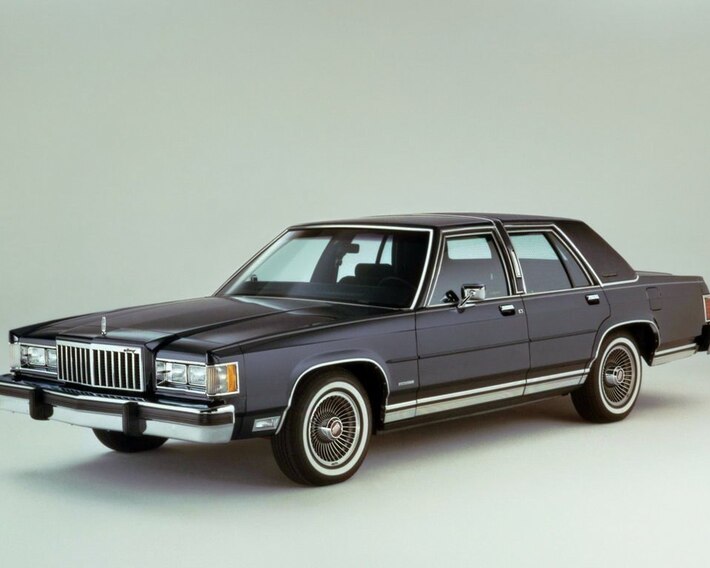
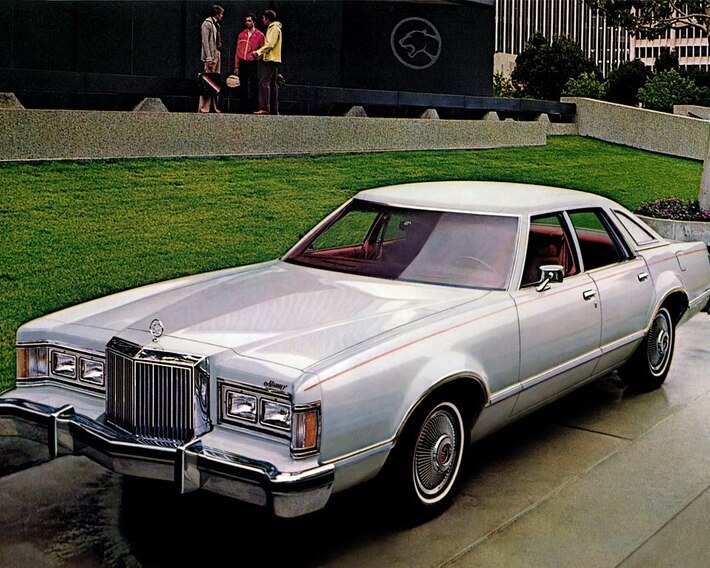
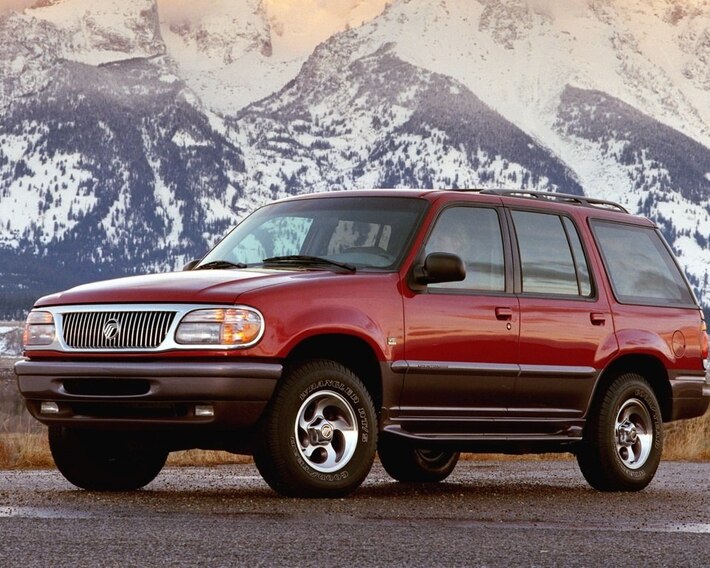
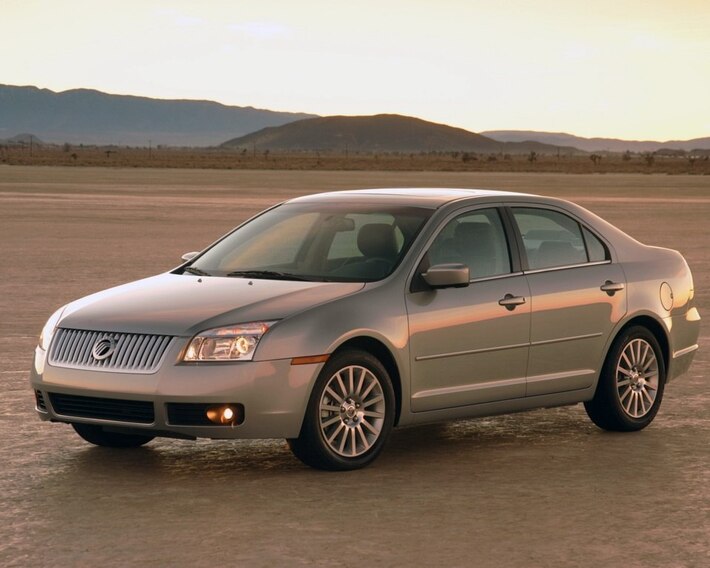
Model Lineup
Mercury's range evolved from distinguished full-size American sedans and pony cars through the muscle car era to practical SUVs and badge-engineered Ford variants, reflecting the broader transformation of American automotive tastes across seven decades.
Engineering & Technology
Mercury's engineering was primarily derived from Ford Motor Company's platform and powertrain developments, with Mercury models typically receiving the same mechanical underpinnings as equivalent Ford products but with refined specifications, additional equipment, and often more distinctive interior treatments. The brand's most technically significant products were generally those that borrowed engineering innovations from Ford's broader product development programme.
- Panther body-on-frame platform (Grand Marquis) — the durable ladder-frame chassis shared with the Ford Crown Victoria provided exceptional longevity and structural rigidity, enabling Grand Marquis examples to accumulate extremely high mileages with proper maintenance and making the platform a favourite for fleet and taxi operators across North America
- Modular V8 engine family — the Grand Marquis's 4.6-litre SOHC V8 from the Ford Modular family provided strong torque, good reliability, and straightforward maintenance compared to the complex engines used by European luxury competitors of the same era
- Hybrid powertrain (Milan/Mariner Hybrid) — Mercury was among the first American brands to offer a hybrid powertrain in a mainstream midsize sedan and compact SUV, using Ford's Duratec Atkinson-cycle engine and electric motor system derived from Ford's cooperation with Toyota hybrid technology
- Independent rear suspension (Cougar, Sable) — Mercury's front-wheel-drive models from the late 1980s onward used independent rear suspension that provided superior handling and ride quality compared to the beam axles typical of American family cars of the era
- Aerodynamic body engineering (Sable/Taurus) — the original 1986 Mercury Sable's drag coefficient of 0.29Cd was among the lowest of any American production car of the era, demonstrating Ford's commitment to aerodynamic efficiency at a time when most American manufacturers still prioritised traditional box-section styling
Mercury in Azerbaijan
Mercury vehicles reached Azerbaijan primarily through parallel imports of American-market used cars, particularly during the 1990s and 2000s when CIS buyers gained access to the global used car market. The Grand Marquis was the Mercury model most likely to have been imported to the region, valued for its large V8 engine, spacious interior, and the durability associated with the Panther platform. Some Mercury Mountaineer SUVs also made their way into the market, benefiting from the same broad availability as the mechanically identical Ford Explorer.
For buyers in Azerbaijan considering a used Mercury, the most important consideration is the close mechanical relationship between Mercury and Ford — Mercury models share their engines, transmissions, and suspension components with equivalent Ford products, meaning that spare parts can typically be sourced through the broader Ford parts network. The Grand Marquis's Modular V8 and 4-speed automatic transmission are both well-understood by mechanics familiar with Ford products, and the Panther platform's exceptional durability means that high-mileage examples can remain viable if properly maintained.
Why Consider a Mercury?
- Ford platform parts availability: Every Mercury model shares its mechanical architecture with a Ford counterpart — Grand Marquis parts come from the Crown Victoria network, Mountaineer from Explorer, Milan from Fusion — providing straightforward access to spare parts and mechanical expertise.
- Grand Marquis spacious comfort and durability: The Panther platform Grand Marquis offers exceptional interior space, V8-powered smoothness, and a build quality that can sustain very high mileages — making well-maintained examples genuinely practical and long-lasting daily drivers.
- Slightly distinctive alternative to Ford: A Mercury provides mechanically identical reliability to a Ford but with subtly different styling and a badge that is considerably rarer in Azerbaijan, offering a degree of distinctiveness without departing from well-understood Ford engineering.
- Large V8 comfort at accessible prices: Full-size Mercury sedans offer a ride quality and interior space that is difficult to match at equivalent used-car prices — the combination of V8 power, rear-wheel drive, and traditional American comfort is a compelling proposition for buyers who value these characteristics.
- Hybrid options for economy-minded buyers: The Mercury Milan Hybrid and Mariner Hybrid offered genuine fuel economy improvements over conventional V6 alternatives, and their hybrid systems benefit from the same maintenance infrastructure as equivalent Ford hybrid models.
BakuWheels uses cookies to improve your experience, analyse site traffic, and personalise content. By clicking Accept All, you consent to our use of cookies. Learn more in our Cookie Policy.