

Morgan
Morgan Motor Company is the last independently family-owned sports car manufacturer in Britain and one of the most extraordinary businesses in the global automotive industry — a company that has built handcrafted roadsters by the same methods in the same factory in Malvern, Worcestershire, for over 115 years. Every Morgan is built to individual order by craftspeople who work with their hands, using traditional materials including ash wood for the body frame and hand-beaten aluminium panels, to create cars of exceptional character and beauty.
Origins & Heritage
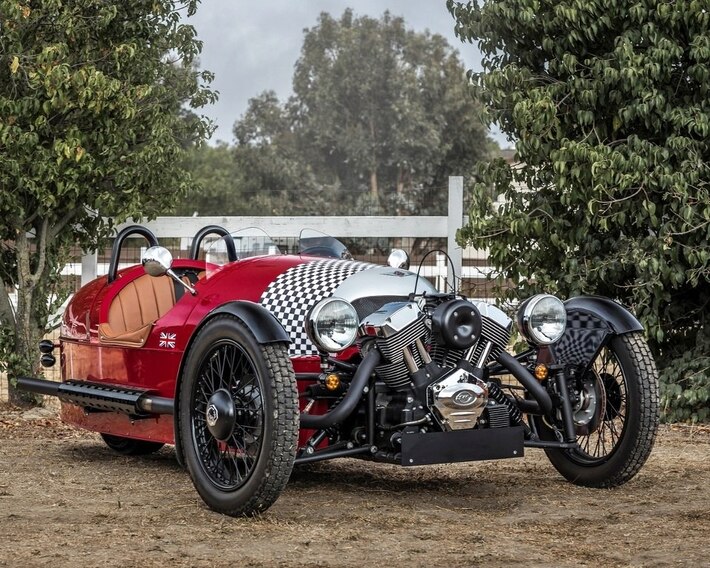
Henry Frederick Stanley Morgan — H.F.S. Morgan — founded the Morgan Motor Company in 1910 in Malvern Link, Worcestershire, after his three-wheeled Runabout caused such a sensation at the 1910 Olympia Motor Show that he was inundated with orders he could not initially fulfil. The Morgan Runabout, powered by a single-cylinder engine mounted at the front, was light, agile, and affordable — and it competed successfully in hillclimbs and trials against far more expensive four-wheeled cars.
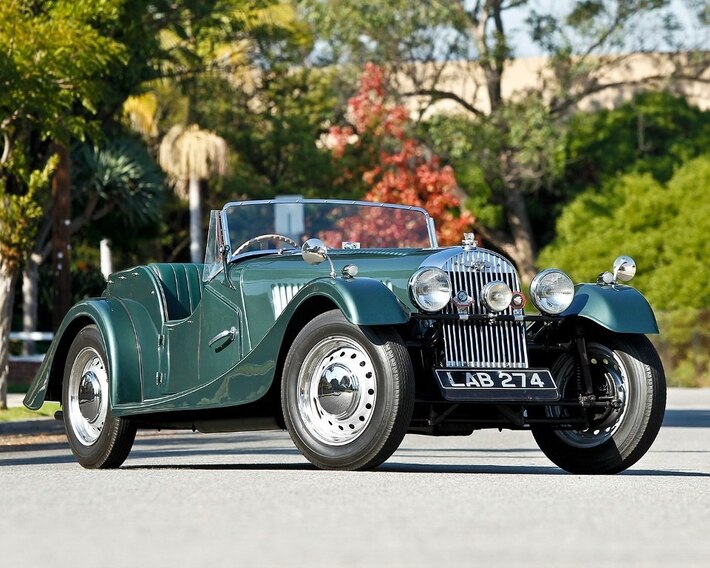
Morgan introduced its first four-wheeled car in 1936, the 4-4 — so named for its four cylinders and four wheels — which remains in production in evolved form as the Plus Four today. This continuity of model heritage is unique in the automotive industry: a Morgan design that has been continuously refined and produced for nearly 90 years, each evolution maintaining the fundamental character of the original while incorporating contemporary engineering where it genuinely improves the driving experience.
The company has always been family-owned. H.F.S. Morgan's son Peter Morgan ran the company from 1959 to 2003, and Peter's son Charles Morgan was involved until the Investindustrial investment in 2019. Today, Morgan is led by a professional management team but retains its fundamental character: a small British factory producing handcrafted cars to individual order, refusing to industrialise a process that depends on the skill, judgment, and care of craftspeople who take genuine pride in what they build.
Key Milestones
Current Model Lineup
Morgan's current range uses the aluminium CX-Generation platform, combining traditional hand-built craftsmanship with modern engineering. Each car is built to individual order with bespoke specification.
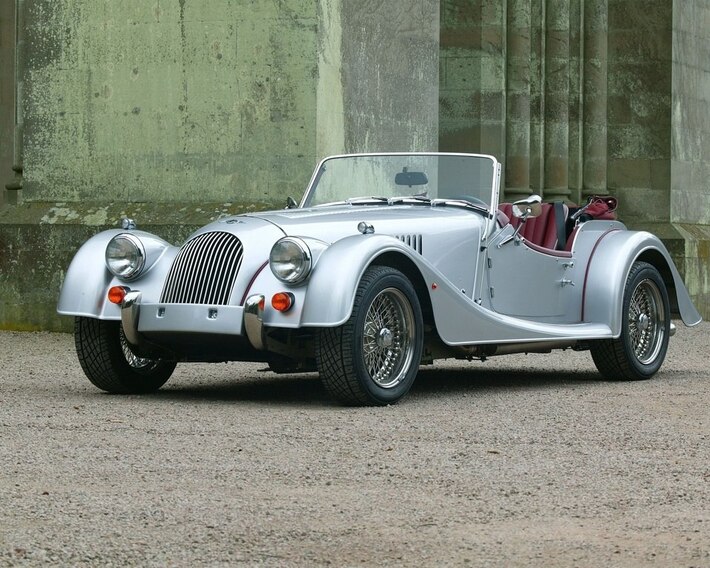
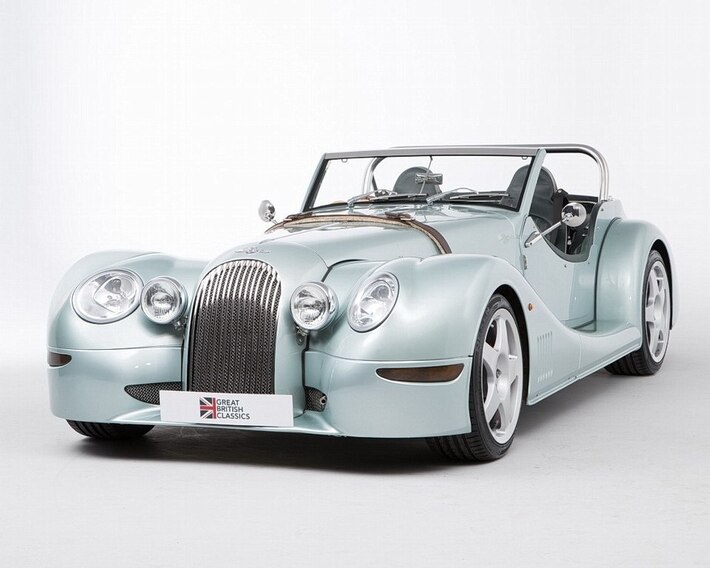
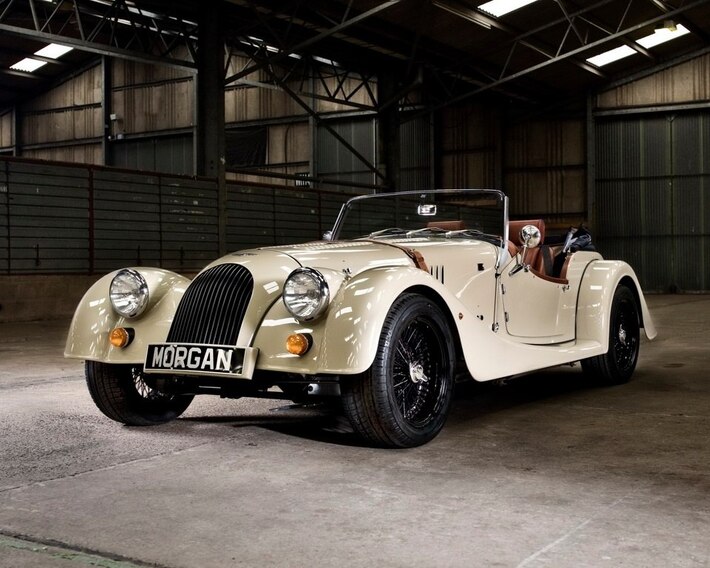
Morgan in Pictures
From the ash-framed roadsters of the twentieth century to today's aluminium-chassis Plus Six, Morgan's cars share a commitment to handcraft, traditional materials, and open-air driving that no other manufacturer sustains.
Craftsmanship & Manufacturing
Morgan's manufacturing process is unlike any other car manufacturer's. Each car begins as a customer order with a specific specification — colour, interior leather, hood fabric, wheel type, instrumentation — and a build date is assigned several months in advance. The car is then built by hand by a small team of craftspeople who each specialise in different aspects of the build: chassis assembly, bodywork forming, trimming, final finishing.
Until 2020, Morgan's bodies were framed in seasoned English ash — a hardwood selected for its combination of strength, flexibility, and workability that allowed craftspeople to form complex curves by hand. The new CX aluminium platform retains hand-forming for aluminium body panels and maintains the same bespoke-to-order approach that has defined Morgan's production process since 1910. A Morgan takes significantly longer to build than any comparable volume car — and this investment of time is visible in the result.
- Hand-formed aluminium body panels — Morgan's craftspeople beat and shape aluminium panels by hand using traditional coachbuilding techniques, producing surfaces of individual character
- Bespoke customer specification — every Morgan is built to individual order with unique colour, interior material, and option combination; no two Morgans are identical
- Small-team build process — each Morgan passes through the hands of a small group of craftspeople who each develop deep expertise in their part of the build, ensuring consistent quality
- Traditional upholstery — Morgan's leather-trimmed interiors are cut and stitched by hand using patterns derived from decades of accumulated craft knowledge
- Long production lead times as a quality guarantee — Morgan's extended build times reflect the investment of time and skill that each car requires; buyers wait months for their car, and the wait is justified
Morgan in Azerbaijan
Morgan vehicles are rare in Azerbaijan, as they are in most markets outside the United Kingdom and Western Europe where the brand has its strongest collector base. The combination of low production volume, right-hand drive orientation for many models, and specialised maintenance requirements means that Morgan ownership in Azerbaijan requires commitment and advance planning.
For Azerbaijani enthusiasts drawn to Morgan's unique character — the combination of handcraft, traditional materials, and driving purity that no modern car can replicate — specialist importers can source specific models to order. Given Morgan's low production numbers and strong collector demand, used examples hold their value well internationally and occasionally become available through private sales.
Why Morgan?
- <strong>The last true handbuilt car:</strong> Morgan is the only car manufacturer in the world that still builds cars entirely by hand, to individual order, in a single factory, using traditional coachbuilding techniques — an experience of ownership that nothing else can offer.
- <strong>115 years of continuous production:</strong> The Morgan Motor Company has been building cars in the same Malvern factory since 1910, a continuity unmatched by any other automotive manufacturer and a guarantee of heritage that gives every Morgan genuine historical significance.
- <strong>Unique driving character:</strong> Without the isolation layers that modern cars impose between driver and road, a Morgan provides tactile feedback, direct steering, and an immediacy of response that modern sports cars engineer away in pursuit of accessibility.
- <strong>Outstanding exclusivity:</strong> With approximately 1,000 cars built per year for the entire global market, a Morgan is among the most exclusive sports cars available — each one a unique object built specifically for its owner.
- <strong>Strong collector value retention:</strong> Morgan's consistent identity, limited production, and devoted international following give both new and used examples excellent value retention compared with mainstream sports cars.
BakuWheels uses cookies to improve your experience, analyse site traffic, and personalise content. By clicking Accept All, you consent to our use of cookies. Learn more in our Cookie Policy.