

Rover
A Century of British Motoring Excellence.
Origins & Heritage
Rover is one of the most storied names in British automotive history — a brand that spanned more than a century of passenger car production, from its origins as a bicycle and motorcycle manufacturer in Coventry to its final chapter as an independent British marque before ceasing production in 2005. Founded in 1877 by John Kemp Starley as a bicycle manufacturer, Rover transitioned to motor cars in 1904, producing its first petrol-engined vehicle and beginning a journey that would establish it as a benchmark for quality, refinement, and British engineering character.
Throughout the middle decades of the twentieth century, Rover built its reputation on well-engineered, dignified saloons and estates that attracted professional and executive buyers across Britain and the Commonwealth. The P4 and P5 series of the 1950s and 1960s earned Rover the informal title of the "poor man's Rolls-Royce" — not for their affordability, but for their blend of traditional craftsmanship, hushed cabins, and assured road manners that placed them clearly above the mainstream. The P6 2000 of 1963 brought modern engineering thinking — unit body construction, disc brakes all round, and a De Dion rear axle — while retaining the refinement and character that Rover customers expected.
The 1968 merger into British Leyland began a turbulent chapter that saw Rover share platforms and resources with volume brands, diluting its premium character even as individual models such as the SD1 of the 1970s and the Honda-derived 800 series of the 1980s maintained genuine engineering merit. BMW's acquisition of the Rover Group in 1994 brought renewed investment and the technically accomplished Rover 75, but the sale of Rover to Phoenix Venture Holdings in 2000 ultimately led to the company's administration and closure in April 2005, ending more than a century of continuous British car production under the Rover name.
Key Milestones
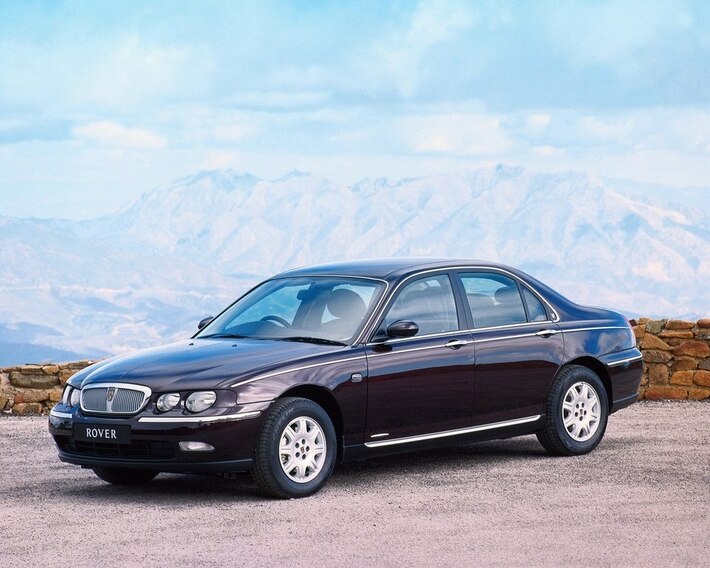
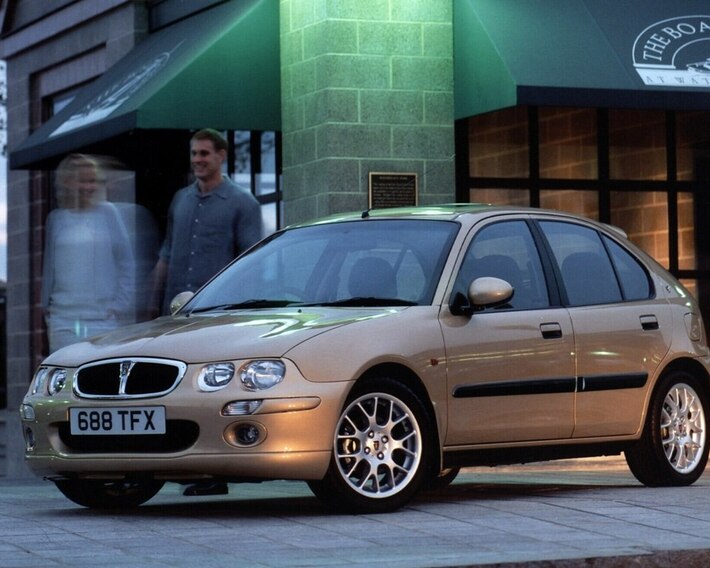
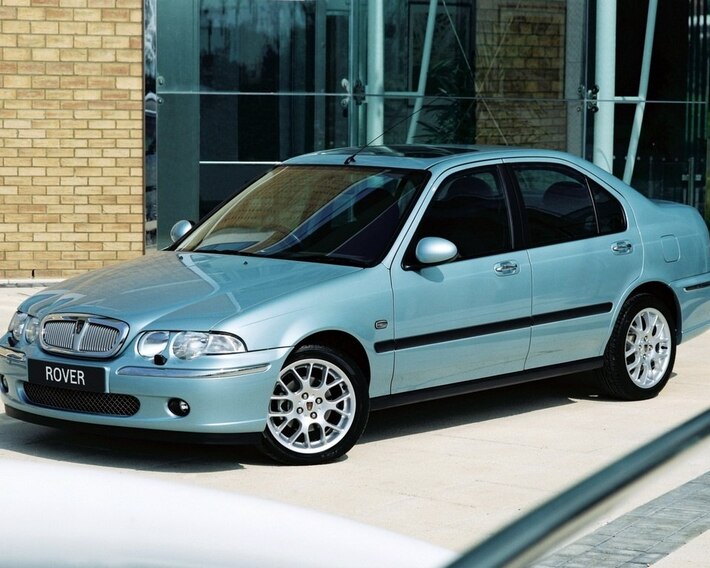
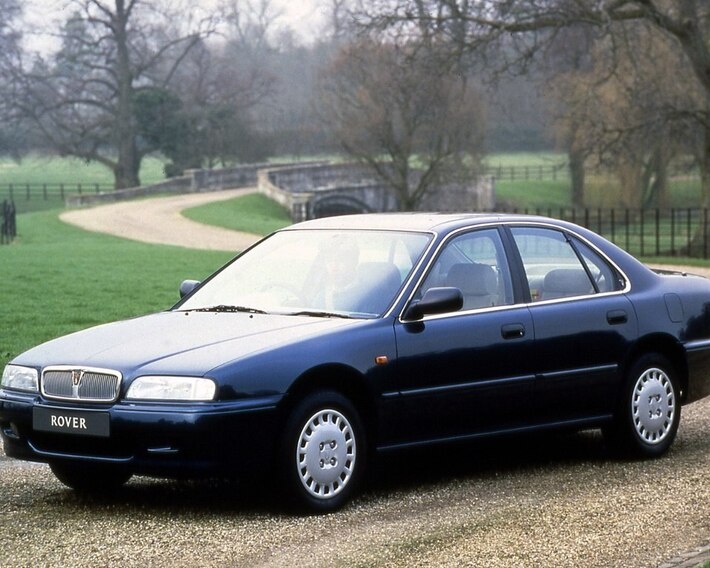
Iconic Models in Pictures
Rover's model range across the decades reflected an unwavering commitment to interior quality, ride refinement, and understated British elegance — from the wood-and-leather P5 to the aerodynamically refined 75.
Model Lineup
Rover's most significant passenger car models demonstrate the brand's consistent pursuit of refinement, quality materials, and engineering substance — spanning compact hatchbacks to executive saloons across the brand's final decades of production.
Engineering & Technology
Rover's engineering philosophy combined traditional British values of ride refinement, interior craftsmanship, and understated quality with increasingly modern technical foundations — particularly after the Honda partnership brought Japanese manufacturing discipline and the BMW period introduced German engineering investment to the final model generations.
- Honda-derived K-Series and L-Series engines — the collaborative powertrain programme brought Japanese engineering reliability to Rover's compact and mid-range models, with the K-Series 4-cylinder becoming one of the most widely deployed engines across the Rover, MG, and Lotus ranges of the 1990s
- BMW M47 common-rail diesel and M52 petrol engines in the Rover 75 — the BMW ownership period delivered engineering-grade powertrains that elevated the 75 to genuine premium saloon status, with smooth inline-six petrol units and efficient diesel engines matching the chassis's refined character
- Traditional interior craftsmanship — Rover's most enduring differentiator: genuine wood veneer (not printed film), Connolly leather options, deep-pile carpeting, and quality analogue instrumentation that contrasted sharply with the plastics of mainstream competitors at equivalent price points
- P6 engineering heritage — the 1963 P6 2000 pioneered unit body construction, four-wheel disc brakes, and De Dion rear suspension in a mainstream British saloon, demonstrating genuine engineering ambition that defined Rover's positioning as a technically credible premium brand
- Hydragas suspension technology — Rover's use of interconnected fluid pressure units provided a distinctive and effective ride quality solution across several model generations, giving these cars a notably smooth and composed primary ride over uneven road surfaces
Rover in Azerbaijan
Rover vehicles have circulated in the Azerbaijani used car market for many years — imported primarily from the United Kingdom, Germany, and Russia, where significant Rover populations remained after the brand's 2005 closure. The Rover 75, 45, and 25 are the models most commonly encountered in Azerbaijan, valued by buyers who appreciate European interior quality at accessible used-car prices. The brand's traditional character — wood trim, leather seating, and composed road manners — continues to attract buyers seeking a refined European driving experience without the premium pricing of continuing German brands.
For Azerbaijani buyers considering a used Rover, the Rover 75 represents the most compelling proposition — its BMW-sourced 2.0-litre diesel engine is both reliable and economical, and its interior quality remains genuinely impressive even by modern standards. Parts availability for Rover is limited but manageable for common wear items through European suppliers; the K-Series engine used in the 25 and 45 requires diligent coolant maintenance to prevent head gasket failures, and buyers should ensure this service history is present before purchase. Workshop knowledge is limited to specialist and enthusiast mechanics, making a thorough pre-purchase inspection essential.
Why Consider a Rover?
- Exceptional interior quality at accessible prices: Rover's traditional craftsmanship — real wood veneer, leather upholstery, and quality materials — is available in used examples at prices that place them in the budget segment of the Azerbaijani market, offering a standard of cabin quality that most equivalently priced modern vehicles cannot match.
- BMW-sourced engineering in the Rover 75: The 75's BMW-period diesel and petrol engines are among the most sophisticated powertrains ever fitted to a Rover, delivering genuine premium saloon performance and refinement combined with an exceptionally well-appointed interior at used-car pricing.
- Composed and refined ride quality: Rover's engineering philosophy prioritised smooth, dignified road manners appropriate for executive transport — a character that remains evident in well-maintained examples and offers a noticeably different driving experience from the harder-edged tuning of equivalent German competitors.
- British automotive heritage and character: Rover occupies a unique position in European automotive history — a genuine premium British marque with more than a century of tradition, whose vehicles carry cultural and historical significance for collectors and enthusiasts in addition to their practical qualities as everyday transport.
- Accessible entry into classic European motoring: As a discontinued brand, well-preserved Rover examples hold their value as collectible classics and represent an accessible route to historic British car ownership for Azerbaijani buyers who value European automotive culture and craftsmanship.
BakuWheels uses cookies to improve your experience, analyse site traffic, and personalise content. By clicking Accept All, you consent to our use of cookies. Learn more in our Cookie Policy.