Saturn
A Different Kind of Car Company.
Origins & Heritage
Saturn was born from General Motors's determination to confront the Japanese automotive invasion of the 1980s on its own terms. By the middle of that decade, Japanese manufacturers — particularly Toyota and Honda — had demonstrated that small cars could be both reliable and desirable, capturing an enormous share of the American compact market. GM's response was radical: create an entirely new subsidiary, free from the bureaucratic culture of the parent company, with its own factory, its own workers, its own retail model, and its own engineering philosophy.
Saturn Corporation was formally established in 1985 and built its Spring Hill, Tennessee factory from scratch. The brand launched in 1991 with the SL sedan and SC coupe — vehicles featuring an unconventional polymer outer body panel construction that resisted minor dents and was immune to surface rust. The retail approach was equally revolutionary: Saturn dealers charged a single, non-negotiable price — the famous no-haggle model — eliminating the adversarial negotiation process that American car buyers had tolerated for generations. The combination of innovative products and a genuinely customer-friendly buying experience created enormous goodwill and a loyal owner community.
Saturn's later years saw the brand absorbed into GM's mainstream engineering structure as the parent company sought to reduce costs by sharing platforms across divisions. The Ion sedan and Vue SUV adopted Opel-derived platforms — gaining European chassis sophistication but losing some of the original Saturn independent character. The Aura mid-size sedan, built on Opel's Epsilon platform, won North American Car of the Year in 2007 — and the Sky roadster was widely celebrated as one of the most attractive American sports cars of its era. Despite these successes, GM's 2009 bankruptcy triggered Saturn's dissolution. Production ended in 2010, leaving behind a brand with genuine innovation, a passionate community, and an unresolved legacy.
Key Milestones
Iconic Models in Pictures
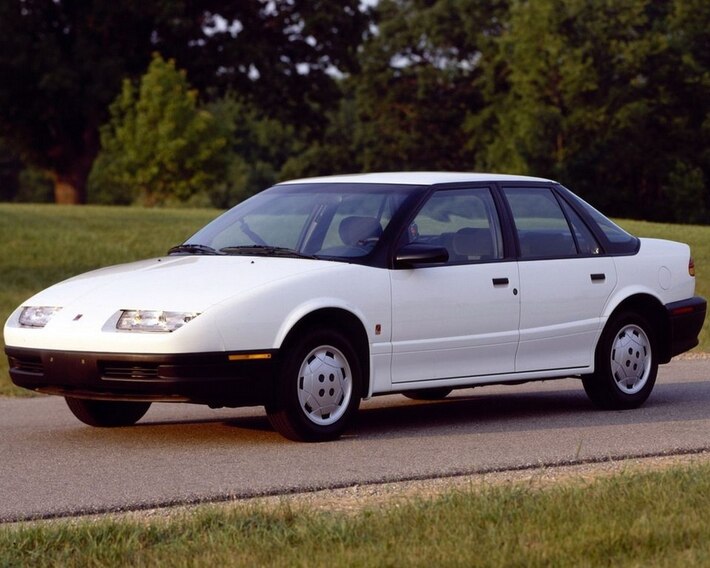
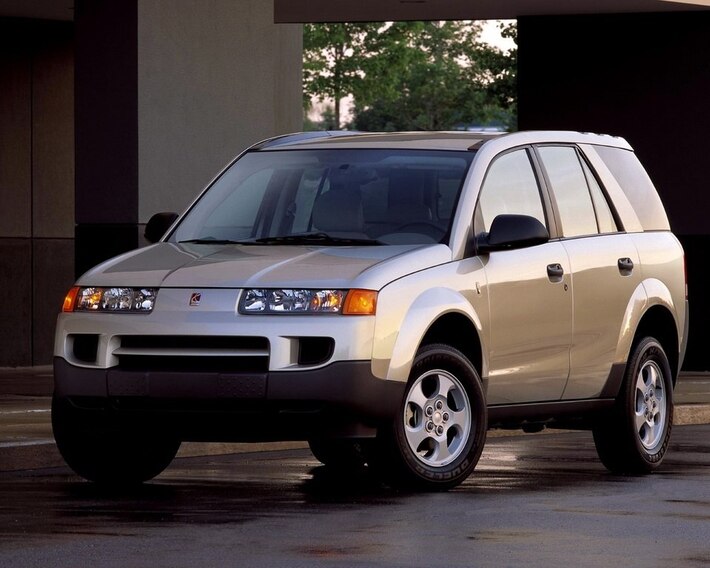
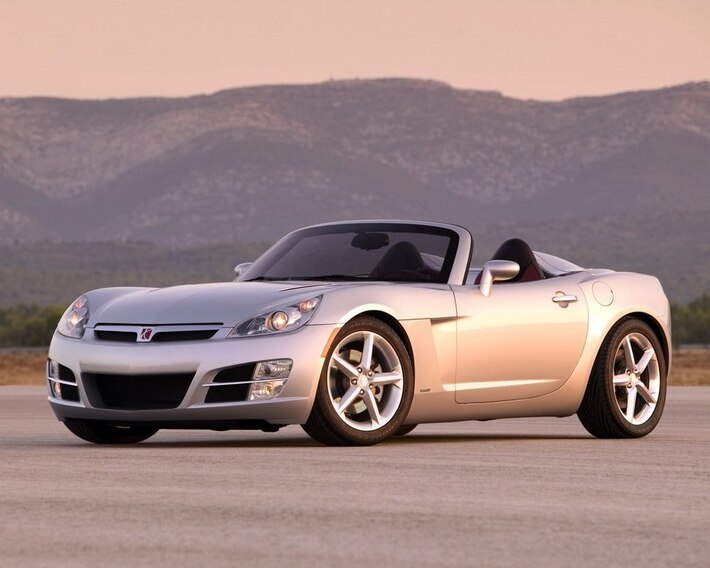
Saturn's quarter-century spans the original polymer-panelled SL sedans through the award-winning Aura and the celebrated Sky roadster — each model representing a chapter in a brand that genuinely tried to do things differently.
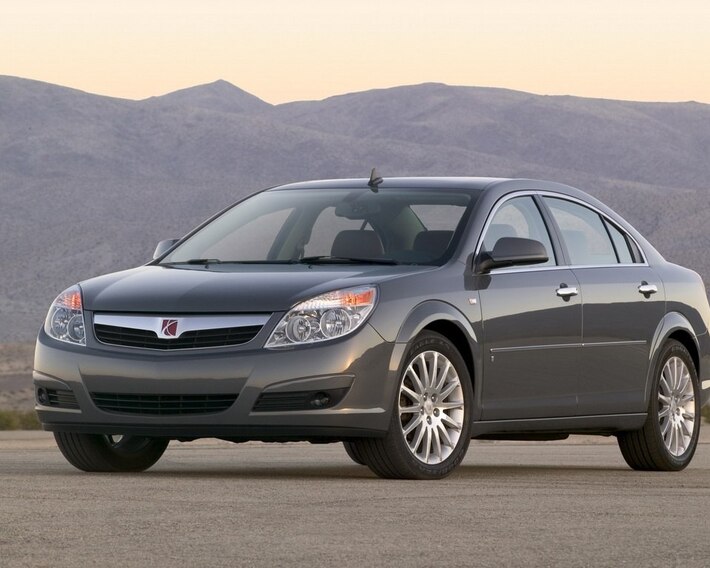
Model Lineup
Saturn's range evolved from the original compact SL/SC models through SUVs, sports roadsters, and premium sedans — reflecting the brand's constant reinvention as it navigated changing American market preferences across 25 years.
Engineering & Technology
Saturn's most distinctive technical innovation was the polymer body panel system used on original SL and SC models. The outer body panels — hood sides, doors, and quarter panels — were moulded from a thermoplastic polymer rather than stamped steel. This construction meant that minor impacts left dents or damage that could be removed by gentle heating, that the panels would never rust or pit from road salt, and that light scrapes produced a resilient surface rather than paint chips and exposed metal. The approach was genuinely innovative, even if later models transitioned to conventional steel for cost and repairability reasons.
- Polymer outer body panels on SL/SC models — thermoplastic construction resists minor dents and dings, is immune to surface rust and road salt corrosion, and is self-healing under gentle heating
- Twin-cam DOHC 1.9L inline-four engines on SL2 and SC2 models — delivering competitive performance and fuel economy for the early 1990s compact segment at a time when Japanese rivals set the benchmark
- No-haggle fixed-price retail model — Saturn dealers charged a single non-negotiable price, eliminating the traditional American dealership negotiation model and creating a fundamentally more transparent customer relationship
- Epsilon platform architecture (shared with Opel Vectra and Saab 9-3) on Aura — providing European-standard multi-link suspension geometry, high structural rigidity, and sophisticated NVH engineering
- Spring Hill manufacturing: a purpose-built vertically integrated production facility designed around quality-first assembly principles, with team-based working and rapid changeover capability ahead of its time in North American automotive manufacturing
Saturn in Azerbaijan
Saturn vehicles — particularly the Vue SUV and Ion sedan — appear in Azerbaijani used car markets through import channels from Russia and neighbouring CIS countries. The Vue's combination of practical size, available V6 power, and relatively affordable used pricing has attracted buyers seeking a compact SUV with American character and the durability of GM engineering. Older SL-series sedans with their distinctive polymer body panels are still in circulation, valued for their resistance to surface rust and body corrosion in both mountain and coastal environments.
Parts availability for Saturn vehicles in Azerbaijan is primarily achieved through cross-referencing with the broader GM parts catalogue — many Saturn components are shared with Chevrolet, Opel, and Saab products that have established supply channels in the CIS. The Saturn Aura and Ion's use of Opel-derived engineering means that mechanics familiar with European GM products can typically service these vehicles with available tooling. For buyers attracted to Saturn's distinctive character or the practical value of well-maintained used examples, the broader GM and Opel supply network provides reasonable long-term support.
Why Consider a Saturn?
- Polymer body panel advantage: Early Saturn SL and SC models are famous for polymer outer panels — dent-resistant, immune to surface rust, and more forgiving of minor parking impacts than conventional steel-panelled vehicles.
- A genuine piece of American automotive history: Saturn was a brand that genuinely tried to do things differently — honest pricing, innovative materials, and a customer-first retail model — making any Saturn a tangible piece of that authentic American story.
- European engineering sophistication (later models): Ion, Aura, and Vue models benefit from Opel's GM European engineering expertise, delivering chassis sophistication, refined suspension, and build quality above typical American budget alternatives of the same era.
- Saturn Sky collector appeal: The Sky is widely considered one of the most attractive American sports cars of the 2000s — a genuine rear-wheel-drive roadster that stands apart from virtually every other vehicle on Azerbaijani roads and carries significant enthusiast interest.
- Accessible used market pricing: Saturn's 2010 closure means all available vehicles are used, and prices reflect this — providing affordable entry to American-engineered vehicles with distinctive character and a loyal global owner community for support.
BakuWheels uses cookies to improve your experience, analyse site traffic, and personalise content. By clicking Accept All, you consent to our use of cookies. Learn more in our Cookie Policy.