

Triumph
Triumph was one of the great British sports car manufacturers — a company whose TR series roadsters, Spitfires, and Stags defined affordable open-top motoring for two generations of enthusiastic drivers in Europe and North America. From its origins as a bicycle company in Victorian Coventry to its final TR8 in 1981, Triumph contributed a unique combination of accessible performance, honest engineering, and distinctly British character to the global sports car story.
Origins & Heritage
Triumph was founded in 1885 in Coventry, England, initially producing bicycles under the name Triumph Cycle Company. The company moved into motorcycles in 1902 and produced its first automobile in 1923, entering the growing market for affordable, sporting motor cars that characterised the interwar period. Through the 1920s and 1930s, Triumph established a reputation for small, well-built cars with genuine sporting character — a reputation that would define the brand's identity for the next sixty years.
The postwar period saw Triumph transformed. Following acquisition by the Standard Motor Company in 1944, Triumph's sports car programme accelerated dramatically. The TR2, launched in 1953, was the breakthrough: a 90 mph sports car priced accessibly for working British professionals and exported aggressively to the United States, where it found an enthusiastic audience seeking an alternative to American muscle. The TR series that followed — TR3, TR4, TR5, TR6 — became some of the most beloved sports cars in history.
Triumph's story ended in 1984 when British Leyland, facing severe financial difficulties, discontinued the brand following the TR8's production run. The cars produced in the six decades of Triumph's automotive existence remain among the most actively collected classic vehicles in the world, with strong owners' clubs, comprehensive parts availability, and a global community of enthusiasts who continue to cherish and drive these distinctive British sports cars.
Key Milestones
Model Lineup
Triumph's product range spanned affordable family cars to genuine sports roadsters, but it is the TR series and small sports cars that define the brand's enduring legacy.
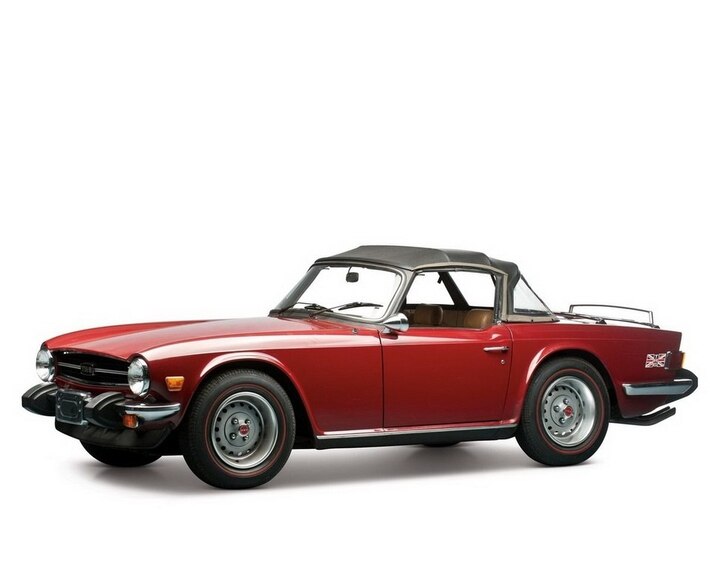
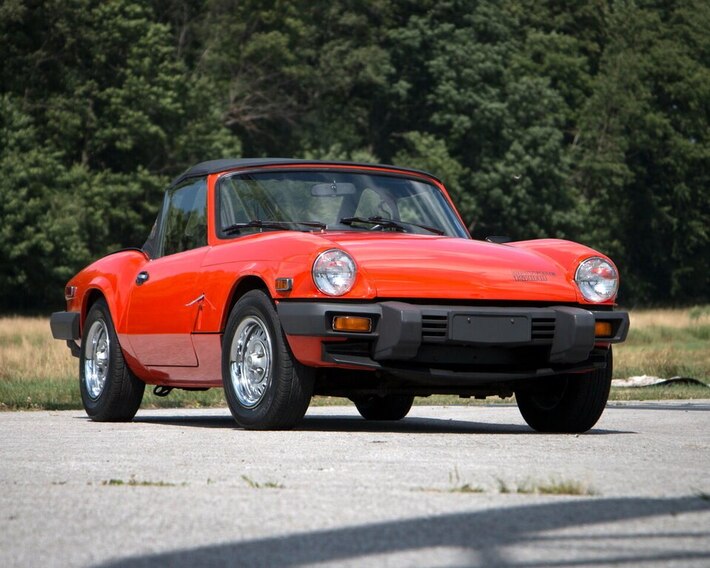
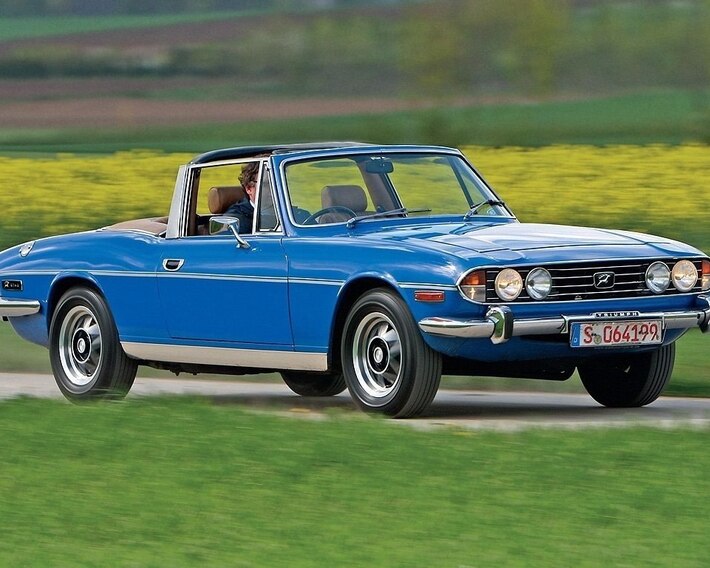
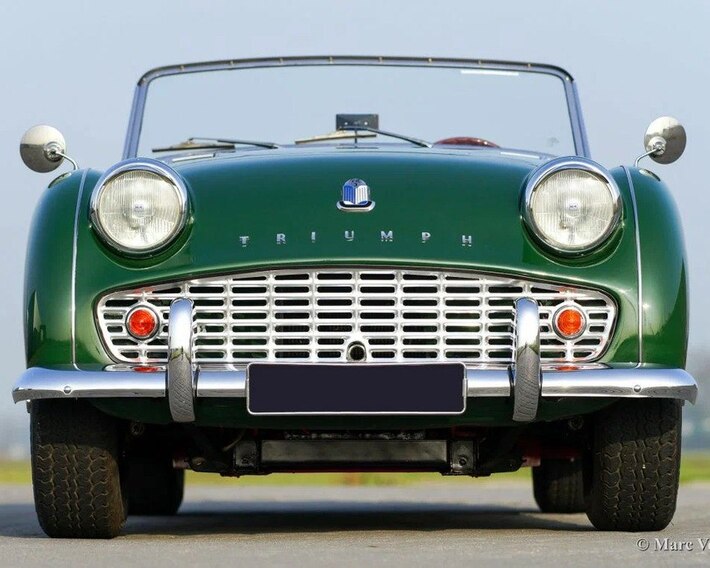
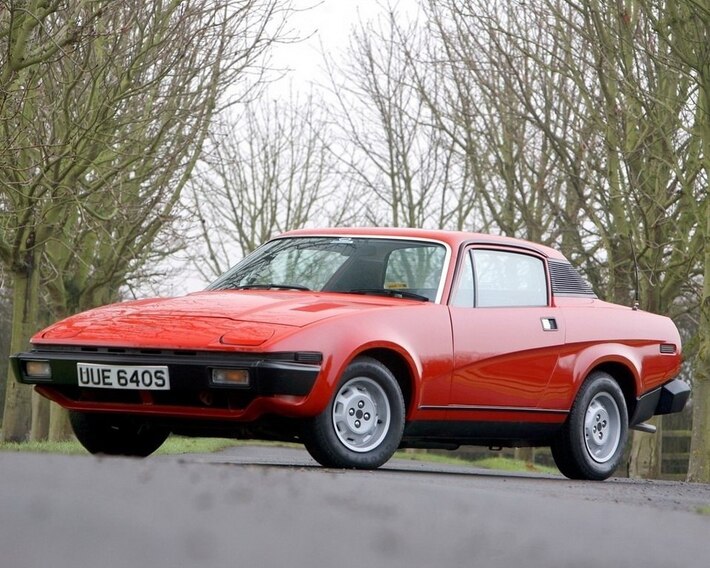
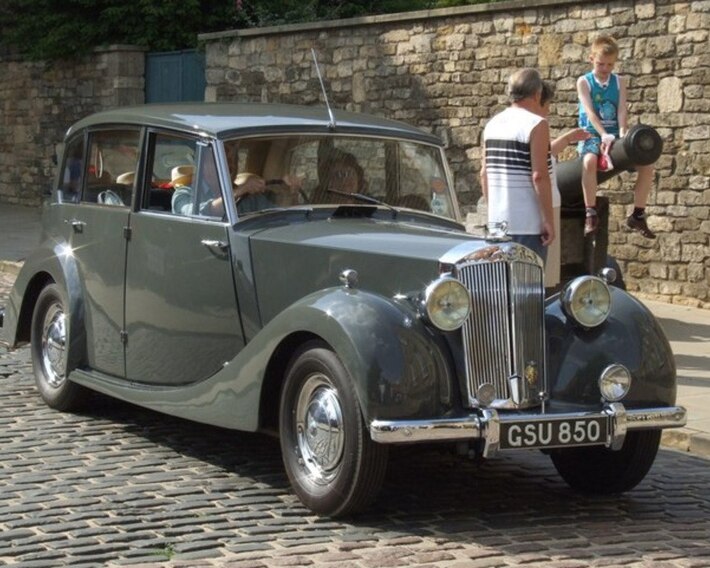
Triumph in Pictures
From the TR2 that launched a legend to the Stag V8 and the faithful Spitfire, Triumph's cars combine distinctly British styling with genuine mechanical character that continues to captivate collectors worldwide.
Engineering Legacy
Triumph's technical contributions to the automotive world are more significant than its relatively modest production volumes suggest. The TR3 was the first production car in the world to be fitted with disc brakes as standard equipment — an innovation that changed automotive safety standards globally. The Dolomite Sprint's 16-valve engine design, developed in-house in Coventry, preceded the wider industry's adoption of multi-valve technology by more than a decade.
The TR series established the template for the affordable British sports car that influenced generations of competitors: front-engine rear-wheel drive, open bodywork, minimal weight, and mechanical simplicity that allowed owners to service their own cars. This template was later refined by Mazda in the MX-5, which acknowledged Triumph's TR roadsters as a direct inspiration during the MX-5's development.
- World's first disc brake production car — the TR3 (1956) introduced standard disc brakes ahead of any competitor, setting the direction for global automotive safety development
- First 16-valve production engine — the Dolomite Sprint's 1973 16-valve cylinder head predated widespread multi-valve engine adoption by over a decade
- Template for the affordable sports roadster — the TR series established the format — lightweight, rear-wheel drive, open bodywork — that the Mazda MX-5 and others would later perfect
- Export success in North America — Triumph TR models were the best-selling imported sports cars in the United States during the 1960s, establishing a market that made British sports cars a cultural phenomenon
- Sustained collector and restoration community — Triumph's mechanical simplicity means that most models remain fully maintainable today, supporting a thriving global owners' club and restoration parts market
Triumph in Azerbaijan
Triumph vehicles occasionally appear in Azerbaijan through the classic car import networks that serve the growing community of vintage automotive enthusiasts in the country. Given the brand's discontinuation in 1984, all Triumph cars are now classics — and the TR series in particular commands significant collector interest globally, with well-maintained examples representing substantial value.
For Azerbaijani enthusiasts interested in acquiring a Triumph, the classic car market provides the primary route, with TR6, Spitfire, and Stag examples available through specialist dealers and private collectors internationally. The mechanical simplicity of Triumph's engineering means that qualified mechanics familiar with classic British sports cars can maintain these vehicles effectively, making classic Triumph ownership practically viable even outside established dealer networks.
Why a Triumph?
- <strong>Defining British sports car character:</strong> No other marque captures the essence of the classic British open sports car — lightweight, honest, mechanical, and deeply rewarding to drive — as completely as Triumph's TR series and Spitfire.
- <strong>Pioneering technical heritage:</strong> The world's first disc-braked production car and first 16-valve production engine are Triumph achievements that place the brand in the forefront of automotive history.
- <strong>Practical collectability:</strong> Triumph's mechanical simplicity, comprehensive parts availability, and global owners' club support make classic ownership significantly more accessible than more exotic marques.
- <strong>Exceptional driving engagement:</strong> Without modern electronic assistance, power steering, or automatic transmissions as standard, Triumph sports cars offer a direct, involving driving experience that modern sports cars cannot replicate.
- <strong>Strong collector community:</strong> Triumph owners' clubs operate globally, providing technical support, parts sourcing, events, and expertise that makes Triumph ownership a community experience as well as a mechanical one.
BakuWheels uses cookies to improve your experience, analyse site traffic, and personalise content. By clicking Accept All, you consent to our use of cookies. Learn more in our Cookie Policy.