

Xinkai
Xinkai — Shenyang's Light Commercial Vehicle Specialist, Delivering Trucks, Vans and Pickups to China and Emerging Export Markets
Origins & Heritage
Xinkai Automobile (新凯汽车, Xīnkǎi Qìchē — "New Opening / New Achievement Automobile") was established in 1993 in Shenyang, the capital of Liaoning province in northeastern China, as a manufacturer focused on light commercial vehicles. Shenyang's industrial heritage as one of China's major heavy manufacturing centres — home to large state-owned enterprises in steel, machinery, and defence production — provided Xinkai with both the industrial ecosystem necessary for vehicle manufacturing and a home market with substantial demand for light commercial vehicles in construction, logistics, and industrial support applications. The company's founding in the early 1990s coincided with China's broader economic opening, which was generating rapid growth in commercial activity and the associated demand for practical transport solutions.
Xinkai's product focus on light trucks, vans, and pickup trucks — rather than passenger cars — positioned the brand to serve the commercial and agricultural transport needs that were expanding rapidly as China's rural and semi-urban economy developed. The company established production lines for vehicles typically in the 1–3 tonne payload class, covering the practical range most useful for small businesses, construction contractors, and agricultural operators. Xinkai's engineering approach prioritised mechanical durability, straightforward maintenance, and payload efficiency over comfort or specification sophistication — characteristics well-matched to the commercial operator buyers who were the brand's primary audience.
Through the 2000s and 2010s, Xinkai developed export programmes targeting markets across Central Asia, the Middle East, and Africa where Chinese light commercial vehicles were gaining acceptance as cost-effective alternatives to Japanese and European brands. Azerbaijan and the broader CIS region formed part of this export strategy, with Xinkai vans and light trucks reaching the region through the established Chinese commercial vehicle import networks. In the domestic Chinese market, intensifying competition from larger manufacturers drove Xinkai to develop new energy vehicle variants, introducing electric delivery vans and light trucks as part of China's broader push toward commercial vehicle electrification.
Key Milestones
Gallery
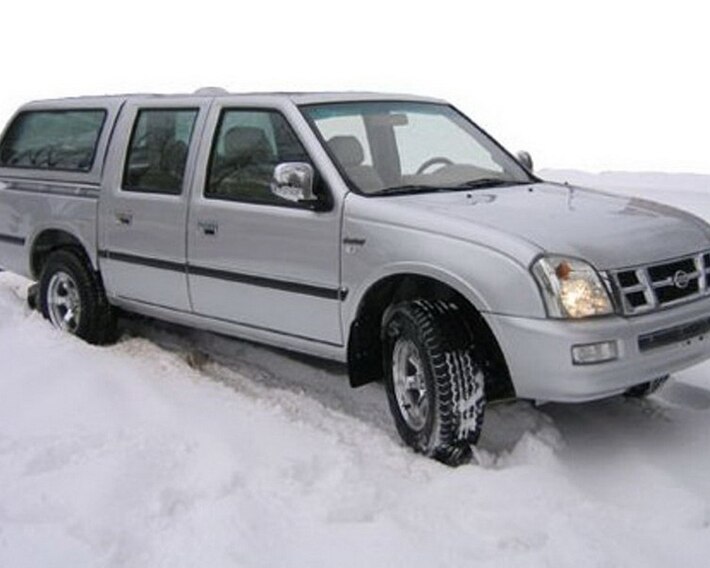
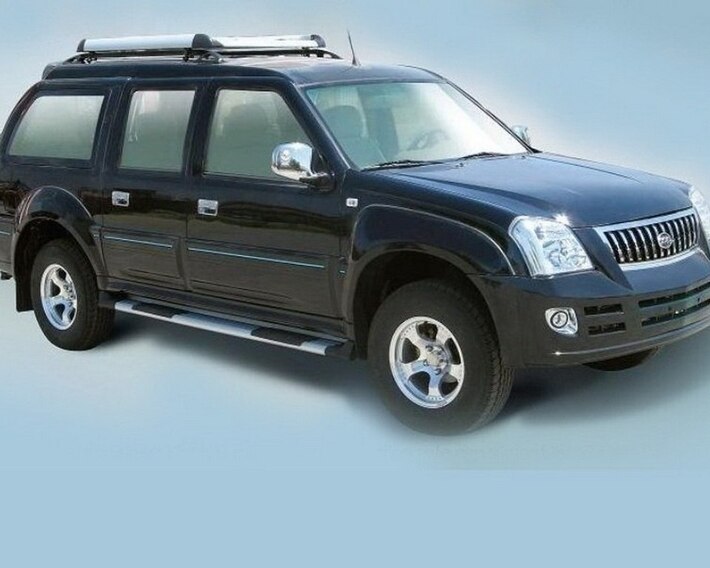
Xinkai light commercial vehicles — trucks, vans and pickups built for practical commercial use in China and export markets.
Key Models
Xinkai produces a practical range of light commercial vehicles focused on cargo transport, pickup truck applications, and specialised commercial derivatives for industrial and logistics users.
Engineering & Technology
Xinkai's engineering approach in commercial vehicles prioritises mechanical durability, straightforward maintenance, and payload efficiency over technological sophistication. This commercial-vehicle philosophy — which matches the requirements of operator buyers who evaluate vehicles on total cost of ownership and operational reliability rather than feature count — has produced a range of products with a strong value proposition for exactly the segments where Chinese commercial vehicles have gained strongest acceptance in export markets.
- Conventional chassis-based construction — Xinkai's trucks and vans use traditional ladder-frame or monocoque commercial vehicle construction with separate chassis rails on truck variants; this conventional architecture is familiar to commercial vehicle mechanics throughout the CIS region and supports field repair and structural modification without the specialist equipment needed for unibody vehicle repairs
- Petrol and diesel engine options — Xinkai offers both petrol and diesel powertrain choices across its range, recognising that commercial operator buyers in different markets have distinct fuel preference based on operating economics; diesel engines are generally preferred for high-mileage commercial use due to their fuel efficiency advantage, while petrol options provide lower initial cost for lighter-use applications
- High payload capacity relative to vehicle class — Xinkai's trucks are engineered to carry maximum payload within each weight class, with suspension and chassis specifications that support sustained operation near rated capacity rather than the conservative loading typical of passenger-car-derived commercial vehicles; this genuine payload capability is the primary commercial value proposition in the operator market
- Accessible service and parts supply — Xinkai's commercial vehicle architecture uses components compatible with the broad ecosystem of Chinese light commercial vehicle parts, ensuring that common service items including brake components, filters, clutch assemblies, and electrical components are available through the well-stocked Chinese parts import networks that now serve Azerbaijan's commercial vehicle operators
- New energy vehicle programme integration — Xinkai's investment in battery-electric commercial vehicle variants positions the brand within the growing NEV transition in Chinese commercial transport; the electric drivetrain knowledge developed for domestic NEV models contributes to the brand's long-term technical capability even as conventional fuel models remain dominant in export markets
Xinkai in Azerbaijan
Xinkai light trucks and vans have reached the Azerbaijani commercial vehicle market through the import networks that bring Chinese commercial vehicles to operators across the CIS region. In Azerbaijan's construction and agricultural sectors, where cost-effective transport solutions take priority over brand recognition, Xinkai's competitive pricing relative to Japanese and European commercial vehicles has attracted small business operators, construction contractors, and agricultural transporters seeking to maximise utility per unit of investment. The brand's presence is concentrated in the commercial operator segment rather than the consumer market, reflecting the practical basis of purchase decisions for vehicles used in business operations.
For Azerbaijani commercial operators, Xinkai represents one of the most cost-effective routes to a new light commercial vehicle, with acquisition prices that can be significantly below equivalent payload-capacity Japanese or European alternatives. The practical support for Xinkai vehicles — mechanical maintenance through CIS-experienced mechanics familiar with Chinese commercial vehicle drivetrains, and parts supply through the established Chinese automotive parts import networks — makes ownership viable for operators who cannot justify the premium of a more established brand for their commercial transport requirements.
Why Consider a Xinkai?
- Maximum payload at minimum acquisition cost: Xinkai's light trucks deliver competitive payload capacity at acquisition prices that represent the most cost-effective entry point for commercial operators who need a working vehicle rather than a prestige product — the strongest case for the brand in Azerbaijan's commercial sector.
- Simple mechanics with broad service accessibility: Xinkai's conventional commercial vehicle engineering is maintainable by the wide network of mechanics experienced with Chinese petrol and diesel commercial vehicle drivetrains, without the specialist tooling and diagnostic systems required for more complex contemporary vehicles.
- Diverse body configurations for commercial flexibility: Xinkai's range includes standard cargo trucks, panel vans, pickup trucks, chassis-cab configurations, and refrigerated variants — a breadth of commercial body options that allows operators to match the specific vehicle format to their actual operational requirements rather than compromising on a less suitable body type.
- Established Chinese commercial vehicle parts supply: Xinkai's components are well-represented in the Chinese automotive parts import networks that now serve Azerbaijan, ensuring that maintenance consumables and common replacement parts are accessible without specialist ordering from distant suppliers.
- New energy variant for urban operators: Xinkai's electric delivery van development positions the brand to serve Azerbaijani operators who are transitioning to electric commercial vehicles for urban delivery applications, providing a cost-effective entry into zero-emission commercial transport for businesses that need to adapt to changing urban logistics regulations.
BakuWheels uses cookies to improve your experience, analyse site traffic, and personalise content. By clicking Accept All, you consent to our use of cookies. Learn more in our Cookie Policy.