
Alfa Romeo 105/115 Series (1963–1977)
The Alfa Romeo 105/115 Series encompasses the most celebrated GT coupes Alfa Romeo ever built — the Giulia Sprint GT, GTV 1750, GTV 2000, GT Junior, and the rare GTC Cabriolet. Styled by Giorgetto Giugiaro at Bertone, powered by Alfa’s legendary twin-cam inline-four, and refined over fourteen years of continuous development, the 105/115 coupes represent Italian grand touring at its purest: small, light, beautifully proportioned, and driven by an engine that rewards every rev with glorious mechanical music.
Overview
In 1963, Alfa Romeo unveiled the Giulia Sprint GT at the Frankfurt Motor Show and immediately set a new standard for what a compact Italian GT coupe could be. The car wore a body designed by Giorgetto Giugiaro — then at the beginning of his career at Bertone — that achieved a harmony of proportion rarely equalled in automotive history. Low, elegant, muscular without aggression, the Sprint GT looked fast standing still and faster still in motion. Underneath that iconic body sat the 105 internal chassis code that would give the entire coupe family its collector designation: the 105/115 Series.
The mechanical foundation was equally impressive. The 105 series carried Alfa Romeo’s twin overhead camshaft inline-four engine — a design with roots in the post-war racing programme that made Alfa famous in the late 1940s and early 1950s. With aluminium cylinder head, twin Weber or Dell’Orto carburettors, and a five-speed gearbox when most rivals were still offering four, the Sprint GT was a driver’s car in every sense. It was not merely fast; it communicated through steering, gearshift, and throttle in a way that made driving an involving, tactile experience.
Over the following fourteen years, the 105/115 family grew and evolved through multiple variants: the GT Junior in 1300cc and 1600cc forms for buyers wanting a more affordable entry point; the GTV 1750 (1967) with its enlarged engine widely considered the finest-balanced car in the series; the 115-series GTV 2000 (1971) with revised front end styling and the most powerful twin-cam engine in the coupe range; and the rare GTC Cabriolet, of which very few were built by Touring. Through it all, the fundamental character — light, responsive, twin-cam powered, beautifully proportioned — remained the defining constant.
Racing validated the road car’s credentials comprehensively. The 105-series coupes dominated touring car racing across Europe in the late 1960s and early 1970s. The GTA (Gran Turismo Alleggerita) — the competition variant with aluminium body panels, twin-plug cylinder head, and full race preparation — won the European Touring Car Championship multiple times. The GTA Corsa and Junior Zagato versions added even more racing glory to the chassis’ name. This competition heritage directly informs the high collector values that exceptional 105/115 GTAs command today, with original GTA examples reaching €300,000–€600,000 at major auctions.
For buyers in Azerbaijan and the wider Caucasus region, the 105/115 GTV represents a historically significant Italian classic that is well-documented, comprehensively supported by a global parts and specialist network, and available at a range of price points from modest GT Junior examples to highly original, numbers-matching GTV 2000 coupes. The key concerns are structural rust (all 105/115 cars are now 45–60 years old and rust in predictable locations), engine rebuild needs, and the authenticity question for any car claiming GTA specification.
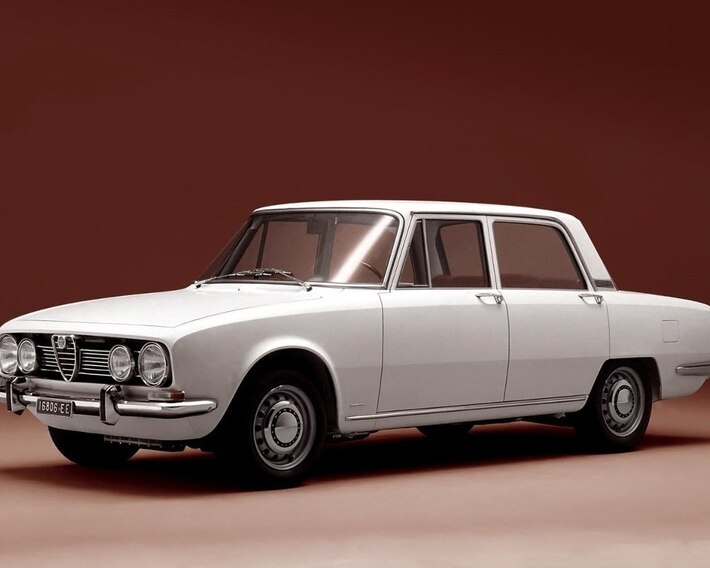
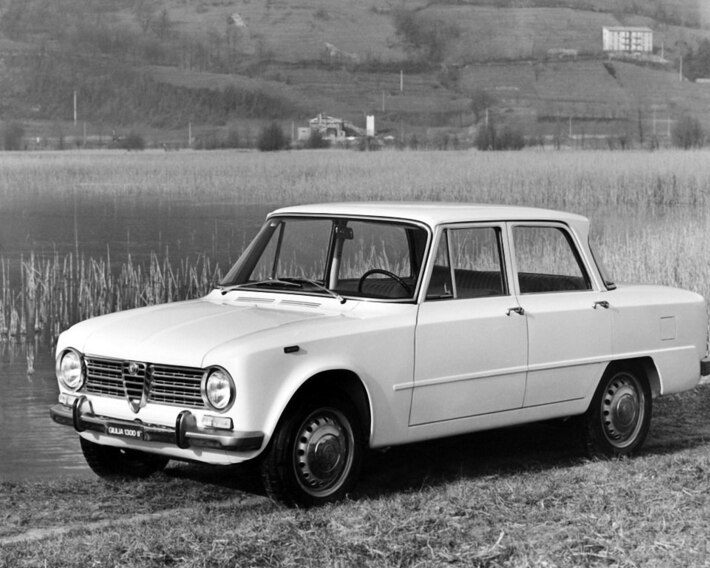
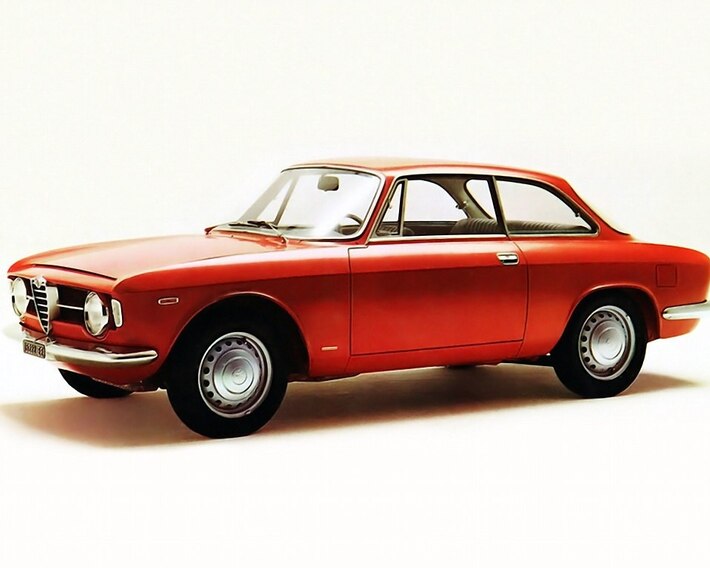
105/115 Series in Pictures
Giugiaro’s Bertone styling has aged with extraordinary grace — the stepped roofline, the Kamm-tail, and the delicately drawn side glass remain as fresh today as they were at the 1963 Frankfurt Motor Show.


Key Specifications
- Engine family: Alfa Romeo twin overhead camshaft inline-four cylinder; aluminium cylinder head, cast iron block; chain-driven twin camshafts; hemispherical combustion chambers; displacements of 1290cc (GT Junior 1300), 1570cc (Sprint GT, GT Junior 1600), 1779cc (GTV 1750), and 1962cc (GTV 2000). The twin-cam design traces its lineage directly to the racing engines of the early post-war period.
- Power outputs: 89 hp (1300 Junior), 106–109 hp (1600/Sprint GT), 122 hp (GTV 1750), 132 hp (GTV 2000). All figures at the flywheel; real-world outputs somewhat lower but still impressive for engine displacements of 1.3–2.0 litres in the 1960s–70s context.
- Carburettors: Twin Weber DCOE side-draught carburettors (Sprint GT, GTA, most sporting variants) or twin Dell’Orto DHLA (GTV 1750/2000 street cars). The Weber/Dell’Orto carburettor specification is a key part of the engine’s character and sound; both units are fully supported by specialists globally.
- Gearbox: Five-speed manual synchromesh on all variants — a significant advantage over most 1960s competitors which offered four speeds. Shift quality is direct and mechanical; the gearbox is an integral part of the driving experience and communicates well.
- Chassis: Unitary steel monocoque construction; wishbone front suspension with coil springs and anti-roll bar; live axle rear suspension with coil springs and radius rods (not an independent rear, unlike some contemporaries). The live rear axle gives the 105/115 a distinctive balance of understeer at the front with predictable rear behaviour.
- Brakes: Disc brakes on all four corners from the Sprint GT onward; inboard rear discs (a technically sophisticated arrangement reducing unsprung weight). Servo-assisted on later cars. The inboard rear disc arrangement is correct but requires access to rear-mounted callipers for service.
- Body: Steel monocoque coupe (primary); very small number of GTC Cabriolet bodies by Touring (open-top). GTA racing variants used aluminium body panels (lighter by approximately 200 kg versus steel road car). Stepover roofline, Kamm tail, and the distinctive stepped glasshouse are the visual signatures.
- Weight: Approximately 960–1,000 kg (steel road car); GTA competition cars considerably lighter at approximately 800 kg. The power-to-weight ratio of the GTV 2000 (approximately 132 hp/tonne) was exceptional for a road car of the early 1970s.
- Production figures: Giulia Sprint GT (1963–1966): approximately 14,000; GTV 1750 (1967–1972): approximately 44,000; GTV 2000 (1971–1977): approximately 37,000; GT Junior 1300 and 1600 (1966–1977): approximately 92,000 combined. GTA (all variants): approximately 500 genuine examples across all GTA sub-variants.
- GTA specification (competition): Gran Turismo Alleggerita — aluminium body panels, twin-plug cylinder head (two spark plugs per cylinder for improved combustion efficiency), full roll cage, competition suspension geometry, race-prepared twin-cam engine producing 170–220 hp in competition form. Genuine GTAs are comprehensively documented and registered; any car claiming GTA specification without documented provenance requires independent expert verification.
Variant Comparison
| Variant | Engine | Power | Gearbox | Best For |
|---|---|---|---|---|
| Giulia Sprint GT (1963–1966) | 1570cc DOHC twin-cam inline-four, twin Weber carburettors | 106 hp at 6,000 rpm | 5-speed manual (synchromesh all gears) | The original 105-series coupe that established the bloodline; Giorgetto Giugiaro’s Bertone styling at its purest; sporting yet civil; most historically significant of the early coupes and the template for all that followed |
| GT Junior 1300 / 1600 (1966–1977) | 1290cc or 1570cc DOHC inline-four, twin Weber carburettors | 89 hp (1300) / 109 hp (1600) | 5-speed manual | The accessible entry-level coupe; 1600 GT Junior is the most numerous surviving 105-series car and the most affordable point of entry; combines Italian coupe style with a mechanical specification that is still serviceable by specialists worldwide |
| GTV 1750 (1967–1972) | 1779cc DOHC inline-four, twin Dell’Orto or Weber carburettors | 122 hp at 5,500 rpm | 5-speed manual | The sweet spot of the 105/115 range; the 1750 engine is widely considered the finest balance of power, torque, and character in the series; more relaxed and torquey than the 2000 GTV; cars from this generation are highly sought by driving enthusiasts and collectors alike |
| GTV 2000 (1971–1977) | 1962cc DOHC inline-four, twin Dell’Orto carburettors | 132 hp at 5,500 rpm | 5-speed manual | The ultimate development of the 105/115 coupe; most powerful street version; slightly heavier than the 1750 but with greater torque; the 115-series cars (GTV 2000) have the revised front end with larger bumpers; peak performance variant for those who want the most capable driver’s car in the family |
| GTC Cabriolet (1965–1966) | 1570cc DOHC inline-four | 106 hp | 5-speed manual | The open-top variant of the Sprint GT, built by Touring (very few made); rarer than the coupe; for collectors seeking a unique and exceptionally rare 105-series variant; not a practical daily driver but extraordinarily collectable |
What Makes the 105/115 Series Stand Out
The 105/115 GTV family occupies a unique position in automotive history: a car beautiful enough to be displayed in design museums, capable enough to win international touring car championships, and accessible enough that examples are still driven and enjoyed by enthusiasts around the world today.
- Giugiaro’s finest early coupe design: The Giulia Sprint GT was one of the first significant production cars designed by Giorgetto Giugiaro while at Bertone. The proportions — the long bonnet, the glasshouse step, the Kamm tail, the delicate brightwork — achieved a harmony that has been studied by automotive designers for six decades. It is one of a small number of road cars that can be described as a genuine work of art.
- The twin-cam engine experience: The Alfa Romeo twin-cam inline-four is celebrated not merely for its power but for its character. From idle, it settles into a purposeful, metallic beat. As revs rise, the engine becomes progressively more willing, peaking with a crisp, howling note through the twin carburettors that remains one of the most evocative sounds in the automotive world. This is an engine that rewards being driven with enthusiasm.
- Five-speed gearbox in 1963: When most European GT cars of the 1960s offered four-speed gearboxes, the 105-series cars came with a five-speed unit that gave the driver proper overdrive gearing for motorway cruising alongside short, responsive ratios for back-road driving. The gear change is mechanical and direct — entirely appropriate for the car’s character.
- Racing pedigree that is directly relevant to road cars: The GTA variants won the European Touring Car Championship in 1966 (GTA), 1967 (GTA), 1970 (GTA 1300 Junior), and 1971 (GTA 1300 Junior). This competition success was achieved by cars that were recognisably related to the road-going GT Junior and GTV — the same engine architecture, the same chassis, the same suspension principles.
- Accessible entry into Italian classic car ownership: GT Junior 1300 and 1600 examples in good but not concours condition are available in Europe at €15,000–35,000, making the 105/115 family one of the most affordable routes into Italian classic car ownership. GTV 1750 and 2000 examples in comparable condition command €30,000–60,000; exceptional, fully restored examples can reach €80,000–120,000.
- Comprehensive global support network: The 105/115 series is supported by specialist clubs (Alfa Romeo Owners Club UK, Alfa Romeo Register, Registro Italiano Alfa Romeo), specialist rebuilders in Italy, Germany, and the UK, and a comprehensive aftermarket parts supply that covers virtually every mechanical and body component. This makes ownership in Azerbaijan practical if the owner is prepared to source parts internationally.
Maintenance & Repairability in Azerbaijan
Owning a 105/115 series car in Azerbaijan requires planning, patience, and a reliable relationship with international parts suppliers. The cars are mechanically well-understood, with a global community of specialists, but local infrastructure for classic Italian cars is limited and structural rust remediation is the single most important and expensive aspect of classic Alfa ownership anywhere in the world.
- Twin-cam engine service: The Alfa Romeo twin-cam engine is well-documented and can be serviced by any competent mechanic familiar with DOHC engines from the 1960s–70s. Service intervals include valve clearance checks every 15,000–20,000 km (shim-under-bucket design on later engines; older cars use bucket-and-shim with side camshaft access), oil changes every 5,000 km using classic car oil with ZDDP additive, and carburettor synchronisation annually.
- Carburettor maintenance: Twin Weber DCOE or Dell’Orto DHLA carburettors require annual cleaning, float height check, and accelerator pump inspection. Rebuild kits are available globally at modest cost. A competent carburettor specialist — not necessarily an Alfa specialist — can service these units. In Baku, mechanics with classic European car experience are available through the enthusiast community.
- Rust: the primary concern: All 105/115 cars are now 45–60 years old and rust in known locations: sill inner structures, floor panels, inner wings (front and rear), and the rear crossmember. Any 105/115 purchase requires a full underseal removal inspection by a specialist. Structural rust repair requires a bodywork specialist with experience in unibody steel reconstruction; costs can reach €15,000–25,000 for a full structural restoration.
- Parts availability: The 105/115 parts market is well-served by specialist suppliers in Italy (Ricambi America, Alfaholics UK, Alfa Ricambi) who export globally. Mechanical parts — engine, gearbox, suspension, brakes — are generally available as new aftermarket or good quality used. Body panels and brightwork are the most challenging items; some panels are reproduced, others require fabrication.
- Inboard rear disc brakes: The 105/115’s inboard rear disc arrangement is technically correct but requires removal of the driveshafts for calliper access. This is a straightforward procedure for an experienced classic car mechanic but takes longer than conventional outboard rear disc service. Replacement rotors and pads are available from specialist suppliers.
- Electrical systems: Period Italian electrics (Marelli ignition, Veglia instruments, period Italian wiring) can be frustrating by modern standards. The positive earth system on early cars was converted to negative earth on later examples. A full rewire using modern wiring harness (available from Alfaholics and others) is a practical solution for cars used regularly; it simplifies future diagnosis significantly.
- Fuel and octane requirements: The twin-cam engines run comfortably on 95 RON unleaded with a lead substitute additive (the aluminium cylinder head has hardened valve seats on most road cars; pre-1970 cars with original heads may need periodic seat replacement or additive use). SOCAR 95 fuel is acceptable; higher-compression GTA engines prefer 98 RON.
105/115 GTV vs. Contemporaries
| Model | Core Strength | Main Compromise |
|---|---|---|
| Alfa Romeo 105/115 GTV (all variants) | The definitive Italian GT coupe of the 1960s–70s; Bertone styling by Giugiaro that has never been bettered in proportion; twin-cam engine celebrated for character and sound; five-speed manual when most rivals had four; genuine touring ability with sports car soul | Rust is the existential threat — all surviving 105/115 cars need thorough inspection of structural sills, floors, and inner wings; parts availability is good but Azerbaijan-based specialist service is limited; electrical systems are period Italian and demand patience |
| Alfa Romeo Giulia Berlina (1962–1978) | Same twin-cam engine family in a practical four-door body; the TI and Super variants offer similar driving pleasure with greater everyday utility; a direct contemporary of the coupes | Less visually dramatic than the GTV; the berlina is a sedan rather than a GT coupe; collector values lower than equivalent-specification GTV; less sought as a collector’s car outside Italy |
| Lancia Fulvia Coupe (1965–1973) | Direct Italian contemporary; narrow-angle V4 engine with front-wheel drive; won the 1972 World Rally Championship (Manufacturers); equally elegant proportions; arguably more technically advanced than the Alfa | FWD versus the Alfa’s RWD means fundamentally different driving character; the Lancia V4 is more exotic to maintain than the Alfa twin-cam; spares more difficult outside Italy; fewer surviving cars in Middle East markets |
| Fiat 124 Sport Coupe (1967–1975) | Contemporary Italian coupe; DOHC engine (Lampredi design, not the Alfa twin-cam); more affordable new; reasonably practical; sold in large numbers globally | Universally considered less desirable than the Alfa GTV both as a driver’s car and as a collector vehicle; lower power outputs; less prestigious badge; values significantly below equivalent GTV |
| Porsche 912 (1965–1969) | The four-cylinder alternative to the 911 sharing the same beautiful body; air-cooled flat-four; Porsche badge prestige; higher quality fit and finish than the Alfa; stronger value retention | Flat-four air-cooled engine entirely different in character to the Alfa twin-cam; less power than the GTV 1750/2000; Porsche collector values significantly higher making entry more expensive; not an Italian car |
Cost-of-Ownership Calculator (Azerbaijan)
This calculator estimates annual running costs for a 105/115 series car used as a classic car with moderate mileage. The service budget reflects classic twin-cam maintenance including carburettor service and valve clearance adjustment.
- Estimated annual fuel use: 1200 litres
- Estimated annual fuel cost: $960
- Total annual ownership estimate: $5260
- Average monthly ownership estimate: $438
Used Buying Checklist
Buying a 105/115 series car requires thorough preparation. These are old cars that rust comprehensively, and restoration costs can quickly exceed the vehicle’s market value if structural work is required.
- Structural inspection (most critical): Inspect both sills (inner and outer) with a spike or magnet; probe the floor pan under carpets for soft metal; check the inner front wings and the rear spring/axle mounting points. A car with significant structural rust will cost €15,000–25,000 to repair properly — this must be factored into any purchase price. Never rely on underseal concealing the true condition.
- Engine authentication: Verify the engine number matches the V5/registration document. The engine number is stamped on the block. For any car claimed to be GTA specification, independent expert verification by a registered GTA specialist (Alfa Romeo Register in the UK maintains a GTA registry) is essential before purchase; genuine GTAs are valued at a significant premium over street cars.
- Twin-cam engine condition: Start the engine cold and listen for tappet noise (normal when cold, should reduce when warm), chain rattle (timing chain), and bottom-end knock. Blue smoke on start-up indicates valve stem seals; grey smoke suggests ring wear. A compression test across all four cylinders should show even readings; more than 10% variation suggests bore wear or head gasket issues.
- Gearbox and drivetrain: Check for baulking between gears (synchromesh wear, particularly third and second on high-mileage cars); check for whine from the differential; inspect driveshaft gaiters for splits. The gearbox rebuilds are well-understood but expensive; budget €1,500–3,000 for a professional rebuild if required.
- Originality and provenance: For collector-grade cars, verify that the body colour, engine, and gearbox numbers all match the registration document and any accompanying history. A fully documented, numbers-matching car carries a significant premium; a well-maintained car with replacement components may be a better daily driver but will not hold value as a collector vehicle.
- Import condition for Azerbaijan: Any 105/115 car imported to Azerbaijan will need to comply with local roadworthiness requirements. Classic cars of this age may be imported under classic/historic vehicle regulations; verify customs procedures and any applicable duties with a local import specialist before committing to a purchase from Europe.
105/115 Series FAQ
What is the difference between the 105 and 115 series?
The 105 chassis designation covers the original Sprint GT and its derivatives through the 1750 GTV. The 115 series designation was introduced with the GTV 2000 in 1971 and reflects the uprated structural specification required for the larger engine. In practice, the two designations are often used interchangeably to refer to the entire Bertone-bodied coupe family; the visual difference is primarily the revised front end with larger bumpers on the 115-series GTV 2000.
Is the GTV 1750 really the best variant?
Among driving enthusiasts, the GTV 1750 is consistently cited as the finest balance of the series. The 1779cc engine provides more torque than the 1600 Sprint GT but revs with more enthusiasm than the heavier 2000. The 1750 era also pre-dates the larger bumpers and minor styling changes of the 115-series cars. That said, the GTV 2000 is the most powerful road car in the family and many drivers prefer its additional performance reserve. Both are exceptional; the choice ultimately depends on whether you prioritise character or outright pace.
How do I identify a genuine GTA from a converted road car?
Genuine GTAs have aluminium body panels (check with a magnet on bonnet, doors, and boot lid — steel will attract, aluminium will not), twin-plug cylinder heads (two sets of spark plugs visible under the bonnet), and a unique chassis number prefix. The Alfa Romeo Register in the UK and the Registro Italiano maintain comprehensive GTA registries. Any car claiming GTA specification without registry documentation should be treated as a conversion until proven otherwise. The value difference between a genuine GTA and a converted road car is €200,000–500,000.
What is the Azerbaijan market like for 105/115 cars?
There is no established local market for 105/115 series cars in Azerbaijan; examples would need to be imported from Europe (Italy, Germany, UK, Netherlands are the primary source markets). Import duties and compliance costs must be factored into the total acquisition cost. The positive aspect is that a well-chosen example purchased in Europe can be imported, serviced, and enjoyed in Azerbaijan with the support of the global Alfa Romeo classic car community.
Should You Buy an Alfa Romeo 105/115 Series?
The 105/115 GTV family represents Italian GT coupe design and engineering at its finest — a car that is visually timeless, mechanically characterful, and supported by a passionate global community that ensures spare parts and expertise remain accessible. For the buyer who values driving engagement above modern conveniences, and who approaches classic car ownership with a realistic understanding of the maintenance commitment involved, the GTV 1750 or GTV 2000 is one of the most rewarding classics available at its price point.
The most important advice is to buy the best car you can afford, with comprehensive documentation and a fully inspected structure. A well-sorted 105/115 series car will reward its owner with decades of driving pleasure; a rust-compromised example requiring structural restoration is a project that requires specialist resources and a generous budget. In the Azerbaijani context, establish a supply relationship with a European Alfa specialist before importing a car, and factor all import and compliance costs into your purchase decision.
BakuWheels uses cookies to improve your experience, analyse site traffic, and personalise content. By clicking Accept All, you consent to our use of cookies. Learn more in our Cookie Policy.