

Austin Motor Company
The company that put Britain on wheels — from the affordable Austin Seven of the 1920s to the revolutionary Mini of 1959, Austin shaped the character of British motoring for eight decades.
The Company That Democratised British Motoring
Austin Motor Company was founded by Herbert Austin in 1905 in Longbridge, Birmingham — a factory site that would grow to become one of the largest automobile manufacturing complexes in Europe. Herbert Austin, who had previously managed the Wolseley motor company, established his own enterprise with the ambition of building practical, reliable motorcars accessible to the emerging British middle class. His approach — prioritising function over fashion, durability over drama — would define Austin's character for the entirety of its independent existence.
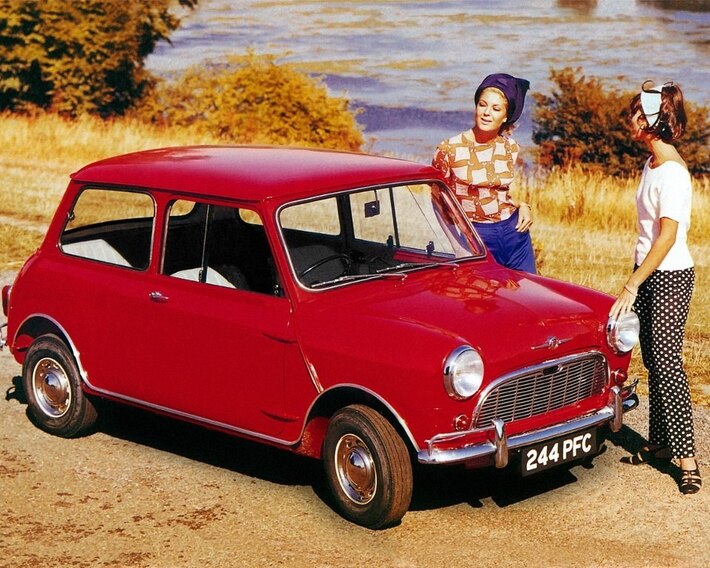
The company's most historically significant achievement came in 1922 with the launch of the Austin Seven — a small, affordable car with four cylinders, four seats, and a price point that brought motoring within reach of families who had previously relied on motorcycles or public transport. The Seven became the car that effectively democratised British motoring; licensing agreements with BMW (Dixi), Rosengart in France, and Bantam in America spread its influence internationally. When Alec Issigonis designed the Mini in 1959, he was consciously building on the Seven's legacy of providing maximum utility from minimum dimensions.
Austin merged with Morris to form the British Motor Corporation (BMC) in 1952, and was subsequently absorbed into British Leyland in 1968 — a corporate structure that ultimately proved unable to compete with European and Japanese rivals in the globalised market of the 1970s and 1980s. The Austin brand name was discontinued in 1987 as the Rover Group rationalised its portfolio, though the Mini nameplate was revived by BMW in 2001 and continues today as a global luxury small car brand.
Brand Milestones
Significant Models
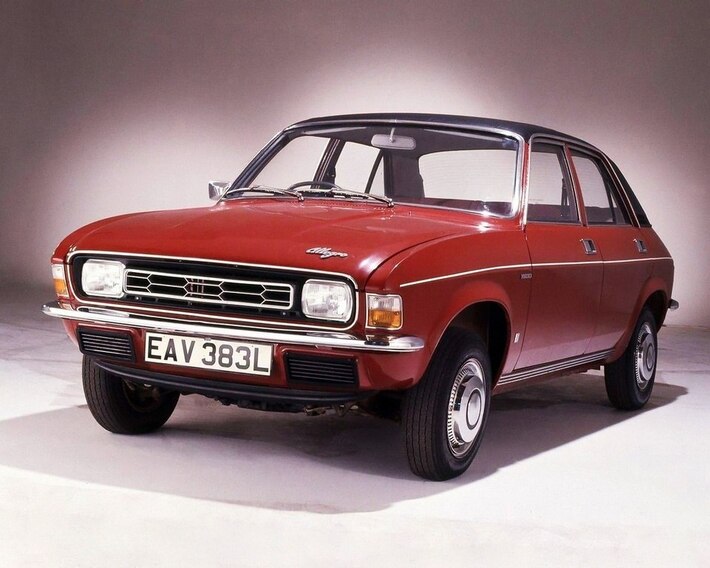
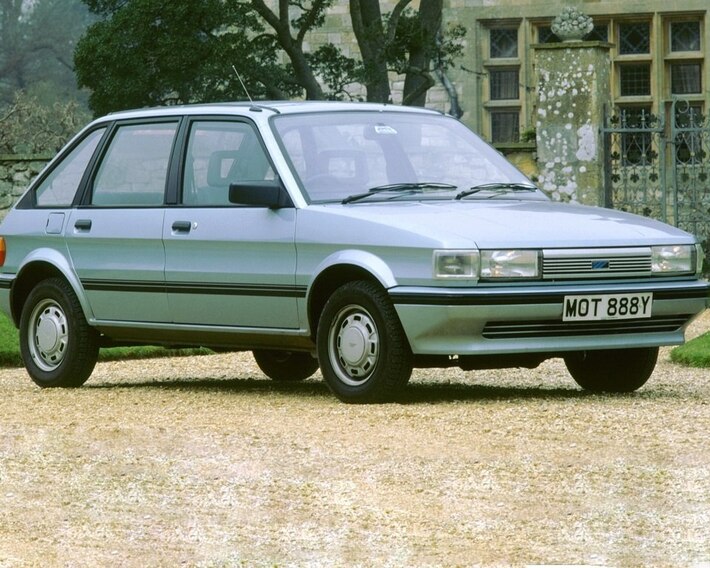
Austin's range spanned from the humblest economy cars to sophisticated family saloons, with the Mini standing as the singular achievement that elevated a utility product to the status of cultural icon.
Austin Through the Decades
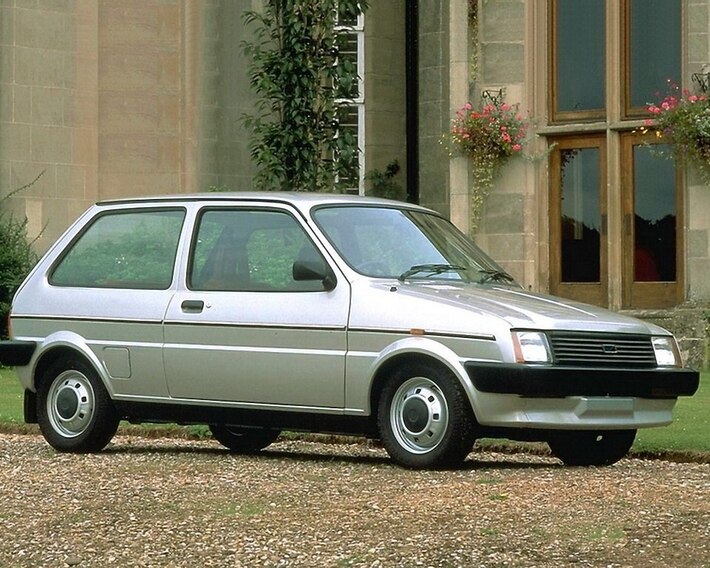
Eight decades of British motoring — from the Seven that started it all to the Metro that ended an era, Austin's story is inseparable from the story of British automotive culture.
Engineering Legacy
Austin's most enduring technical contribution was the transverse-engine, front-wheel-drive layout pioneered in the Mini — a packaging solution so elegant and effective that it became the universal architecture for small cars globally. Alec Issigonis's insight was that mounting the engine sideways across the car, with the gearbox below it in the sump, freed up an extraordinary proportion of the car's length for passenger space — giving the 3.05-metre Mini interior accommodation comparable to cars a metre longer.
The BMC A-series and B-series engines, produced across Austin, Morris, MG, and Triumph applications, became defining components of the British motor industry — their reliability, tunability, and long production life supporting everything from economy runabouts to competition-winning sports cars. The A-series remained in production from 1951 until 2000, making it one of the longest-running engine families in automotive history.
- Transverse front-wheel-drive layout — the Mini's revolutionary packaging solution, placing the engine sideways across the front of the car with the gearbox in the sump, maximised interior space and established the template for virtually every small car built since 1959
- Rubber cone suspension — Issigonis's unconventional suspension system for the Mini used compressed rubber cones instead of conventional springs, providing a compact, maintenance-free solution that proved unexpectedly well-suited to competition use
- BMC A-series engine — a family of small-displacement four-cylinder engines produced from 1951 to 2000, powering Austin, Morris, MG, and Triumph models through nearly five decades of continuous development
- Austin Seven architecture — the 1922 Seven's combination of a proper four-cylinder engine, four-wheel brakes, and full body construction at an affordable price established the minimum specification that defined the modern small car
- BMC corporate platform sharing — the merging of Austin and Morris engineering resources under BMC enabled economies of scale that allowed both brands to offer technically sophisticated cars at competitive prices, funding the development programmes that produced the Mini and the 1100
Austin in Azerbaijan
Austin vehicles, particularly classic examples such as the Mini, the Seven, and the Austin-Healey sports cars, are occasionally found in the Azerbaijani collector market — typically imports from Western Europe where classic British cars have been preserved and restored. The Mini, in particular, has a global collector following that extends to Azerbaijan, where examples appear at classic car events.
For Azerbaijani buyers interested in British automotive heritage, Austin represents one of the most historically important British manufacturers — the company that produced the car credited with democratising British motoring and the design that defined the modern small car. BakuWheels connects enthusiasts with specialist classic car importers who can source Austin models from European markets.
Why Austin?
- The Mini's cultural legacy: The Austin Mini is one of a handful of automobiles that transcended the category of transportation to become a cultural symbol — its associations with 1960s British culture, the film The Italian Job, and the racing career of John Cooper make it one of the most recognised and beloved cars ever produced.
- Democratic motoring heritage: The Austin Seven's role in bringing affordable motoring to British families in the 1920s places Austin in the same company as Ford (with the Model T) as a manufacturer that fundamentally changed the relationship between society and the private automobile.
- Technical innovation: The Mini's transverse front-wheel-drive layout was so technically superior that it became the universal architecture for small cars — a contribution to automotive engineering that continues to define the entire small car category sixty-five years after its introduction.
- Sports car heritage: The Austin-Healey partnership produced some of the most beloved British sports cars of the 1950s and 1960s — the Big Healey 3000, in particular, combines genuine performance credentials with the visual romanticism of the classic open roadster.
- Collector value: Classic Austins — from the Seven to the original Mini — have appreciated steadily as British automotive heritage becomes more broadly appreciated internationally, making well-preserved examples increasingly desirable as investment-grade collectibles.
BakuWheels uses cookies to improve your experience, analyse site traffic, and personalise content. By clicking Accept All, you consent to our use of cookies. Learn more in our Cookie Policy.