

Hummer
Born from the military HMMWV that won the Gulf War, the Hummer became a symbol of maximum American excess in the 1990s — and then was reborn in 2022 as a 1,000 hp electric supertruck, proving that the most extreme off-road icon can also be one of the most advanced electric vehicles on the planet.
Origins & Heritage
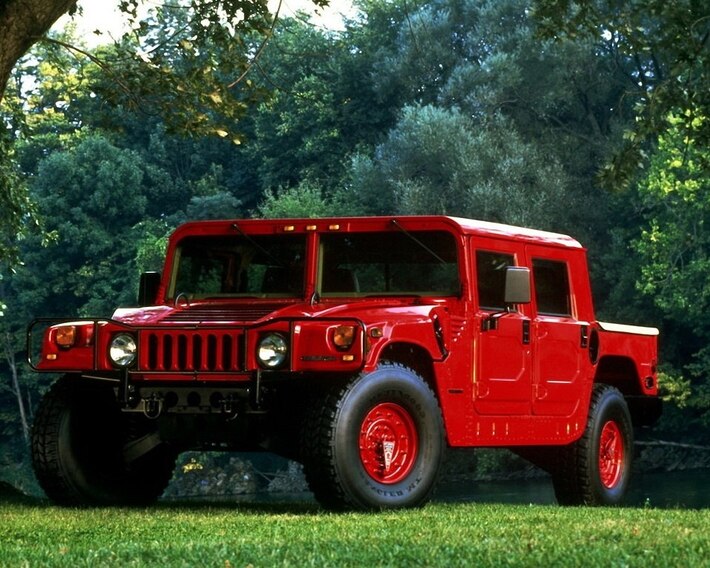
The Hummer's origins lie in a US Army contract. AM General Corporation developed the High Mobility Multipurpose Wheeled Vehicle (HMMWV, pronounced 'Humvee') in 1979 to replace the ageing Jeep in military service. The HMMWV entered US Army service in 1984 — a 2.3-metre-wide, diesel-powered, four-wheel-drive vehicle capable of fording 1.5 metres of water, climbing 60% grades, and traversing terrain that would defeat virtually any other wheeled vehicle.
The HMMWV's public profile exploded during the 1991 Gulf War, when television coverage showed columns of Humvees crossing the Saudi Arabian desert — and when celebrity Arnold Schwarzenegger pressed AM General to produce a civilian version. The civilian Hummer H1, launched in 1992, was essentially the military HMMWV with added comfort — still 2.3 metres wide, still running on diesel power, still capable of driving over almost anything in its path. At $100,000, it was the most expensive production 4x4 in American history and immediately became the status symbol of choice for extreme wealth expression.
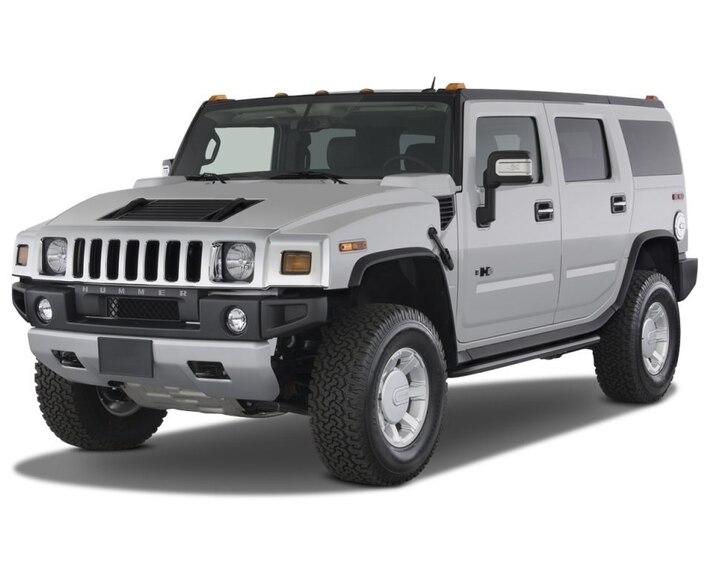
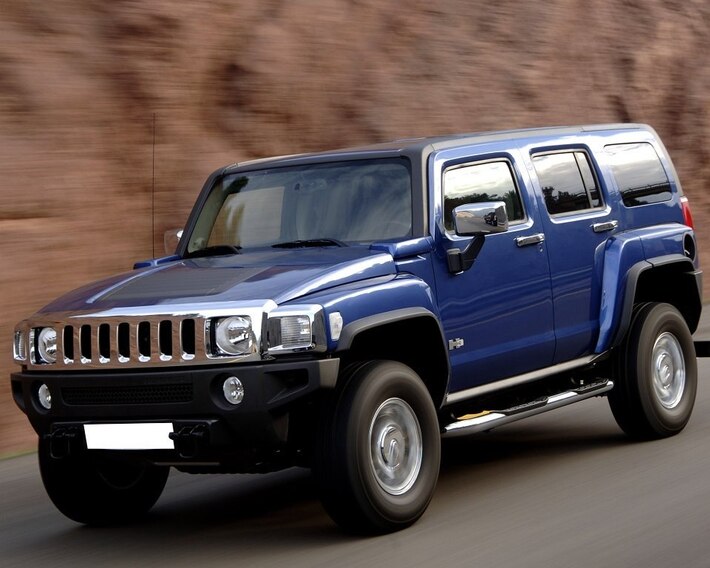
General Motors acquired the Hummer brand name in 1999 and introduced the more accessible H2 and H3 models — still enormous by any standard, but more closely related to the Chevy Suburban and Colorado truck platforms than to military hardware. The brand was discontinued in 2010 as GM emerged from bankruptcy. Its resurrection in 2022 as an all-electric GMC sub-brand — the Hummer EV — was one of the automotive world's most spectacular reinventions.
Key Milestones
Model Lineup
The current Hummer lineup consists exclusively of electric vehicles under the GMC Hummer EV sub-brand. The EV Pickup and EV SUV share the same Ultium platform, triple-motor drivetrain architecture, and extraordinary capability credentials — differing primarily in body configuration.
Iconic Models in Pictures
From the desert-crossing H1 to the 1,000 hp Hummer EV — few automotive stories encapsulate the range of American ambition more dramatically than the Hummer's journey from war machine to electric supertruck.
Hummer EV Technology
The GMC Hummer EV is built on GM's Ultium platform — the next-generation battery and drivetrain architecture underpinning the brand's entire electric vehicle strategy. The Hummer EV Edition 1 uses three Ultium drive motors producing a combined 1,000 hp and 11,500 lb-ft of wheel torque. The 212.7 kWh Ultium battery pack is one of the largest in any production vehicle.
CrabWalk — the Hummer EV's most distinctive capability — uses four-wheel steering to turn all four wheels in the same direction simultaneously, allowing the vehicle to move diagonally. Extract Mode uses the air suspension to raise the vehicle by up to 6 inches — valuable when departing extreme terrain or crossing obstacles that require maximum ground clearance.
- 1,000 hp tri-motor Ultium — the most powerful production off-road vehicle ever sold by an American manufacturer
- CrabWalk four-wheel steering — diagonal movement capability unique in any production vehicle
- Extract Mode — 6-inch air suspension raise for maximum ground clearance on demand
- WTF launch control — Watts to Freedom mode drops to lowest suspension setting and maximises all three motors simultaneously
- Infinity Roof — removable glass panel sections exposing an open-air driving experience in an off-road-capable body
Hummer in Azerbaijan
The original Hummer H1 and H2 established a devoted following in Azerbaijan, where the brand's combination of extreme size, military associations, and American prestige made them among the most immediately recognisable vehicles on Baku's streets. The H2 in particular became synonymous with a certain era of conspicuous luxury consumption in the Azerbaijani capital.
The Hummer EV's relaunch has generated significant interest among Azerbaijan's premium car community, particularly for its extraordinary performance figures and unique CrabWalk technology. The combination of the iconic Hummer visual identity with zero-emission credentials makes it relevant to a new generation of Azerbaijani buyers who want both maximum impact and responsible technology.
Why Choose Hummer?
- Maximum capability: No production vehicle combines the Hummer EV's off-road capability with electric performance — 1,000 hp and CrabWalk in the same package.
- Iconic design: The Hummer silhouette is among the most instantly recognisable in automotive history — commanding road presence guaranteed in any country.
- Electric innovation: The Hummer EV demonstrates that electrification enhances rather than compromises off-road capability — instant torque delivery on loose terrain is superior to combustion.
- Ultium technology: GM's proprietary battery platform represents billions in investment and provides the foundation for the broadest and most capable EV lineup in America.
- Collector status: Classic H1 and H2 models are appreciating in value as discontinued vehicles from a unique cultural moment — genuine future collectibles.
- Military heritage: The direct connection to the most capable military light vehicle in history provides an authenticity that purpose-built lifestyle 4x4s cannot replicate.
BakuWheels uses cookies to improve your experience, analyse site traffic, and personalise content. By clicking Accept All, you consent to our use of cookies. Learn more in our Cookie Policy.