

Westfield
Westfield Sportscars is a British manufacturer of open-wheel roadsters and kit cars founded in 1982 in the West Midlands, drawing direct inspiration from the iconic Lotus Seven — a design philosophy that places raw driving experience, minimal weight, and maximum driver engagement above all other considerations. Westfield produces both fully built and self-build kit versions of its vehicles, offering enthusiasts the opportunity to construct their own road-legal sports car. The company competes in the same niche as Caterham Cars, and its vehicles are popular in club motorsport and track day driving throughout the UK and Europe.
Origins & Heritage
Westfield Sportscars was founded in 1982 by Chris Smith in Kingswinford, West Midlands, with the explicit aim of producing an affordable alternative to the Lotus Seven and its successor, the Caterham Seven. The Lotus Seven had established a devoted following since its introduction in 1957 — a minimalist, open-wheel, open-top sports car of extreme lightness and corresponding performance — but the original Lotus design had passed through several ownership changes, with Caterham Cars holding the current production rights. Westfield offered an alternative interpretation of the same core concept.
Westfield's vehicles share the fundamental Seven philosophy: a tubular steel spaceframe chassis clothed in lightweight composite or aluminium bodywork, a small-capacity engine providing substantial power-to-weight ratio, and a driving experience of complete directness and immediacy with no electronic mediation between driver input and vehicle response. The cars are designed to be built by their owners from kit form — a tradition that reduces cost while fostering deep mechanical understanding and a strong community of owners who maintain, modify, and race their vehicles.
Over four decades, Westfield has developed a full range of roadster variants using engines from Ford, Rover, Suzuki, and other mainstream manufacturers — providing buyers with a choice of performance levels from accessible entry-level to seriously quick track weapons. The company has also developed electric variants, adapting the lightweight roadster concept to zero-emission drivetrains. Westfield vehicles are regularly seen in British club motorsport series, track days, and enthusiast gatherings throughout Europe.
Key Milestones
Westfield in Pictures
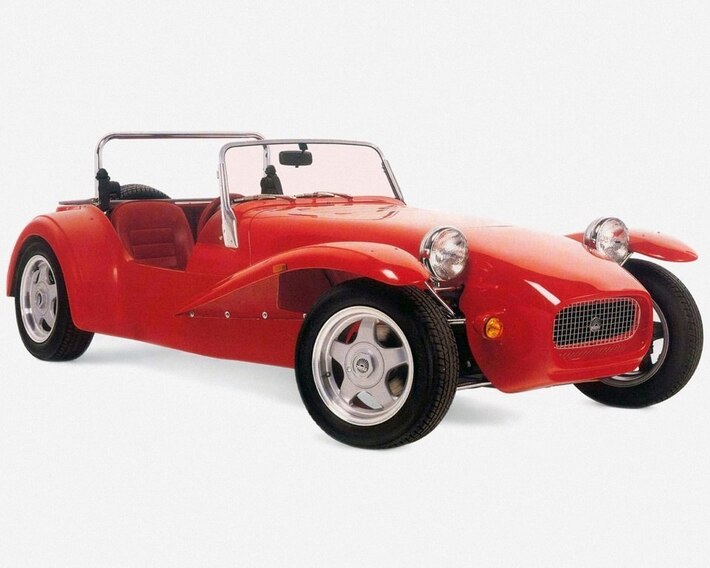
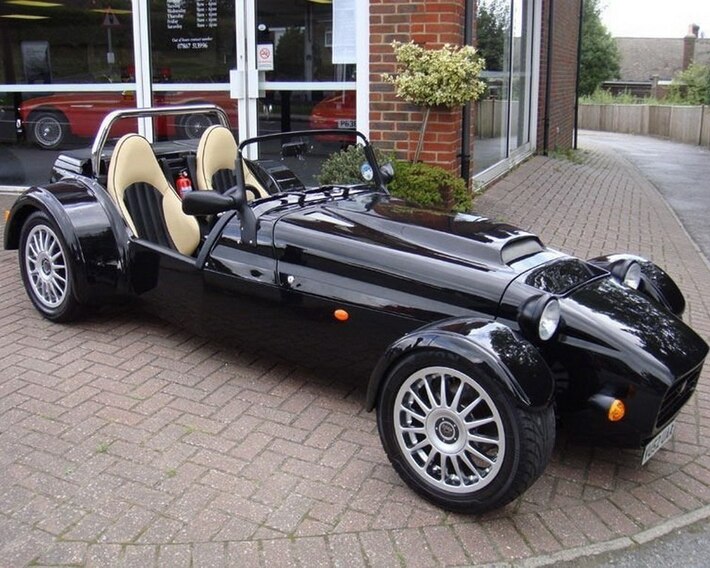
Westfield's minimalist aesthetic — exposed wheels, low body sides, a tiny windscreen, and a long bonnet — is unchanged from the Lotus Seven design philosophy that inspired the company's founding.
Model Range
Westfield's range centres on open roadsters in varying states of specification, from accessible entry-level builds to serious track-focused variants, all sharing the fundamental Seven architecture and driving philosophy.
Engineering Philosophy
Westfield vehicles embody a specific engineering philosophy that prioritises the elimination of weight over the addition of power — the opposite approach from mainstream automotive development. A Westfield weighs between 450 and 600 kg depending on specification, meaning that even modest engine outputs produce extraordinary performance relative to conventional cars. The tubular steel spaceframe is a deliberately simple and repairable structure, and the suspension geometry is optimised for maximum driver feedback and response rather than comfort or isolation.
- Tubular steel spaceframe chassis — a lightweight, stiff, repairable structure that forms the backbone of the Westfield design, providing the handling precision that minimal body mass and direct steering inputs deliver
- Wide engine compatibility — Westfield's chassis is engineered to accept Ford Zetec, Ford Duratec, Rover K-series, and Suzuki Hayabusa motorcycle engines among others, giving builders a choice of performance levels from economical to extreme
- Pushrod or double wishbone front suspension with inboard spring-damper units — providing progressive, communicative handling responses with minimal unsprung mass for the fastest possible driver feedback
- Power-to-weight ratio engineering — even the entry-level Ford Zetec-engined SEi produces approximately 200 hp/tonne in a completed build, while the Hayabusa-engined variants exceed 500 hp/tonne — territory occupied only by purpose-built race cars among road vehicles
- Self-build kit design — Westfield's vehicles are engineered for assembly by non-specialist builders using hand tools, with comprehensive build manuals and a factory support programme ensuring that a mechanically capable owner can complete their car to road-legal standard
Westfield in Azerbaijan
Westfield Sportscars are extremely rare in Azerbaijan — the brand's primary market is the United Kingdom, with secondary presence in Germany, the Netherlands, and other European countries through which kit building and track day culture is well-established. Any Westfield in Azerbaijan would be an individually imported vehicle, brought by an enthusiast with specific knowledge of the brand and the mechanical skills to maintain it. The concept of a self-built kit car roadster occupies a very specialist niche in any market, and Azerbaijan's automotive culture currently centres on conventional passenger vehicles.
For Azerbaijani driving enthusiasts interested in track day and club motorsport experiences, a Westfield represents an intellectually compelling option — the combination of mechanical engagement, driving purity, and extreme performance per unit cost has no equivalent in the conventional market. Import from the UK or Germany is the most practical route, and buyers should ensure they have access to a mechanic familiar with the Ford or Rover engines typically used, as these are the basis of most Westfield builds encountered in export markets.
Why a Westfield?
- The purest driving experience available: Nothing on four wheels delivers more direct, unmediated driver engagement than a lightweight roadster — the Westfield's sub-600 kg mass, wide track, and immediate steering make it more communicative than any conventional sports car at any price.
- Extraordinary performance per unit cost: A Westfield Sport Turbo can out-accelerate cars costing five to ten times more — 0–100 km/h times below 4 seconds are achievable from a vehicle that costs a fraction of the supercars it humiliates on a track.
- Self-build option for deep mechanical engagement: Building your own Westfield from kit form provides a mechanical education unlike any other — a completed self-build car is both a performance vehicle and a deeply personal project with lasting satisfaction.
- Active club motorsport community: Westfield owners across Europe participate in a thriving club motorsport scene with dedicated race series, track day events, and technical support communities — an ownership experience that extends far beyond simply driving the car.
- Minimal running costs: Despite their performance potential, Westfield vehicles use conventional production car engines and drivetrain components that are inexpensive to service and repair, making the running cost per performance unit arguably the lowest of any sports car category.
BakuWheels uses cookies to improve your experience, analyse site traffic, and personalise content. By clicking Accept All, you consent to our use of cookies. Learn more in our Cookie Policy.