

AMC
The underdog that dared to challenge Detroit's Big Three — innovating fuel efficiency and all-wheel drive before they were fashionable.
The Fourth Giant of American Motoring
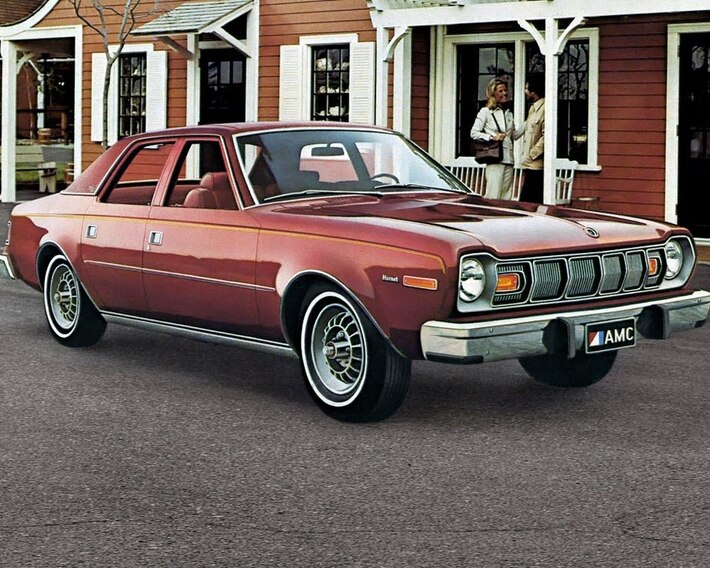
American Motors Corporation was formed in 1954 through the merger of Nash-Kelvinator Corporation and Hudson Motor Car Company — two independent American automakers that recognized their only path to survival against General Motors, Ford, and Chrysler was to combine resources. The resulting company, headquartered in Kenosha, Wisconsin, became the fourth-largest American automobile manufacturer and operated for thirty-three years before being acquired by Chrysler in 1987.
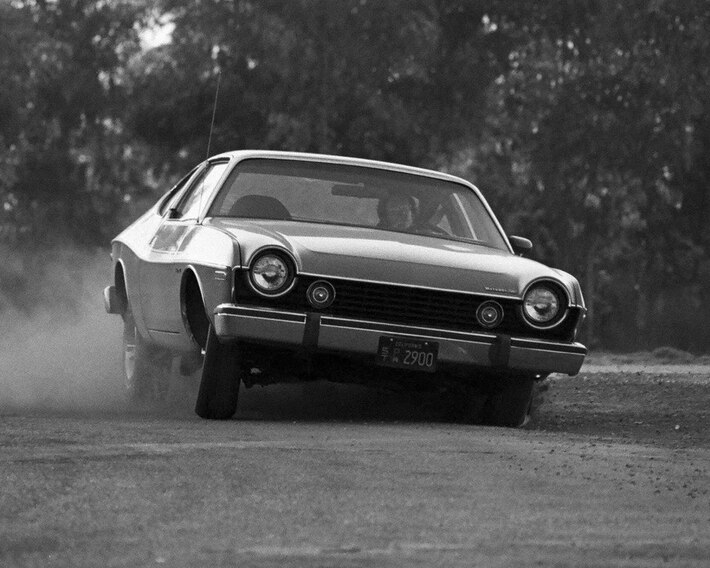
AMC's position as the smallest of the major American automakers forced an engineering culture that valued efficiency and innovation over brute scale. While the Big Three could absorb the costs of maintaining large model ranges and frequent restylings, AMC had to be more selective — a constraint that often produced genuinely differentiated products. The company was early to compact cars, early to fuel efficiency, and a surprising pioneer of consumer all-wheel-drive technology.
The AMC story is one of repeated near-death experiences and unlikely recoveries. Through the 1960s and 1970s, the company regularly operated at the margins of profitability, yet managed to produce vehicles that became culturally significant — from the Javelin muscle car that competed in Trans-Am racing to the AMC Eagle, which effectively invented the modern crossover SUV category a decade before that segment existed.
Key Milestones
Landmark Models
AMC's model range combined mainstream family cars with genuinely innovative products that regularly challenged prevailing wisdom about what American buyers wanted.
AMC Through the Decades
From the lean Rambler of the 1950s to the pioneering Eagle crossover, AMC produced vehicles that consistently challenged convention and occasionally changed the automotive landscape.
Engineering Legacy
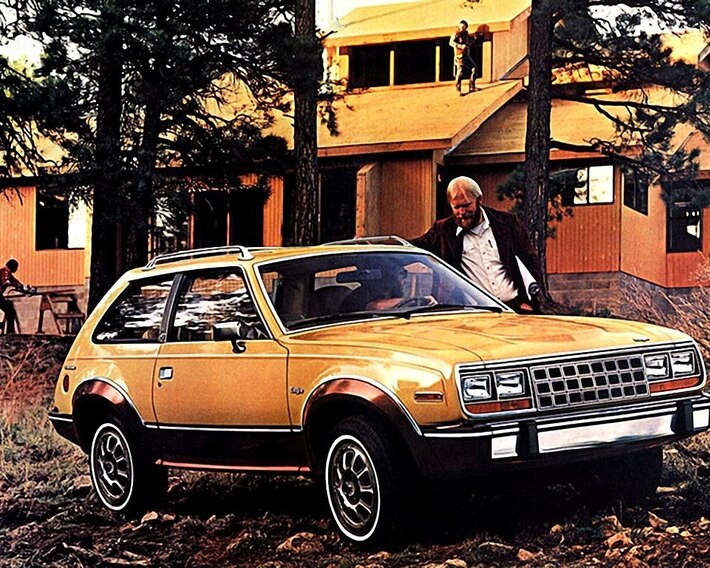
AMC's most enduring engineering contribution is the concept that eventually became the crossover SUV. The AMC Eagle, introduced in 1979, combined the body structure of a conventional passenger car with permanent four-wheel drive and raised suspension — creating a vehicle category that the rest of the automotive industry spent the following decade dismissing as a niche product before recognising its potential in the late 1990s.
Beyond the Eagle, AMC's engineering legacy includes pioneering work in fuel efficiency during the 1970s energy crisis, when the company's compact-car focus suddenly became a competitive advantage. AMC's partnership with Renault also introduced European small-car engineering discipline to the American market at a time when domestic manufacturers were still struggling to build convincing economy cars.
- Crossover SUV invention — the AMC Eagle of 1979 created the four-wheel-drive passenger car crossover category more than a decade before the segment became mainstream, demonstrating vision that the rest of the industry was slow to recognise
- Early adoption of compact cars — the Rambler American established that American buyers would choose compact, efficient cars, a lesson that Detroit took years to absorb and that became critical during the 1970s fuel crisis
- Trans-Am racing success — the Javelin's competition programme provided genuine performance credibility and engineering learnings that benefited AMC's road cars throughout the pony car era
- International partnership model — the Renault alliance was one of the first genuine product-development partnerships between an American and European automaker, pioneering a collaboration model now standard in the global industry
- Jeep heritage preservation — AMC's acquisition of Kaiser Jeep in 1970 and the subsequent development of the Jeep brand ensured the survival of an iconic American automotive name that continues today under Stellantis
AMC in Azerbaijan
AMC vehicles are collector items in Azerbaijan, as in most markets outside North America. The brand's thirty-year production run (1954–1987) means that surviving examples are now over thirty-five years old, with the most desirable models — the Javelin AMX, AMC AMX, and early Eagle 4x4s — commanding premiums among international classic car collectors.
For Azerbaijani enthusiasts of American automotive history, AMC represents the most accessible entry point into the classic American muscle and pony car market, given that early Javelin and AMX examples command lower prices than comparable Ford Mustangs and Chevrolet Camaros from the same era. BakuWheels can connect classic car enthusiasts with specialist importers who source American classic vehicles for the Azerbaijani collector market.
Why AMC Matters
- <strong>Pioneering engineering:</strong> AMC invented the crossover SUV category with the Eagle in 1979 — a contribution to automotive history that the industry spent fifteen years dismissing before proving AMC right.
- <strong>Collector accessibility:</strong> AMC muscle cars and pony cars are generally available at lower collector prices than comparable Ford Mustangs and Chevrolet Camaros, offering genuine 1960s–1970s American performance heritage at accessible entry points.
- <strong>Racing heritage:</strong> The Javelin's Trans-Am success gives AMC genuine motorsport credibility — not manufactured marketing, but results achieved against Ford and Chevrolet factory-supported programmes.
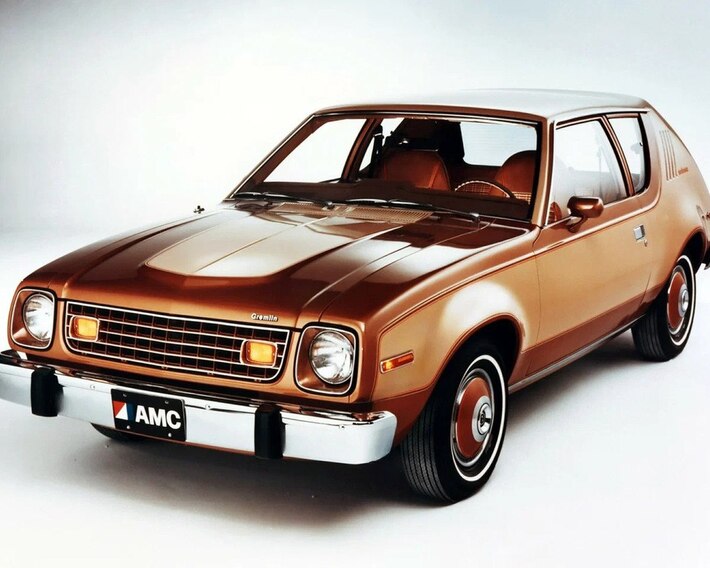
- <strong>Cultural significance:</strong> From the Gremlin's polarising design to the Eagle's prescient crossover concept, AMC consistently produced vehicles that challenged convention and generated debate — a cultural footprint disproportionate to its market share.
- <strong>Jeep lineage:</strong> AMC's most commercially successful decision was acquiring Kaiser Jeep — providing the Jeep brand's direct ancestor and ensuring that one of AMC's core products continues in production today.
BakuWheels uses cookies to improve your experience, analyse site traffic, and personalise content. By clicking Accept All, you consent to our use of cookies. Learn more in our Cookie Policy.