
BAW
Beijing's Off-Road Pioneer: BAW Building Capable 4×4 Vehicles Since the Founding of Modern China.
Origins & Heritage
BAW — Beijing Auto Works — traces its origins to 1953, when the newly established People's Republic of China commissioned the first Beijing automotive factory to produce utility vehicles for the military and government. The factory's inaugural product was a reverse-engineered version of the Soviet GAZ-69 off-road vehicle, reflecting the close technological relationship between China and the Soviet Union in the early years of the People's Republic. This foundation in military-grade off-road vehicle production established the engineering philosophy that continues to define BAW's products today: robust four-wheel-drive vehicles built for capability over comfort.
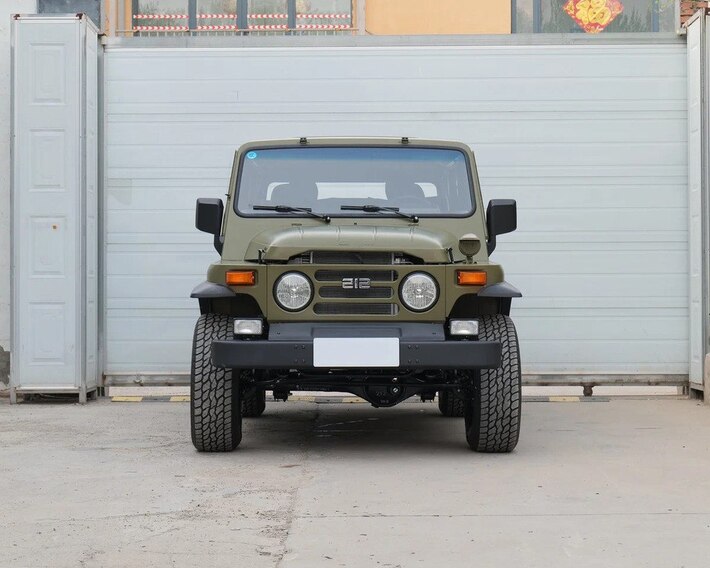
The BJ212, launched in 1965, became the defining product of Beijing's automotive industry for decades. This open-top military jeep, directly inspired by the Soviet GAZ-69 and indirectly by the American Willys Jeep, became the standard utility vehicle of the Chinese People's Liberation Army and government agencies throughout the Cultural Revolution and Reform Era. Its mechanical simplicity, genuine off-road capability, and the ability to be maintained with basic tools anywhere in China's vast territory made it an institution — the Chinese equivalent of the Land Rover Defender or Toyota Land Cruiser in terms of cultural significance.
As China's automotive industry consolidated and modernised in the 2000s and 2010s, BAW's off-road vehicle heritage became the foundation for a modernised product range under the BAIC Group corporate structure. The BJ40, launched as a concept in 2010 and entering production in 2013, reinterpreted the BJ212's off-road credentials with modern turbocharged engines, optional automatic transmissions, and contemporary SUV styling — retaining the ladder-frame construction and mechanical four-wheel-drive systems that define genuine off-road capability while adding the features that modern buyers demand.
Key Milestones
Iconic Models in Pictures
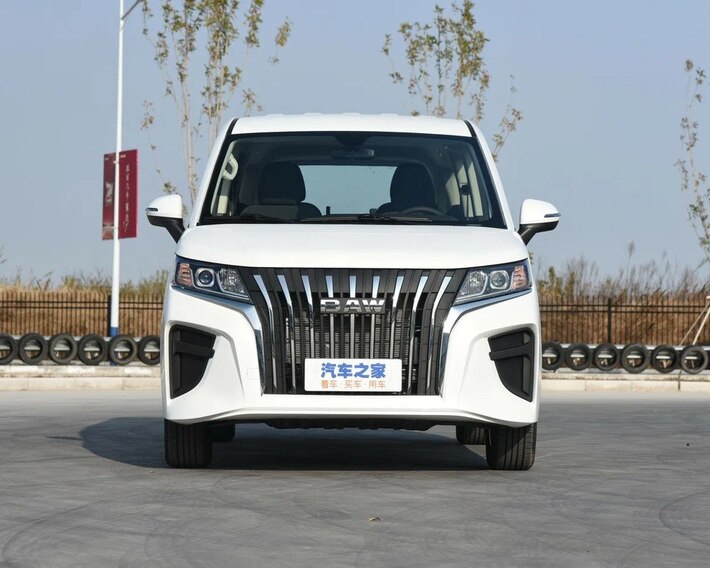
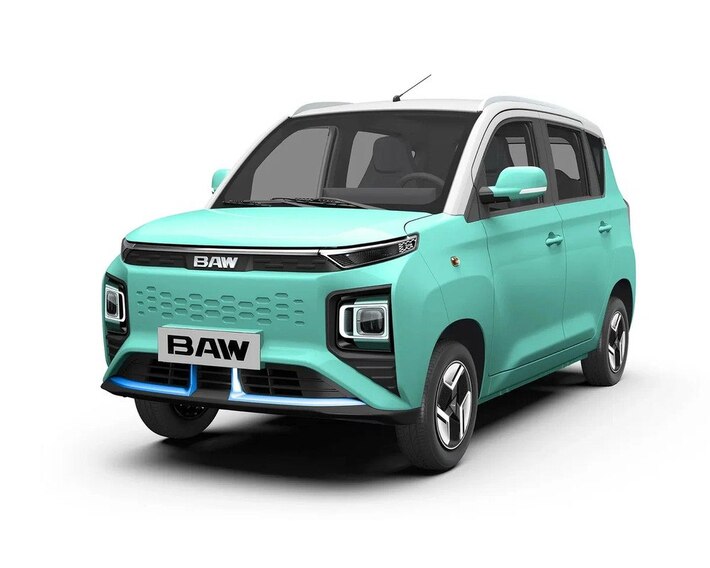
BAW's heritage spans from the revolutionary-era BJ212 military jeep to the modern BJ40 off-road SUV — seven decades of Chinese off-road vehicle engineering, from Soviet-inspired utility to contemporary adventure 4×4.

Model Lineup
BAW's product range centres on genuine off-road capability delivered through ladder-frame construction, mechanical four-wheel drive, and robust diesel or petrol powertrains — vehicles built for buyers who need the reassurance of proven off-road credentials rather than the cosmetic SUV styling of car-derived crossovers.
Engineering & Technology
BAW's engineering identity is defined by ladder-frame construction and mechanical four-wheel-drive — a deliberate choice to retain the engineering characteristics that provide genuine off-road capability, at the cost of the refined on-road dynamics and fuel efficiency advantages offered by unibody car-derived crossovers. This philosophy, inherited from six decades of military and utility vehicle production, produces vehicles that behave predictably under the conditions that defeat conventional crossovers: deep mud, loose surfaces, steep gradients, and river crossings where departure, approach, and breakover angles are performance metrics.
- Ladder-frame construction — BAW's off-road models use body-on-frame architecture with a separate steel ladder chassis; this construction provides superior torsional rigidity for off-road articulation, resistance to frame twist under diagonal loading, and the structural reinforcement capability that allows body damage to be repaired without compromising chassis integrity
- Mechanical four-wheel-drive with low range — BAW's 4×4 systems provide a dedicated low-range transfer case with mechanical engagement, delivering the maximum torque multiplication needed for severe off-road terrain; this mechanical system provides more predictable and controllable traction in extreme conditions than electronically managed torque-vectoring systems in car-derived crossovers
- Military heritage testing protocols — BAW's origins in Chinese military vehicle production mean that durability and reliability testing protocols were developed for military rather than consumer standards; production vehicles benefit from validation processes designed for the most demanding institutional use cases
- Turbocharged petrol engine range — modern BAW BJ40 models use turbocharged direct-injection petrol engines providing the performance and efficiency combination demanded by contemporary buyers; the turbocharged architecture provides strong torque at low engine speeds, beneficial for low-speed off-road traction management
- BAIC Group technology integration — BAW benefits from its membership in the BAIC Group, one of China's largest automotive conglomerates, which provides access to electronic control systems, connected vehicle technology, and ADAS features developed across the group's broader passenger car and commercial vehicle programmes
BAW in Azerbaijan
BAW vehicles have reached Azerbaijan through two distinct channels. The historic BJ212 arrived during Soviet times as a standard military and government utility vehicle, and surviving examples continue to serve in agricultural and utility applications where their mechanical simplicity provides practical advantages. The modern BJ40 and other BAW products have entered the Azerbaijani market through commercial import channels as part of the broader adoption of Chinese vehicles that has accelerated across the CIS market in recent years.
For Azerbaijani buyers considering a BAW vehicle, the mechanical robustness of the ladder-frame platform and the simplicity of the powertrain systems provide genuine ownership advantages in a market where specialist Chinese brand service infrastructure is still developing. The BJ40's conventional mechanical four-wheel-drive system can be serviced by experienced mechanics familiar with similar systems on other off-road platforms. Parts availability through China-linked automotive import networks has improved significantly as the Chinese vehicle presence in Azerbaijan has grown, though BAW does not maintain dedicated dealer or service infrastructure in the country.
Why Consider a BAW?
- Genuine off-road capability at competitive pricing: BAW's ladder-frame construction, mechanical four-wheel-drive with low range, and off-road-tuned suspension geometry provide authentic terrain capability that car-derived crossovers cannot match — at pricing that significantly undercuts equivalent capability from Jeep, Land Rover, or Toyota Land Cruiser.
- Seven decades of Chinese off-road heritage: BAW's military vehicle heritage provides an engineering foundation in durability and field-maintainability that is impossible to replicate in a new brand — the BJ40's mechanical systems reflect seven decades of experience building vehicles that must operate in the most demanding conditions without access to specialist service.
- Mechanically simple for field maintenance: BAW's retention of conventional mechanical four-wheel-drive, body-on-frame construction, and conservative powertrain specifications means that qualified mechanics across Azerbaijan can service and repair BAW vehicles without specialist Chinese brand tooling or diagnostic equipment.
- BJ212 historical significance: For enthusiasts of historical Chinese vehicles and Soviet-era machinery, the BJ212 represents a genuinely significant piece of Chinese automotive history — one of the world's longest-running automotive nameplates and an icon of modern Chinese history that connects ownership to a remarkable engineering and cultural legacy.
- BAIC Group backing and future development: BAW's membership in the BAIC Group, one of China's most important automotive conglomerates, provides the corporate resources for continued product development — the modernising BJ40 range and electrification development plans demonstrate that BAW's off-road capability tradition will continue to evolve rather than remain static.
BakuWheels uses cookies to improve your experience, analyse site traffic, and personalise content. By clicking Accept All, you consent to our use of cookies. Learn more in our Cookie Policy.