

Bedford
Bedford was Britain's most successful commercial vehicle brand for much of the twentieth century — a name that equipped the British Army in two World Wars, powered the nation's post-war economic recovery, and put reliable, affordable vans, trucks, and buses in the hands of British businesses for over half a century. From 1930 to 1987, Bedford's products were as much a fixture of British working life as the red telephone box or the double-decker bus.
Origins & Heritage
Bedford was established in 1930 as the commercial vehicle division of Vauxhall Motors — itself a subsidiary of General Motors, which had acquired Vauxhall in 1925. The name "Bedford" referred to the county town near Vauxhall's Luton headquarters, and the brand was created to compete directly with Ford's successful commercial vehicle range, which had established dominance in the British market through its American-influenced products.
From its first year, Bedford was a commercial success: the Bedford 30cwt truck launched in 1931 found immediate favour with British businesses for its competitive price, solid construction, and straightforward servicing requirements. By 1934, Bedford had become the best-selling commercial vehicle in Britain — a position it would hold, with occasional interruptions, for much of the following five decades. This success was built on a consistent philosophy: practical engineering, competitive pricing, and a product range that addressed every commercial vehicle need from light delivery van to heavyweight truck.
Bedford's most significant historical contribution came during the Second World War, when the company's Luton factories were converted to produce military vehicles of all types — trucks, ambulances, troop carriers, and specialised military vehicles — in enormous volumes. Bedford MW trucks became iconic symbols of the British wartime logistics effort, serving in every theatre of the conflict from the Western Desert to the Normandy beaches. This wartime production established Bedford's reputation for reliability under the most demanding conditions and created a generation of mechanics who understood Bedford vehicles intimately.
Key Milestones
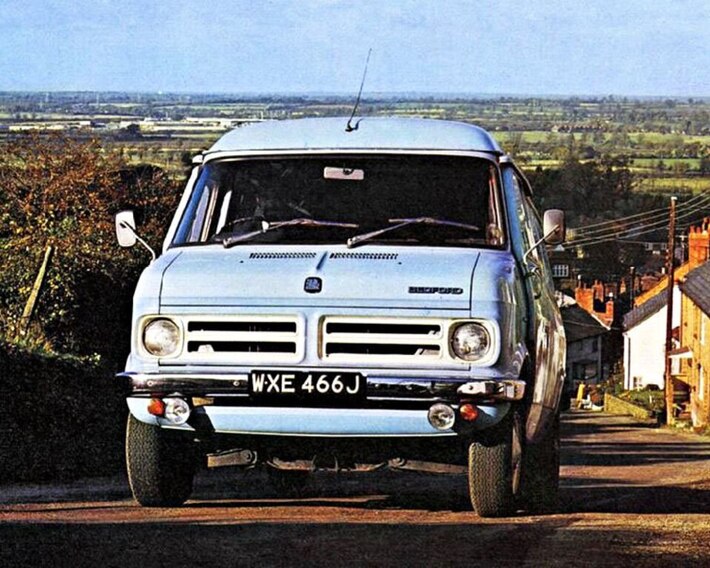
Bedford Vehicles in Pictures
From the wartime MW truck to the ubiquitous CF van that served a generation of British tradespeople, Bedford's commercial vehicles shaped British working life across six decades.
Model Lineup
Bedford's comprehensive commercial vehicle range spanned light delivery vans, medium-duty trucks, heavy-duty lorries, and specialist military vehicles — providing a complete solution for British commercial transport needs from the 1930s to the 1980s.
Engineering Legacy
Bedford's engineering philosophy was centred on practical reliability, ease of maintenance, and competitive manufacturing economics. Rather than pursuing technical innovation for its own sake, Bedford focused on developing proven solutions that British mechanics could service with standard tools, that British businesses could afford to operate, and that could be produced at competitive costs in the Luton facilities that GM invested in continuously throughout the post-war decades.
- Forward-control van architecture — the Bedford CA of 1952 pioneered the forward-control layout for British delivery vans, placing the driver over the front axle to maximise load space within a given overall vehicle length; a design approach that became the industry standard for light commercial vehicles
- Diesel powertrain adoption — Bedford was an early adopter of diesel engines for commercial vehicles in Britain, offering diesel options across its truck and van range from the 1950s onward, providing British operators with improved fuel economy and lower running costs that proved critical for commercial vehicle economics
- Military-grade durability — the wartime production requirements imposed on Bedford engineering produced a durability standard that carried through into civilian products; the same robustness that saw Bedford MWs survive the Western Desert campaign made post-war Bedford commercials exceptionally long-lived in civilian service
- GM global platform integration — Bedford's position within General Motors' global engineering organisation provided access to international technical development, allowing Bedford to offer contemporary engines, transmissions, and chassis technologies that independent British commercial vehicle manufacturers could not match at equivalent prices
Bedford in Azerbaijan
Bedford vehicles arrived in Azerbaijan through the Soviet era's complex trade channels and through vehicles imported via Iran and Turkey — countries where Bedford commercial vehicles had significant market presence. Bedford trucks and vans served agricultural and commercial roles across the Middle East and Central Asia, and their presence in the Caucasus, while limited, reflects the brand's genuinely global reach during its production years.
Today, Bedford vehicles in Azerbaijan are primarily of interest to collectors of classic British commercial vehicles and enthusiasts of mid-twentieth-century European automotive manufacturing. Well-preserved examples — particularly military variants and the iconic CF van — attract interest from collectors in Germany, Britain, and across Europe where the Bedford name carries strong nostalgic resonance. BakuWheels can connect interested buyers with specialist importers experienced in sourcing classic British commercial vehicles.
Why Bedford?
- British industrial heritage: Bedford was Britain's most important commercial vehicle brand for much of the 20th century — a name that equipped the British military in two World Wars and served British business through its most productive decades, making it a genuinely significant chapter in British industrial history.
- Military provenance: Bedford's wartime and Cold War military vehicle production gives surviving examples a historical significance that extends far beyond their automotive character — WWII Bedford MWs and Cold War-era military trucks are authentic pieces of British military heritage.
- Mechanical accessibility: Bedford commercial vehicles from the 1960s and 1970s were engineered for ease of maintenance using standard tools — a philosophy that makes them among the more practical classic commercial vehicles to restore and maintain, with many components still available through specialist suppliers.
- Collector market strength: The Bedford name enjoys strong recognition and affection among collectors of classic British vehicles, particularly in the UK where the CF van and TK truck are iconic presences at vintage commercial vehicle shows — ensuring that well-preserved examples retain and grow their value in a strong enthusiast market.
BakuWheels uses cookies to improve your experience, analyse site traffic, and personalise content. By clicking Accept All, you consent to our use of cookies. Learn more in our Cookie Policy.