
Volkswagen
"Das Auto" — The People's Car that conquered the world and is now leading Europe's electric revolution.
Origins & Heritage
Volkswagen's story begins in 1934, when Ferdinand Porsche — at the personal commission of Adolf Hitler — was tasked with designing an affordable car for the German people. The result was the KdF-Wagen (Kraft durch Freude, "Strength through Joy"), an aerodynamic rear-engined prototype that would eventually evolve into one of the most recognisable automobiles ever built. The factory at Wolfsburg was constructed in 1938, though wartime priorities meant it produced military vehicles rather than the promised people's car.
After Germany's defeat in 1945, the factory and brand were placed under British military stewardship. Major Ivan Hirst of the Royal Electrical and Mechanical Engineers famously restarted production, keeping thousands of workers employed and the plant from being dismantled. In 1948, German industrialist Heinz Nordhoff took over management and transformed Volkswagen into a global export powerhouse. The Beetle — as the world came to call the KdF-Wagen — became a cultural icon: over 21 million were built before production ended in Mexico in 2003.
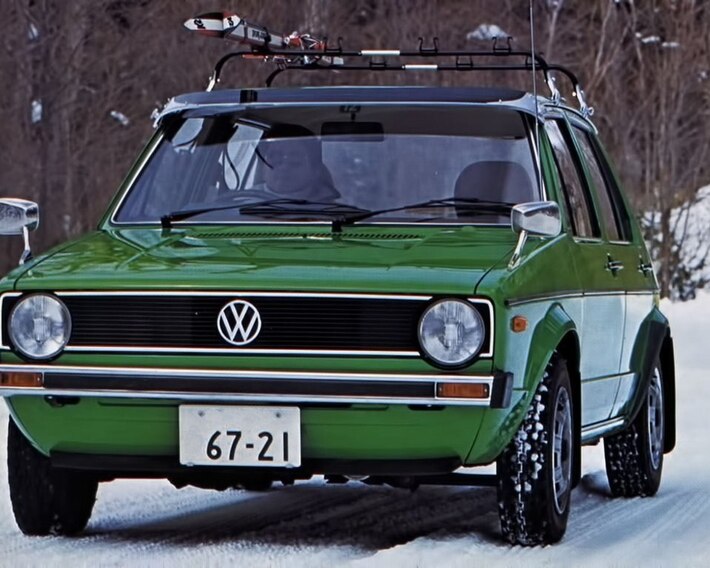
In 1960s America, the Beetle transcended its origins to become a symbol of the counterculture and hippie movement. But by the 1970s, the air-cooled rear-engine formula was reaching its limits. In 1974, Volkswagen launched the Golf — a water-cooled front-wheel-drive hatchback designed by Giorgetto Giugiaro — which not only saved the company but redefined the entire class of compact cars. Two years later, the Golf GTI debuted at the Frankfurt Motor Show — the original hot hatch, combining everyday practicality with genuine performance at an accessible price point.
From the 1990s onwards, Volkswagen Group embarked on an aggressive acquisition strategy, bringing Audi, SEAT, Škoda, Bentley, Lamborghini, Bugatti, and eventually Porsche under one corporate umbrella. The 2015 Dieselgate emissions scandal was a profound setback — VW admitted to manipulating diesel engine tests in 11 million vehicles worldwide, resulting in billions in fines. The crisis, however, accelerated a dramatic pivot: Volkswagen committed to becoming a full-spectrum electric vehicle manufacturer, launching the MEB platform and the ID. family of EVs.
Key Milestones
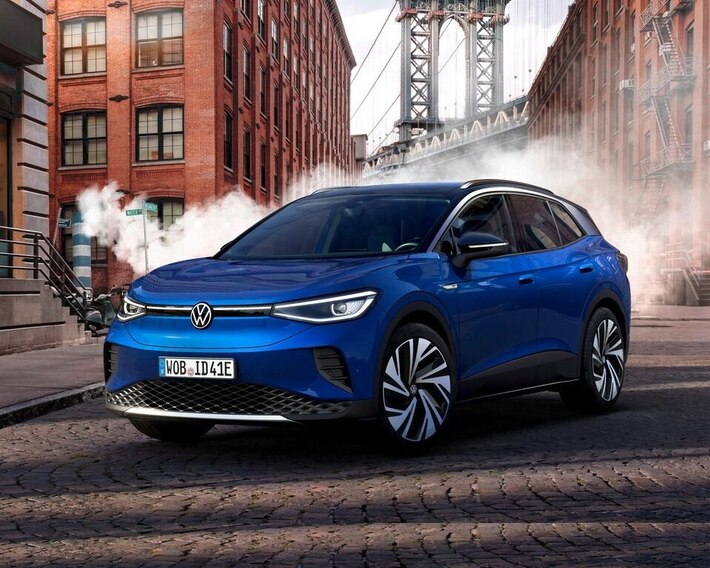
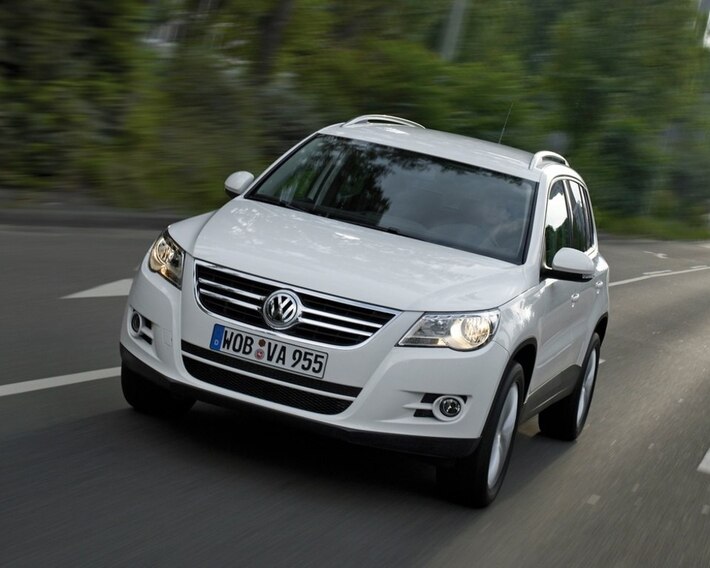
Iconic Models in Pictures
From the enduring Golf to the pioneering ID.4, Volkswagen's lineup spans hatchbacks, SUVs, and electric pioneers that have shaped motoring for generations.
Current Model Lineup
Volkswagen's contemporary range covers every major segment from the subcompact Polo to the flagship Touareg SUV, with a growing electric ID. family sitting at the heart of the brand's future.
All Volkswagen Model Pages (Batches 1 & 2):
Innovation & Technology
Volkswagen's engineering identity has always been rooted in democratising technology — taking innovations pioneered on premium vehicles and making them available at scale. The MQB (Modularer Querbaukasten) modular transverse matrix platform underpins millions of vehicles across the Volkswagen Group, delivering enormous economies of scale while enabling rapid iteration of safety, infotainment, and powertrain components across brands and body styles.
The pivot to electrification has produced the MEB (Modularer E-Antriebs-Baukasten) electric platform, purpose-built for battery-electric vehicles and shared with the ID.3, ID.4, ID.5, ID. Buzz, and several Audi and SEAT/Cupra models. This common architecture slashes development costs while ensuring consistent range, charging capability, and over-the-air update capacity across the electric fleet.
- MQB modular platform — economies of scale enabling advanced tech across mass-market price points
- MEB electric platform — purpose-built EV architecture shared across multiple group brands
- IQ.DRIVE suite — Travel Assist, Emergency Assist, Lane Assist, and predictive ACC
- We Connect — remote vehicle access, over-the-air updates, and real-time traffic services
- Digital Cockpit Pro — fully configurable 10″ virtual instrument cluster and 12″ infotainment
- DSG dual-clutch transmission — lightning-fast gear changes with the efficiency of a manual
- 4MOTION AWD — intelligent torque distribution for year-round traction across all segments
- 800V charging architecture on newer SSP-platform models — targeting ultra-fast top-up times
Volkswagen in Azerbaijan & the Caucasus
Volkswagen has long been one of the most recognised European brands on Azerbaijani roads, with the Golf and Passat building a loyal following through the 2000s and 2010s. The Tiguan has become a particular favourite in Baku's urban landscape, blending European build quality with the practicality demanded by Azerbaijani families navigating both city traffic and the country's varied terrain.
As Azerbaijan modernises its automotive market and fuel infrastructure, interest in Volkswagen's electrified models — including the Tiguan eHybrid and the ID.4 — is beginning to grow among environmentally conscious urban buyers and early-adopter professionals. The brand's extensive European service network and the familiarity of its badge mean Volkswagen remains a strong choice for buyers seeking European engineering at a rational price point.
Why Choose Volkswagen?
- Broad range, one quality promise: From the Polo city car to the Touareg flagship, every VW is built to a consistent standard of solidity, refinement, and longevity.
- GTI & R performance heritage: Decades of motorsport-derived engineering inform every Golf GTI and Golf R, making performance accessible without compromise.
- Electric leadership in Europe: The ID. family leads European EV sales, backed by a dedicated MEB platform and rapid expansion of charging partnerships.
- Premium interior at volume pricing: Volkswagen consistently delivers cabin quality that rivals cars costing significantly more, with quality materials and intuitive ergonomics.
- Group parts ecosystem: Shared components with Audi, Škoda, and SEAT mean widely available parts, trained technicians, and competitive servicing costs globally.
- Safety as standard: IQ.DRIVE assistance systems come as standard across the lineup, not as expensive optional extras.
BakuWheels uses cookies to improve your experience, analyse site traffic, and personalise content. By clicking Accept All, you consent to our use of cookies. Learn more in our Cookie Policy.