
BMW
Bayerische Motoren Werke — for more than a century, the Bavarian manufacturer has defined what a driver's car should feel, sound, and be.
Origins & Heritage
BMW's story begins not with cars but with aircraft engines. Founded in Munich in 1916 as Bayerische Motoren Werke, the company supplied aero engines to the German military during World War I — an origin reflected in its roundel logo, which evokes a spinning propeller against a blue Bavarian sky.
The transition to motorcycles came in 1923, and to cars in 1928 when BMW acquired the Dixi works and began producing the first German-licensed Austin Seven. From these modest beginnings, BMW refined its engineering philosophy through the pre-war years, establishing a reputation for precision-built sporting machinery that would define the brand for a century.
The post-war decades were turbulent — near bankruptcy in the late 1950s was averted only by a shareholder vote that rejected a Mercedes-Benz takeover bid. The arrival of the Neue Klasse (New Class) saloons in 1962 established BMW's modern identity: rear-wheel drive, inline six-cylinder engine, driver-focused cockpit. That DNA persists in every M3, 3 Series, and 5 Series produced today.
Key Milestones
Signature Models
All BMW Models
Gallery
Technology & Innovation
BMW's iDrive infotainment system, now in its eighth generation, remains the benchmark for in-car technology integration — a curved display spanning instrument cluster and central screen, voice control that understands natural language, and over-the-air updates that improve the car post-delivery.
The M division's active differential, carbon fibre reinforced plastic (CFRP) structural components, and adaptive M suspension systems represent decades of motorsport-derived engineering filtered into road cars accessible to drivers who will never see a track.
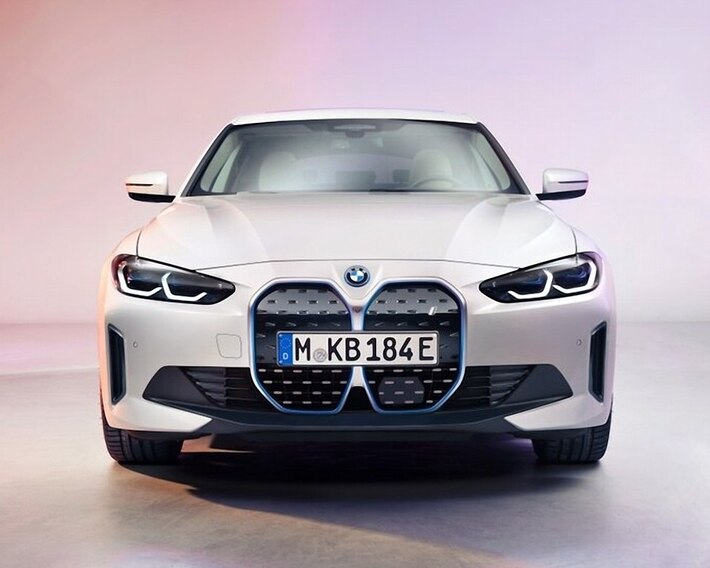
BMW's commitment to electrification is structured: the i sub-brand covers pure electric vehicles (i3, i4, i5, i7, iX), while the xDrive PHEV variants of mainstream models offer hybrid capability within familiar body styles. The company's aim to make 50% of global sales electric by 2030 is underpinned by its own battery cell development program.
- iDrive 8 with curved display
- M TwinPower Turbo engines
- CFRP structural components (M models)
- Active M Differential
- Over-the-air (OTA) updates
- Laser headlights
The M Division
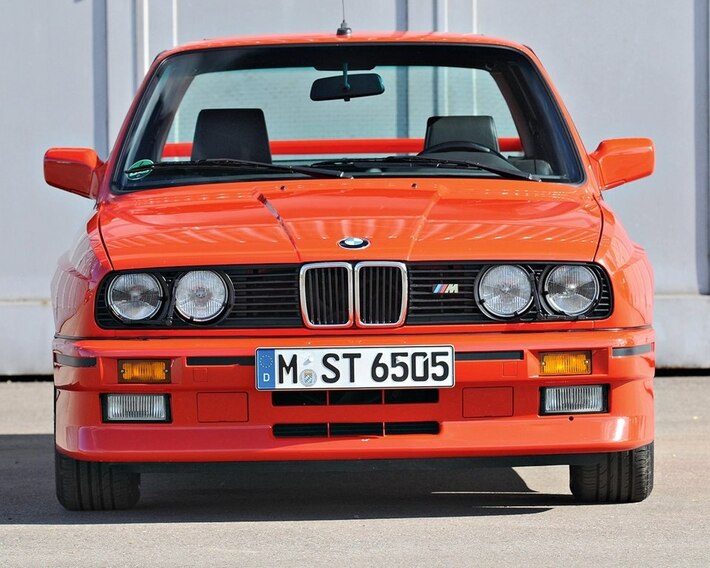
BMW M GmbH was founded in 1972 as a motorsport subsidiary. Its original purpose — building homologation specials for touring car racing — evolved into something far more significant: defining what a performance road car should be. The M3, first produced in 1986, became the global reference point for sports saloons and remains so today.
Every M car is developed independently from its standard counterpart — suspension geometry, powertrain tuning, bodywork, and interior all receive M-specific engineering. The M division's Garching facility hand-assembles high-revving naturally aspirated engines for the most demanding variants, maintaining a craft tradition uncommon in modern volume production.
BMW in Azerbaijan
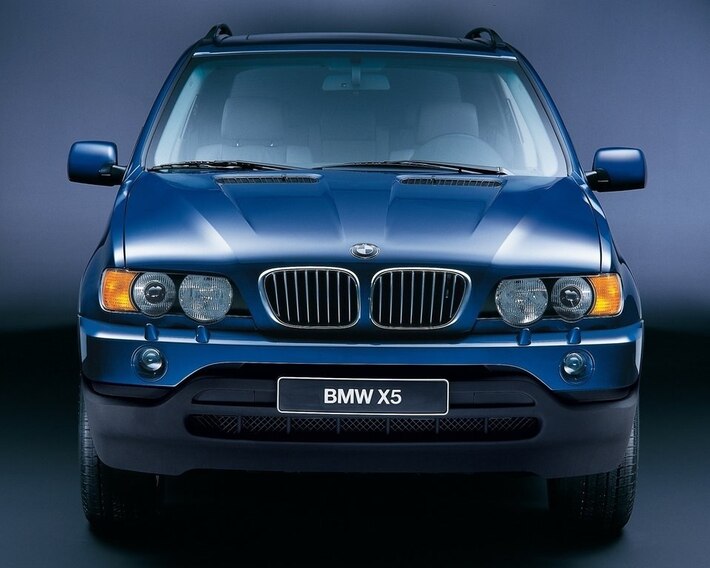
BMW is the prestige brand of choice for Baku's business and professional community. The 5 Series and X5 dominate the upper-executive segment, while the 3 Series remains the aspirational purchase for professionals entering the premium market. M models — particularly the M3, M4, and M5 — command strong residual values and generate significant enthusiasm among Azerbaijan's enthusiast community.
Authorised BMW service facilities in Baku support the full model range with factory-trained technicians, genuine parts, and warranty coverage. The brand's active involvement with the Baku City Circuit Formula 1 event elevates its visibility annually — BMW's connection to motorsport resonates particularly strongly in a city that hosts a Grand Prix.
Why Choose BMW?
- Driver's car credentials: No manufacturer has invested more consistently in the physics of driver engagement — steering feel, chassis balance, and engine character are BMW's defining differentiators.
- M division heritage: Fifty years of the M division have produced the world's most comprehensively developed performance derivatives — the M3 and M5 define their segments.
- Technology leadership: iDrive pioneered integrated infotainment; BMW continues to set the benchmark for in-car digital experience.
- Electric transition: The i4 and iX demonstrate that BMW can build compelling electric vehicles without sacrificing the brand's core driving character.
- Prestige and residuals: BMW holds its value better than most competitors in the premium segment — a meaningful total-cost-of-ownership advantage.
- Breadth of range: From the 1 Series hatchback to the M8 Competition Gran Coupé, BMW covers more of the premium market more coherently than any other German brand.
BakuWheels uses cookies to improve your experience, analyse site traffic, and personalise content. By clicking Accept All, you consent to our use of cookies. Learn more in our Cookie Policy.