

Jensen
The West Bromwich coachbuilder and car manufacturer that created the iconic Jensen Interceptor — one of the most beautiful grand tourers of its era — and the revolutionary Jensen FF, the world's first production car with four-wheel drive and anti-lock brakes.
Origins of Jensen
Jensen Motors was founded in 1934 by brothers Richard and Alan Jensen in West Bromwich, in England's industrial West Midlands. The brothers had previously built special-bodied cars for clients including Clark Gable, and their new company continued this tradition of building custom-bodied vehicles on chassis supplied by established manufacturers. Jensen's early work included bodies on Ford and Standard chassis, and the company established a reputation for quality coachwork that attracted prestigious commissions. The brothers possessed both engineering ability and genuine aesthetic sensibility — a combination that would define Jensen's character throughout its existence.
Jensen became a manufacturer in its own right rather than purely a coachbuilder with the introduction of the Jensen Interceptor in 1949 (the original, not to be confused with the later model of the same name). During the 1950s and 1960s, the company produced a series of grand tourers that established its reputation for combining Italian-inspired styling — on the C-V8, notably supplied by Touring of Milan — with American V8 engines, creating vehicles of considerable performance and elegance. The collaboration with Chrysler for V8 engines gave Jensen cars a distinctive combination of American muscle and British refinement.
The second-generation Interceptor, introduced in 1966, represented Jensen's commercial and creative peak — a grand tourer of exceptional beauty designed by Carrozzeria Touring of Milan, powered by a Chrysler V8, and combining a fastback glasshouse with a distinctive hatchback rear that was both elegant and practical. Simultaneously, Jensen introduced the FF — the world's first production car with both four-wheel drive and anti-lock brakes — a technological achievement of extraordinary significance. Financial difficulties and the oil crisis of the early 1970s ultimately proved fatal, and Jensen ceased production in 1976, though the name has been subject to several revival attempts.
Key Milestones
Notable Models
Jensen's model history spans bespoke coachwork, stylish grand tourers, and the technological milestone of the FF — each model contributing to a legacy of British engineering ambition.
Technology & Engineering
Jensen's engineering approach consistently sought to advance the state of the art — demonstrated most dramatically by the FF, which introduced technologies to production vehicles that the automotive industry as a whole would take decades to widely adopt.
- Ferguson Formula four-wheel drive system — the FF used the Ferguson Research Ltd. four-wheel drive system, a sophisticated permanent AWD setup with a viscous coupling centre differential that provided traction and stability far beyond any contemporary rear-wheel drive competitor
- Dunlop Maxaret anti-lock braking — the FF's Maxaret system, derived from aircraft braking technology, prevented wheel lock-up under heavy braking — anticipating the modern ABS systems that would not become standard automotive equipment for another two decades
- Chrysler V8 power — Jensen's use of large-displacement Chrysler V8 engines provided effortless high-speed performance while maintaining mechanical reliability, the combination of American power and British chassis engineering producing grand tourers of considerable driving quality
- Fibreglass body construction — Jensen's adoption of fibreglass for the 541 in 1954 was one of the earliest uses of this material for a production grand tourer, demonstrating Jensen's willingness to adopt new materials when they offered genuine advantages in weight reduction and design freedom
Jensen in Azerbaijan
Jensen vehicles have no established presence in Azerbaijan. As British grand tourers produced in relatively small numbers, surviving Jensen Interceptors and FF models are found primarily in private collections in the United Kingdom, the United States, and Western Europe. The Jensen Interceptor has maintained a passionate collector following that sustains active restoration and parts support.
For Azerbaijani automotive enthusiasts, Jensen represents a fascinating lesson in how technical ambition and aesthetic quality do not guarantee commercial success — the FF alone should have secured Jensen's future, yet the company's small scale and the broader economic difficulties of the 1970s proved insurmountable. The Interceptor remains one of the most beautiful British cars ever made, its Italian-designed body and American V8 engine creating a combination of qualities that no single national tradition could have achieved alone.
Why Jensen Matters
- Four-wheel drive pioneer: The Jensen FF's introduction of production four-wheel drive with anti-lock brakes in 1966 was one of the most significant technological advances in automotive history — an achievement that was simply too expensive and too far ahead of its time to achieve commercial success, but whose significance has only grown with the passage of decades.
- Anglo-American synthesis: Jensen's model of combining American V8 engines with British chassis engineering and Italian styling created a template for grand touring that proved more effective than any single national approach could have achieved, producing vehicles of distinctive character and genuine quality.
- The Interceptor's design legacy: The Jensen Interceptor's Touring-designed body remains one of the most admired examples of Italian coachwork applied to a British car — its combination of elegance, practicality, and sporting character making it one of the enduring classics of the grand touring genre.
- Small-scale achievement: Jensen's ability to produce vehicles of genuine innovation and beauty as a small, independent manufacturer — competing with far larger and better-resourced rivals — demonstrates that quality and innovation are products of talent and commitment rather than simply of scale.
Iconic Models in Pictures
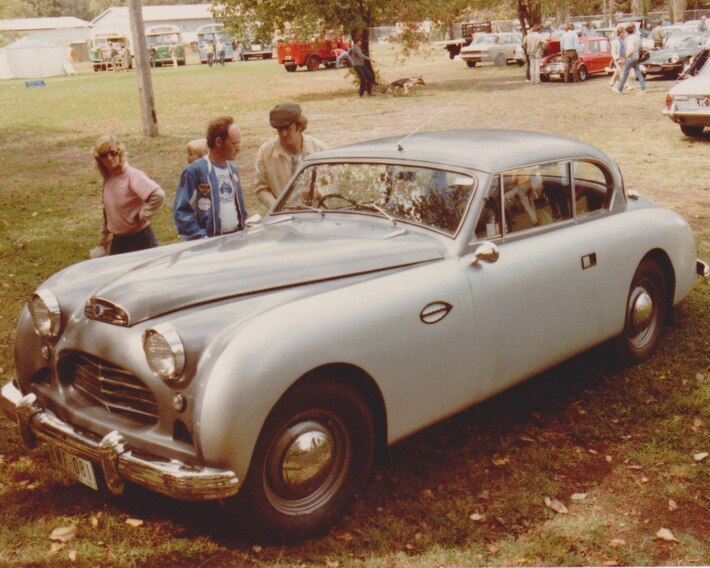
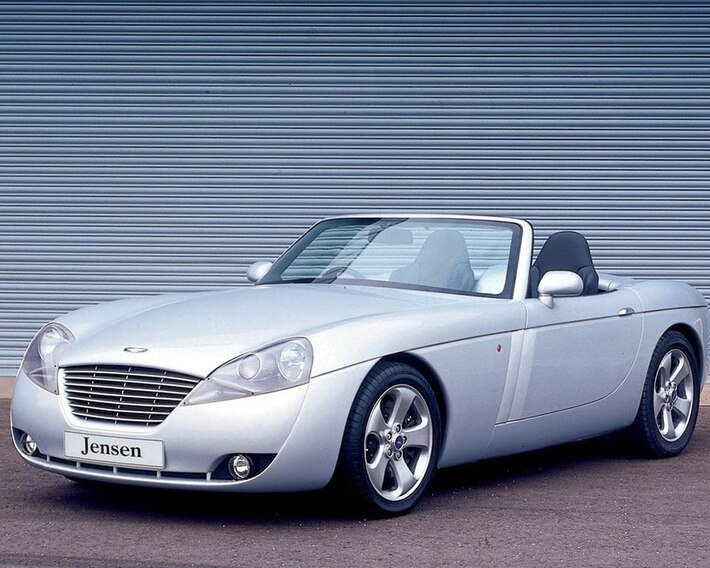
Jensen vehicles — a visual selection of the iconic models produced by this manufacturer.
BakuWheels uses cookies to improve your experience, analyse site traffic, and personalise content. By clicking Accept All, you consent to our use of cookies. Learn more in our Cookie Policy.