

Piaggio
Piaggio is one of Europe's oldest vehicle manufacturers — an Italian industrial giant whose three-wheeled Ape cargo vehicle and Vespa scooter transformed urban transport across the world.
Origins & History
Piaggio was founded in 1884 in Genoa by Rinaldo Piaggio as a producer of railway carriages and industrial equipment. Through the late 19th and early 20th centuries the company expanded into ship fittings, aircraft, and tram production — developing into one of Italy's most diversified industrial groups. By the Second World War Piaggio was a major aircraft manufacturer, producing bombers for the Italian military and operating large factories in Tuscany.
The transformation of Piaggio into a vehicle manufacturer came directly from the ruins of the Second World War. With its factories bombed and the Italian economy shattered, Piaggio's director Enrico Piaggio commissioned aeronautical engineer Corradino D'Ascanio to design a cheap, reliable, and practical personal vehicle for a population that needed affordable transport. The result — revealed in 1946 — was the Vespa scooter, a product so elegant and practical that it became one of the most culturally significant vehicles ever designed.
Piaggio followed the Vespa with the Ape in 1948 — a three-wheeled cargo vehicle based on Vespa mechanics that became the backbone of small business transport across Italy, India, and much of the developing world. The Ape's combination of practicality, low cost, and mechanical simplicity made it indispensable for street food vendors, market traders, and small businesses in hundreds of cities worldwide. Today the Piaggio Group encompasses Vespa, Aprilia, Moto Guzzi, and Derbi — making it one of the world's largest two and three-wheeled vehicle manufacturers.
Key Milestones
Notable Models
Piaggio's product range spans iconic consumer scooters, practical three-wheeled commercial vehicles, and light urban transport solutions that continue to serve millions of users worldwide.
Engineering Philosophy
Piaggio's engineering heritage combines Italian design flair with practical engineering solutions for urban mobility — creating vehicles that are affordable, maintainable, and suited to the challenging conditions of city use across a wide range of climates and infrastructure standards.
- Three-wheeled vehicle expertise — Piaggio's decades of three-wheeled vehicle development for the Ape have generated unique expertise in the dynamics, stability, and packaging of tilting and non-tilting three-wheeled vehicles
- Urban mobility focus — Piaggio designs vehicles specifically for dense urban environments, optimising dimensions, turning circles, and parking footprints for cities where space is at a premium
- Scalable powertrain approach — from single-cylinder petrols to electric motors, Piaggio's commercial vehicles use right-sized powertrains that match the operational requirements and fuel costs of small business users
- Global adaptability — the Ape has been produced and assembled in multiple countries including India, adapting its specification to local regulations, road conditions, and operator preferences while maintaining the core mechanical simplicity that enables local servicing
Piaggio in Azerbaijan
Piaggio's cars and three-wheelers are rare in Azerbaijan, though Vespa scooters have a modest following among urban enthusiasts. The Ape commercial vehicle has not found widespread adoption in the Azerbaijani market, which has relied on conventional light commercial vehicles for small business transport. As electric urban mobility grows in importance, Piaggio's electric Ape variants may find relevance in Azerbaijani cities.
For Azerbaijanis interested in European automotive history, Piaggio represents one of the most creative and impactful stories in post-war industrial design — the company that turned the wreckage of wartime industrial capacity into two of the most beloved and enduring vehicles in the world.
Why Piaggio Matters
- Post-war mobility revolution: Piaggio's Vespa and Ape transformed personal and commercial mobility in Italy and beyond after the Second World War — demonstrating how elegant design and practical engineering could democratise transport for ordinary people at minimal cost.
- Three-wheeler innovation: Piaggio's mastery of three-wheeled vehicle design spans cargo carriers to sporty urban scooters — a unique engineering specialisation that has produced vehicles from the humble Ape to the sophisticated MP3 tilting three-wheeler.
- Global commercial vehicle reach: The Ape commercial vehicle has become essential infrastructure in markets from Italy to India, where millions of small businesses depend on it for their livelihoods — making Piaggio's engineering decisions a matter of economic importance for developing economies.
- Design legacy: The Vespa's design, created by an aircraft engineer working from first principles, remains one of the most elegant and original industrial designs of the 20th century — a reminder that engineering constraints, applied with creativity, can produce objects of enduring aesthetic beauty.
Iconic Models in Pictures
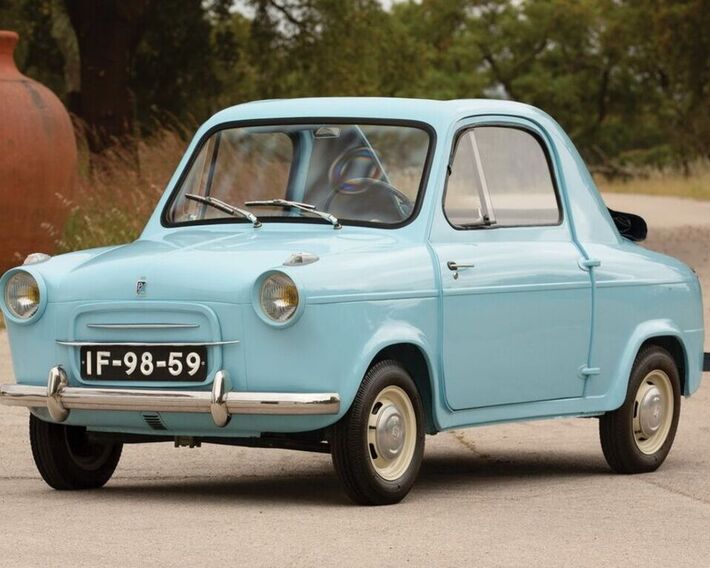
Piaggio vehicles — a visual selection of the iconic models produced by this manufacturer.

BakuWheels uses cookies to improve your experience, analyse site traffic, and personalise content. By clicking Accept All, you consent to our use of cookies. Learn more in our Cookie Policy.