
Alfa Romeo 145 (1994–2001)
The Alfa Romeo 145 was the Italian answer to the compact hot hatch — a three-door coupe-styled hatchback with sharper looks, more driver engagement, and more genuine Italian character than anything produced by VW, Ford, or Peugeot in the same class. Powered by a range of engines culminating in the 150 hp 2.0 Twin Spark, and built on the Alfa 140 platform with front-wheel drive and a carefully developed suspension, the 145 offered the rare combination of daily practicality and genuine driving pleasure.
Overview
When Alfa Romeo launched the 145 in 1994, it faced a compact car market dominated by the Volkswagen Golf, the Ford Escort, and the Peugeot 306. The 145 was Alfa’s response: a three-door hatchback with coupe-inspired proportions, an angular, distinctive body designed by the Centro Stile Alfa Romeo, and an engineering brief that prioritised driving character alongside everyday usability. The name itself followed the Alfa numeric naming convention established by the 33 and continued through the 155, 156, and later models.
The 145’s most significant technical feature was Alfa Romeo’s Twin Spark engine technology. By fitting two spark plugs per cylinder (one central, one offset), Alfa engineers achieved a more complete combustion process that simultaneously improved power output, reduced fuel consumption, and lowered emissions — a combination that seemed almost too good to be true in the mid-1990s. The 1.8 Twin Spark and 2.0 Twin Spark engines brought this technology to the compact hatchback segment and gave the 145 a genuine technical advantage over its contemporaries. The system also gave the engines a characteristic sound and rev quality that appealed strongly to driving enthusiasts.
The 145 was built on the Alfa 140 platform, shared with its five-door sibling the 146. Front-wheel drive with MacPherson strut front suspension and a torsion beam rear gave the 145 a well-sorted chassis that could exploit the performance of the top Twin Spark engines effectively. The steering was hydraulically assisted and offered good feedback by the standards of the era; Alfa’s engineers prioritised handling engagement alongside ride comfort in a way that distinguished the 145 from more comfort-oriented rivals.
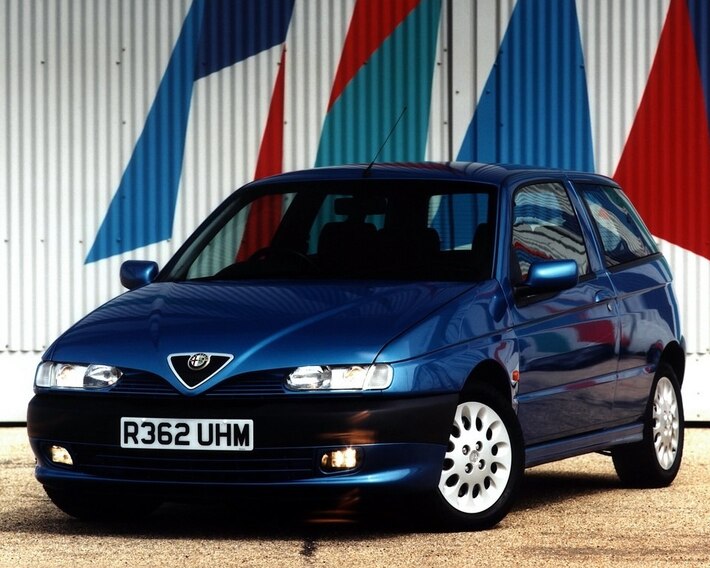
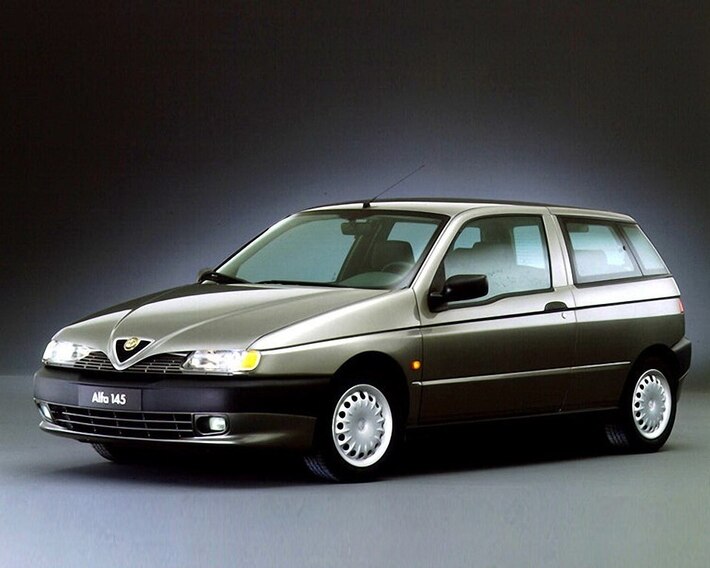
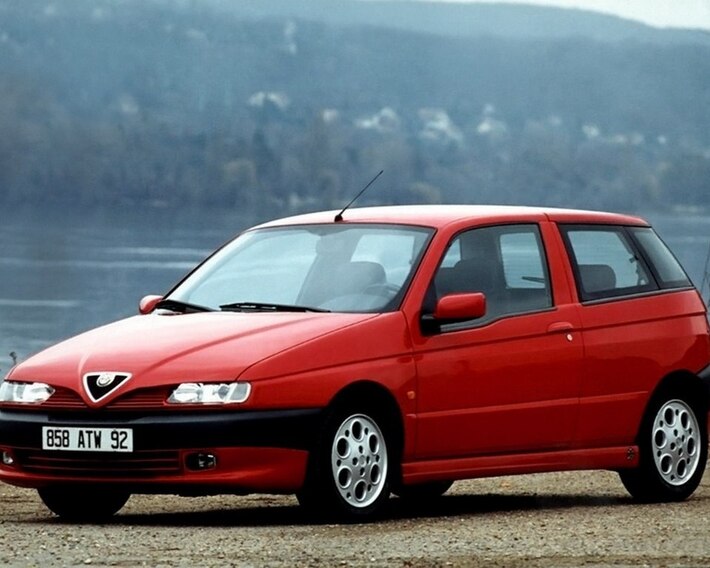
Visually, the 145 was unmistakably Italian and unlike anything else in its segment. The wide, low bonnet, the distinctive triangular DLO (daylight opening) in the C-pillar, and the aggressive three-door fastback silhouette gave it the appearance of a proper coupe in hatchback form. The interior reflected its era in its materials but maintained Alfa’s commitment to a driver-focused layout: the instruments were clear, the driving position excellent, and the relationship between driver and car immediate. By modern standards the cabin was modest; by the standards of 1994–2001 compact hatchbacks, it was a stylish and engaging place to spend time.
Production ran from 1994 to 2001, with approximately 217,000 examples built. The 145 was effectively replaced in the compact segment by the Alfa Romeo 147, launched in 2000, which updated the formula with more refined engineering and a design that has since become even more celebrated. The 145 is now entering classic car territory in the most desirable specifications, with well-preserved 1.8 and 2.0 Twin Spark examples increasingly sought by enthusiasts who remember what genuine Italian compact car character felt like.
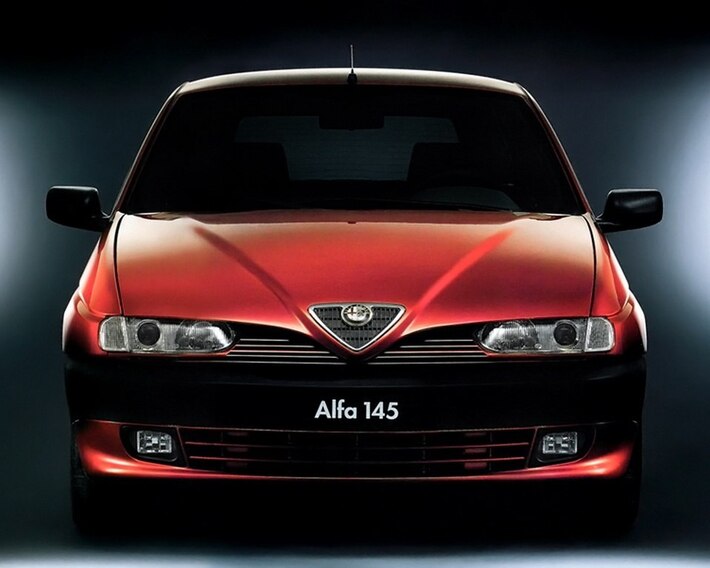
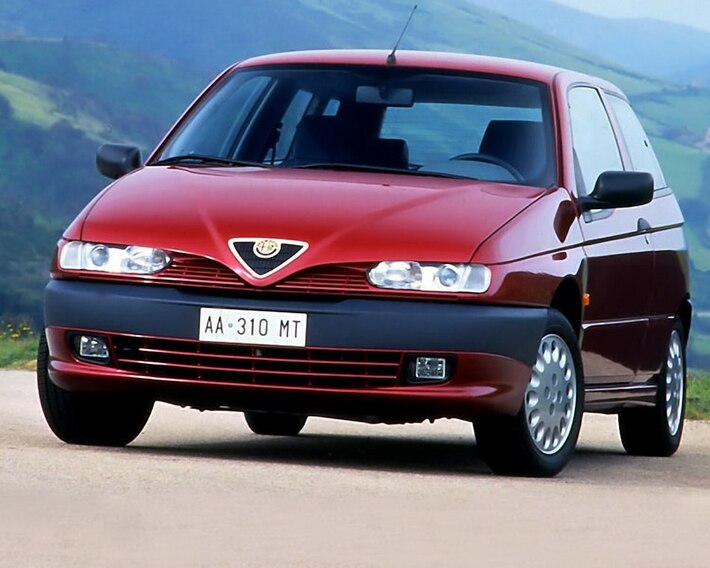
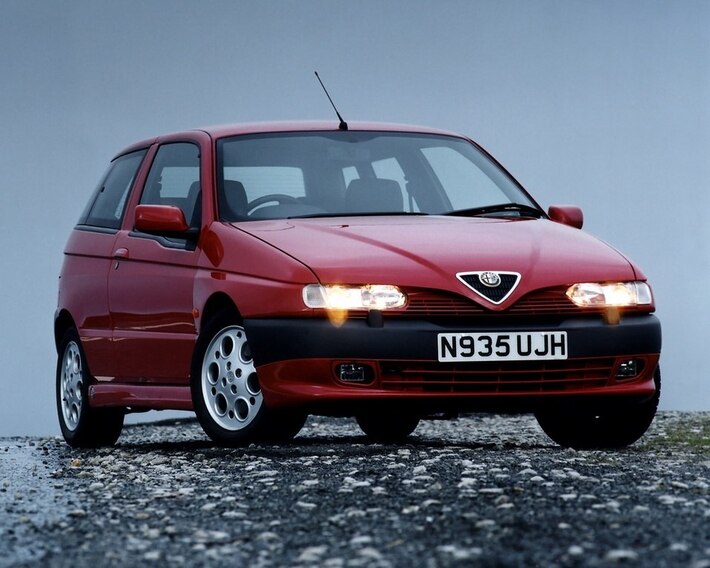
Alfa Romeo 145 in Pictures
The 145’s angular, coupe-inspired lines and distinctive C-pillar treatment gave it a visual identity that no rival could match — pure Italian Centro Stile design in compact hatchback form.
Key Specifications
- Platform: Alfa Romeo 140 platform, shared with the 146 five-door. Front-wheel drive with transversely mounted inline-four engine. MacPherson strut front suspension, torsion beam rear axle. Hydraulic power-assisted rack-and-pinion steering.
- Twin Spark technology: Two spark plugs per cylinder — one centrally located for primary ignition, one offset for secondary flame front. The system allows a wider, faster combustion event that improves thermal efficiency, reduces emissions, and allows the engine to produce more power from a given displacement than a single-spark equivalent. Alfa Romeo patented this approach and it became a defining feature of the brand’s engines through the 2000s.
- Engine range: 1.4 ie 103 hp (single-point injection); 1.6 ie 16v 120 hp (multi-point); 1.8 Twin Spark 144 hp; 2.0 Twin Spark 150 hp; 1.9 TD turbodiesel 90 hp. All petrol engines are naturally aspirated; the Twin Spark units are the most desirable for performance-oriented buyers.
- Transmission: 5-speed manual on all variants. No automatic transmission option was offered on the 145 — the car was designed for drivers who preferred to shift themselves, consistent with Alfa’s positioning of the 145 as a driver’s compact.
- Body: Three-door hatchback only. Steel monocoque construction. The fastback roofline and the distinctive triangular C-pillar window are defining visual features; the rear three-quarter view is one of the most recognisable compact car profiles of the 1990s.
- Weight: Approximately 1,090–1,130 kg depending on specification — light by modern hatchback standards. The 2.0 TS’s power-to-weight ratio of approximately 133 hp/tonne gave it genuine performance credentials for a naturally aspirated front-drive compact.
- Performance (2.0 Twin Spark): 0–100 km/h approximately 8.0 seconds; maximum speed approximately 210 km/h. These figures were competitive with the Golf GTI of the same era and significantly better than most rivals in the segment.
- Brakes: Disc brakes front and rear on Twin Spark variants; front discs with rear drums on lower-specification variants. ABS optional on early cars, standard on later specifications. Brake feel was considered one of the 145’s strengths; pedal response was direct and progressive.
- Production period and numbers: 1994–2001; approximately 217,000 total. The 1.6 and 1.8 variants were the most popular; 2.0 TS examples are now the most sought by enthusiasts. The diesel variant is the rarest in the used market.
Variant Comparison
| Variant | Engine | Power | Gearbox | Best For |
|---|---|---|---|---|
| Alfa Romeo 145 1.4 ie (103 hp) | 1351cc Twin Spark inline-four, single-point injection | 103 hp at 6,000 rpm | 5-speed manual | The entry-level variant; adequate urban performance with the lowest running costs; sensible choice for buyers who want Alfa style and handling on a tight budget; most common in the used market |
| Alfa Romeo 145 1.6 ie 16v (120 hp) | 1598cc 16-valve inline-four, multi-point injection | 120 hp at 6,300 rpm | 5-speed manual | The mid-range sweet spot; responsive 16-valve engine that revs freely; good balance of economy and performance; preferred by buyers who want a spirited driver’s experience without the higher insurance of the 1.8 or 2.0 |
| Alfa Romeo 145 1.8 Twin Spark (144 hp) | 1747cc Twin Spark inline-four, multi-point injection | 144 hp at 6,000 rpm | 5-speed manual | The driver’s choice for enthusiasts; the 1.8 Twin Spark offers excellent power delivery across a wide rev range; twin-spark technology gives noticeably cleaner combustion and better economy than equivalent single-plug engines; still one of the most rewarding front-drive hatchback experiences from the 1990s |
| Alfa Romeo 145 2.0 Twin Spark (150 hp) | 1970cc Twin Spark inline-four, multi-point injection | 150 hp at 6,200 rpm | 5-speed manual | The ultimate road-going 145; 150 hp from a naturally aspirated 2.0-litre in a compact hatchback gave the 145 2.0 TS genuinely rapid performance for its era; 0–100 km/h in approximately 8 seconds; the full expression of what the Alfa 140 platform could do in 3-door hatchback form |
| Alfa Romeo 145 1.9 TD (90 hp) | 1929cc turbodiesel inline-four | 90 hp at 4,000 rpm | 5-speed manual | The economical choice for high-mileage drivers; the turbodiesel offers excellent fuel economy and reasonable torque for city driving; less exciting than the petrol variants but practical for daily commuting; rarer than petrol versions in collector usage |
What Makes the 145 Stand Out
In a segment where competence was common but character was rare, the Alfa Romeo 145 offered something its rivals simply could not replicate: genuine Italian personality in an everyday compact package.
- Twin Spark technology genuinely works: The dual-ignition approach was not a marketing exercise. Twin Spark engines of the 1.8 and 2.0 displacement genuinely produce cleaner combustion, better fuel economy relative to their power output, and a distinctive, crisp engine note that single-spark equivalents cannot match. The technology was so successful that Alfa Romeo continued using it through the Alfa 147 GTA and 156 programmes.
- Italian styling in a practical package: The 145 achieved what many Italian car companies struggled to do — real distinctiveness in an everyday segment. The angular, coupe-like three-door body stood out in a segment full of conservative hatchback designs. Driving a 145 in 1996 made a statement that a Golf or an Escort simply could not match.
- Genuine driving engagement: The 145’s suspension, steering, and overall chassis behaviour were calibrated for driver involvement. The front end was responsive, the steering informative, and the balance between front traction and body control well-judged. This was a car that rewarded drivers who enjoyed the act of driving, not merely those who wanted to travel from A to B.
- Emerging classic status in top specifications: Well-preserved 2.0 Twin Spark examples are now entering the collectors’ radar as 1990s Italian compacts gain appreciation. A genuinely low-mileage, well-maintained 145 2.0 TS is becoming difficult to find, and values are beginning to stabilise rather than continuing to depreciate.
- Practical as a daily driver: Unlike the classic 105/115 or the GTV6, the 145 is a fully modern (by 1990s standards) front-drive hatchback with a five-speed gearbox, ABS, power steering, and a well-developed drivetrain. It can serve as a daily driver with realistic maintenance costs once in good condition.
Maintenance & Repairability in Azerbaijan
The 145 is now 25–32 years old and requires the attention appropriate for a car of that age. In Azerbaijan, the primary challenges are parts sourcing (require European imports) and finding mechanics familiar with Alfa Romeo’s specific systems.
- Twin Spark engine service: The Twin Spark engines require conventional service items (oil, filter, spark plugs ×8, air filter, coolant) but the dual ignition system means plug replacement costs twice as much as a conventional engine. Both sets of plugs must be replaced simultaneously for correct operation. Use NGK or equivalent plugs specified for Twin Spark applications; incorrect plug grades cause misfires.
- Parts availability: Alfa Romeo parts for the 145/146/147/156 generation are widely available from European suppliers (Alfa OEM parts, FAP, Magneti Marelli aftermarket). Engine, gearbox, and suspension mechanical parts are generally available; some plastic interior trim and body panels are becoming more difficult to source for the 145 specifically. International shipping from Germany or Italy takes 1–2 weeks to Azerbaijan.
- Common age-related issues: Rust on lower sills and wheelarches on cars that have not been properly maintained; alternator and starter motor wear on high-mileage examples; coolant system leaks (water pump, thermostat housing); power steering rack wear; and front suspension bushes and ball joints requiring replacement on high-mileage cars.
- Timing belt service: All Twin Spark petrol engines are interference engines (valve contact with pistons if belt breaks). The timing belt must be replaced every 60,000 km or every 4 years (whichever comes first), along with the water pump and tensioner. This is a critical service item; verify the history of any used 145 before purchase.
- Electrical systems: The 145 uses Bosch Motronic engine management for fuel injection and ignition. Fault diagnosis requires an OBD-compatible diagnostic tool (later cars have OBD-II; early cars may require a specific Alfa Romeo diagnostic cable). Most modern generic OBD scanners will read codes on later examples.
- Local service: Mechanics in Baku with European car experience — particularly VW/Audi Group or Fiat Group specialists — will generally be capable of routine service and common repairs on the 145. The Twin Spark ignition system is specific to Alfa but not complex; any competent mechanic can learn it quickly with documentation.
Alfa Romeo 145 vs. Contemporaries
| Model | Core Strength | Main Compromise |
|---|---|---|
| Alfa Romeo 145 2.0 Twin Spark | Italian style and character that no rival could match; 150 hp naturally aspirated 2.0 in a sub-1,100 kg 3-door; twin-spark technology for efficiency; Alfa’s trademark sharp steering and front-drive balance; one of the most visually distinctive compacts of the 1990s | Reliability reputation weaker than Japanese or German rivals; electrical gremlins on older examples; Italian depreciation has left many neglected; sourcing parts in Azerbaijan requires European imports |
| VW Golf III GTI (1992–1997) | The benchmark hot hatch of its era; 150 hp 2.0 8-valve (early) or 150 hp VR6 (late); build quality and reliability superior to Italian contemporaries; strong dealer network globally; clear ownership costs | Significantly less character than the Alfa; the Golf GTI Mk3 is widely considered the least exciting GTI generation; heavier than the Alfa; no Italian soul |
| Peugeot 306 GTI-6 (1996–2001) | Outstanding chassis balance; 167 hp 2.0 16v; widely regarded as one of the finest-handling front-drive cars of the 1990s; strong motorsport pedigree; accessible used prices | French rather than Italian; the 306 GTI-6 arrived slightly later than the 145 2.0 TS; body styling less dramatic than the Alfa; PSA parts network more accessible than Alfa in some markets |
| Honda Civic VTi (1995–2001) | VTEC engine technology; exceptional reliability; 160 hp from 1.6L naturally aspirated; clean and efficient; strong resale value; Honda dealer network globally | No Italian character; the VTEC engine is technically impressive but lacks the mechanical warmth of the Alfa twin-spark; styling far more conservative; not a GT car |
| Ford Escort RS2000 (1992–1996) | Performance-focused Ford compact; 150 hp 2.0 16v Zetec; Ford motorsport heritage; strong parts availability; Ford dealer network everywhere including Azerbaijan | The Escort platform was ageing when the RS2000 was launched; handling balance less inspiring than the Alfa 145; style considerably less distinctive; lacks Italian premium perception |
Cost-of-Ownership Calculator (Azerbaijan)
This calculator estimates annual running costs for an Alfa Romeo 145 used as a daily or occasional-use car. Service budget reflects Twin Spark-specific maintenance including dual plug replacement and timing belt service amortised annually.
- Estimated annual fuel use: 1200 litres
- Estimated annual fuel cost: $960
- Total annual ownership estimate: $5260
- Average monthly ownership estimate: $438
Used Buying Checklist
Buying a used Alfa Romeo 145 requires careful assessment of bodywork condition, service history (especially timing belt records), and the overall mechanical state of the Twin Spark drivetrain.
- Timing belt verification (critical): Ask for written service records documenting timing belt replacement. If no records exist, budget for immediate replacement. A snapped timing belt on a Twin Spark engine causes catastrophic valve and piston damage costing more than the car is worth. This is the single most important service item to verify.
- Rust inspection: Check lower sills, wheelarch edges, and the lower rear corners of the tailgate aperture. 145s of this age from Central/Eastern European markets (common import sources for Azerbaijan) may have undisclosed accident repair or rust treatment. A magnet test on suspicious areas and a full underbody inspection are essential.
- Twin Spark ignition system: Start cold and listen for misfires at idle. A healthy Twin Spark engine should idle smoothly; a stumbling idle usually indicates one or more faulty plugs, a coil pack issue, or injector problems. Check for fault codes with an OBD scanner before purchase.
- Gearbox condition: Check for baulking on second and third gear (common on high-mileage 145 gearboxes). A noisy or difficult-to-operate gearbox indicates worn synchromesh; rebuild costs are disproportionate to the car’s value. A smooth, clean shift across all five gears is a positive sign.
- Interior condition: Alfa 145 interior plastics are not especially durable; check the condition of the dashboard, door cards, and headlining. Replacing deteriorated interior trim on a 145 is difficult due to parts scarcity. Prioritise cars with well-preserved original interiors.
- Specification check: Confirm the variant (1.4/1.6/1.8/2.0/diesel) matches the registration and the asking price. The 2.0 Twin Spark carries a significant premium over 1.4 and 1.6 variants; verify engine displacement from the VIN or registration document, not merely from seller description.
Alfa Romeo 145 FAQ
What is Twin Spark and why does it matter?
Twin Spark refers to Alfa Romeo’s dual ignition system, where each cylinder has two spark plugs fired in a specific sequence to create a wider, faster combustion event. The result is more complete fuel burn, higher thermal efficiency, reduced emissions, and noticeably better performance per litre of displacement compared to single-spark equivalents. On the 145, it means the 1.8 and 2.0 TS engines produce more power than their displacement would suggest, with better fuel economy than a rival engine of similar output. The system requires all eight plugs to be replaced simultaneously; mismatched plugs cause rough running.
Is the 145 reliable enough for daily use in Azerbaijan?
A well-maintained 145 in good condition is reliable for daily use. The main concerns are timing belt maintenance (must be current), cooling system condition, and the age-related electrical issues common to 1990s Italian cars. The 145 is not as robustly reliable as a contemporary Honda Civic or VW Golf, but it is not as fragile as its Italian reputation might suggest when properly maintained. The key is finding a car with a documented service history and addressing any deferred maintenance immediately after purchase.
How does the 145 compare to the 147 that replaced it?
The 147 (launched 2000) is a significantly more refined and better-engineered car than the 145. The 147 has a better interior, more developed safety systems, a more sophisticated body structure, and ultimately stronger residual values as a collector vehicle. The 145 has the advantage of rarity in top specification and a rawer, more direct driving character that some enthusiasts prefer. For daily driving, the 147 is the better choice; for a distinctive driving experience and emerging classic status, the 145 2.0 TS is compelling.
Should You Buy an Alfa Romeo 145?
The Alfa Romeo 145 occupies an interesting position in the used car market: too old and too Italian for buyers who want reliable everyday transport, but not yet fully appreciated as a classic by those who remember what made it special. In top 2.0 Twin Spark specification, a well-preserved 145 is a genuinely enjoyable driver’s car with Italian character that cannot be replicated by a Golf or a Civic. The key is finding a sound, well-maintained example — one that has received regular timing belt changes, has clean bodywork, and has been treated as the sporting car it is rather than neglected as an old economy hatchback.
For buyers in Azerbaijan, the 145 makes most sense as a second car for enthusiast use rather than a primary daily driver, given the parts sourcing challenges. Import a car with a full service history from Europe, address any deferred maintenance on arrival, and the 145 will reward you with driving pleasure that far exceeds its modest purchase price.
BakuWheels uses cookies to improve your experience, analyse site traffic, and personalise content. By clicking Accept All, you consent to our use of cookies. Learn more in our Cookie Policy.