
ARO 10
The ARO 10 is Romania's compact answer to the 4x4 — a rugged, body-on-frame off-roader with part-time 4WD, built to traverse the Carpathian mountains and serve rural communities across Eastern Europe and beyond.
Overview
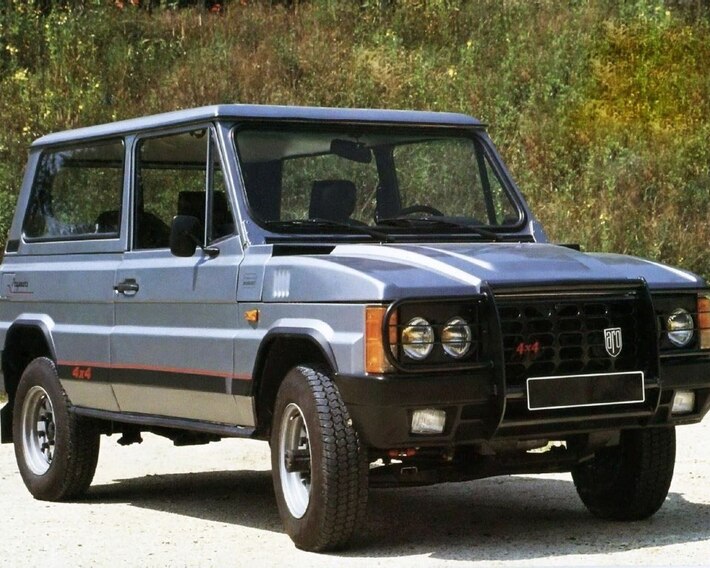
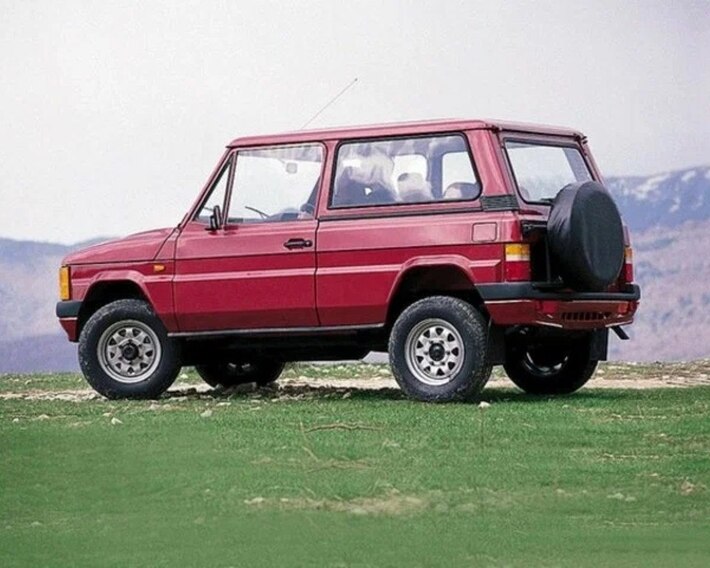
The ARO 10 was introduced in 1980 as a compact off-road vehicle from the Auto Romania Câmpulung factory — a Romanian state enterprise that had been building 4x4 vehicles since the 1950s. Positioned as a smaller, more accessible sibling to the larger ARO 24, the ARO 10 was designed for civilian use, targeting rural communities, agricultural workers, forestry operations, and the domestic Romanian consumer market. Its compact dimensions made it more practical for narrow rural roads while retaining the off-road capability that Romanian terrain demanded.
The ARO 10's engineering philosophy was one of maximum simplicity and repairability. The body-on-frame construction used a separate ladder chassis — proven, robust, and easily repaired in field conditions. The part-time 4WD system allowed the driver to engage four-wheel drive when conditions required and return to rear-wheel drive for normal road use, conserving fuel and reducing drivetrain wear. The 1.4-litre OHV petrol engine was deliberately straightforward, capable of being diagnosed and repaired with basic tools in conditions far from any workshop.
Production of the ARO 10 continued through multiple iterations — the 103, 104, and subsequent variants — until ARO's financial collapse ended operations in 2006. Today, surviving ARO 10s are found across Eastern Europe, the Balkans, and the Caucasus, where their mechanical simplicity and off-road capability keep them in active use decades after production ended. In Azerbaijan, the ARO 10 represents a pragmatic classic — a no-frills 4x4 that asks nothing more of its owner than basic mechanical attention in return for genuine off-road usefulness.
Gallery
Key Specifications
| Production Years | 1980 – 2006 |
|---|---|
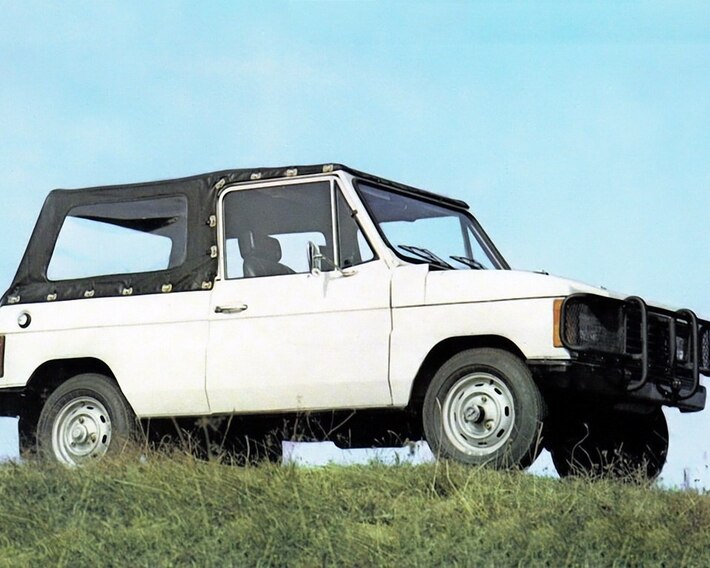
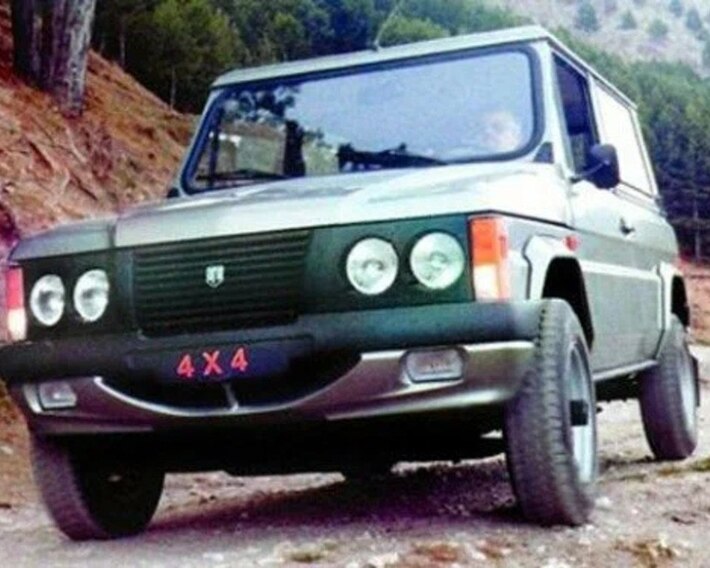
| Body Style | Compact off-road SUV, multiple body styles (hardtop, soft-top, pickup) |
| Construction | Body-on-frame with separate ladder chassis |
| Engine (base) | 1.4L OHV petrol, 57 hp |
| Engine (uprated) | 1.6L OHV petrol, 65–72 hp |
| Drivetrain | Part-time 4WD with manual transfer case |
| Gearbox | 4-speed manual |
| Suspension (front) | Live axle with leaf springs |
| Suspension (rear) | Live axle with leaf springs |
| Brakes | Drum brakes all round |
| Kerb weight | approximately 1,000–1,100 kg |
| Fuel consumption | approximately 10–13 L/100 km |
| Origin | Câmpulung, Romania |
Variant Comparison
| Variant | Engine | Power | Drive | Best For |
|---|---|---|---|---|
| ARO 10 (1980) | 1.4L OHV petrol | 57 hp | Part-time 4WD | Original compact ARO — basic off-road utility |
| ARO 103 (1983) | 1.4L OHV petrol | 57 hp | Part-time 4WD | Refreshed 1983 model with revised trim |
| ARO 104 (various) | 1.6L OHV petrol | 65–72 hp | Part-time 4WD | Uprated engine variant — improved performance and reliability |
What Makes the ARO 10 Stand Out
Extreme Mechanical Simplicity
The ARO 10's engineering is deliberately uncomplicated. The OHV petrol engine, leaf-spring live axles, and drum brakes can all be serviced with basic hand tools by anyone with reasonable mechanical knowledge. There are no complex electronics, no hydraulic components requiring specialist equipment, and no proprietary systems.
Compact Off-Road Footprint
The ARO 10's shorter wheelbase compared to full-size 4x4s of its era gives it a better approach and departure angle in tight terrain. Where a UAZ 469 or Land Rover Series would struggle with approach angles on severe obstacles, the ARO 10's compact dimensions allow it to pick more direct lines.
Eastern European Rarity
The ARO 10 is far rarer than a Lada Niva or UAZ today, but sufficiently well known among Eastern European automotive enthusiasts to carry genuine collector interest. A well-preserved example in running condition is a genuine find.
Romanian Automotive Heritage
ARO represents one of only a handful of Eastern European countries that independently developed and exported 4x4 vehicles during the communist era. The ARO 10 was exported to dozens of countries including the UK, France, and across Africa — a testament to its credibility as a genuine off-road tool.
Multiple Body Style Options
Unlike many compact 4x4s of the period that offered a single body configuration, the ARO 10 was available in hardtop, soft-top, and pickup variants, making it adaptable to agricultural, commercial, and personal use without requiring a larger vehicle.
Maintenance & Repairability in Azerbaijan
The ARO 10 was designed from the outset to be maintained in conditions with minimal infrastructure — a philosophy that works in the owner's favour in Azerbaijan today. Any mechanic familiar with Soviet-era vehicles, older Lada mechanics, or basic OHV petrol engines will be able to perform routine work on an ARO 10 without needing specialist training or diagnostic equipment.
The 1.4L and 1.6L OHV petrol engines are robust units that respond well to regular oil changes and basic ignition maintenance. Valve clearances should be checked every 20,000–30,000 km. The timing chain (not belt) is a longevity advantage, but should be inspected for stretch on high-mileage examples. Carburetion on these engines is conventional and well understood by older-generation mechanics in Azerbaijan and across the Caucasus region.
Parts availability is the main challenge. ARO-specific components — body panels, trim, and some drivetrain parts — require sourcing from Romania or Moldova, where specialist suppliers still maintain limited stock. The good news is that many mechanical consumables (bearings, gaskets, seals, belts) can be substituted with standard metric components available locally. The leaf-spring suspension uses standard components that can be fabricated or sourced through commercial spring suppliers. Bodywork rust is the primary long-term concern; any ARO 10 in Azerbaijan should be treated preventively for corrosion.
Competitor Comparison
| Model | Strength vs. ARO 10 | Compromise vs. ARO 10 |
|---|---|---|
| Lada Niva | Simpler mechanicals, better cold-weather reliability, stronger parts supply in Azerbaijan | Permanent 4WD only, less body style variety |
| UAZ 469 | More durable in extreme off-road conditions, higher ground clearance, larger load capacity | Larger and heavier, less suitable for urban use |
| Suzuki SJ | Japanese reliability, lighter weight, better fuel economy for the size | More expensive to find and maintain in the region, smaller domestic market presence |
| Dacia 1300 | Better on-road comfort, lower running costs in normal conditions | No 4WD capability, entirely unsuitable for off-road use |
Cost-of-Ownership Calculator
Estimate your annual running costs for an ARO 10 in Azerbaijan. Adjust the values to match your driving profile.
Used Buying Checklist
- Chassis and body rust — The ladder chassis and body panels are highly susceptible to corrosion. Inspect sill sections, floor pan, chassis rails, and wheel arch inners. Structural rust on the chassis is a serious safety concern and expensive to address correctly.
- Engine compression test — Before purchase, conduct a compression test on all cylinders. Worn OHV engines with uneven compression indicate piston ring wear or valve seat issues. Rebuilds are affordable but should be factored into the purchase price.
- 4WD engagement test — Engage and disengage the 4WD transfer case under appropriate conditions. Check for grinding, binding, or difficulty engaging. The front and rear differentials should be inspected for oil leaks.
- Leaf spring condition — Inspect front and rear leaf springs for broken leaves, cracked spring eyes, and worn bushings. Flat or sagging springs affect both load carrying and handling.
- Drum brake condition — Drum brakes require periodic adjustment. Check for uneven braking, grinding, or pulling. Brake drum measurements should confirm they are within specification.
- Electrical system — The ARO 10's electrical system is primitive by modern standards. Inspect wiring harness condition for rodent damage, chafing, and corrosion at connections. Many older units will have been subject to amateur electrical modifications.
- Documentation — Confirm import and registration paperwork is in order. Verify the VIN matches documents and that the vehicle's history can be reasonably established.
Frequently Asked Questions
Should You Buy the ARO 10?
Reasons to Buy
- Exceptional mechanical simplicity — repairable with basic tools anywhere
- Genuine off-road capability with part-time 4WD on a dedicated ladder chassis
- Very low purchase cost for a working 4x4 vehicle
- Compact dimensions improve manoeuvrability on narrow tracks vs. larger 4x4s
- Romanian automotive heritage with collector interest among Eastern European classic enthusiasts
- Multiple body styles available — hardtop, soft-top, pickup
Reasons to Consider Alternatives
- Specific ARO parts require sourcing from Romania — delays and shipping costs
- Corrosion risk is very serious on vehicles of this age
- Modest 57–72 hp power output makes highway driving slow and unrefined
- Drum brakes on all four corners by modern safety standards are a concern
- No heating, air conditioning, or modern comfort features
- Lada Niva offers similar off-road capability with far better parts availability in Azerbaijan
Verdict: The ARO 10 is a compelling choice only for the committed enthusiast who values mechanical simplicity, Eastern European automotive history, and genuine off-road character over comfort and convenience. As a working vehicle for rural properties, light agricultural use, or off-road recreation, a well-preserved ARO 10 delivers exactly what it promises. For buyers prioritising reliability and parts availability above all else, the Lada Niva offers a more pragmatic alternative in the Azerbaijani market.
BakuWheels uses cookies to improve your experience, analyse site traffic, and personalise content. By clicking Accept All, you consent to our use of cookies. Learn more in our Cookie Policy.