
ARO 24
The ARO 24 is Romania's full-size 4x4 icon — a rugged body-on-frame off-roader produced for over three decades, exported to dozens of countries, and built to survive the Carpathian mountains and beyond.
Overview
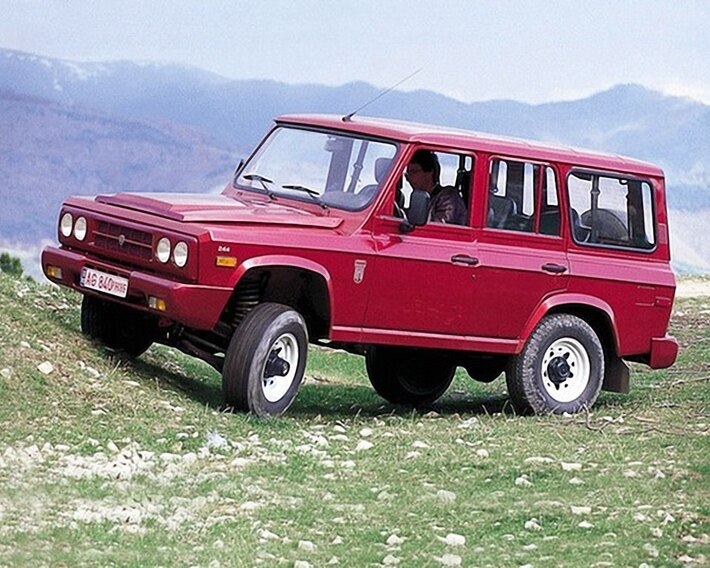
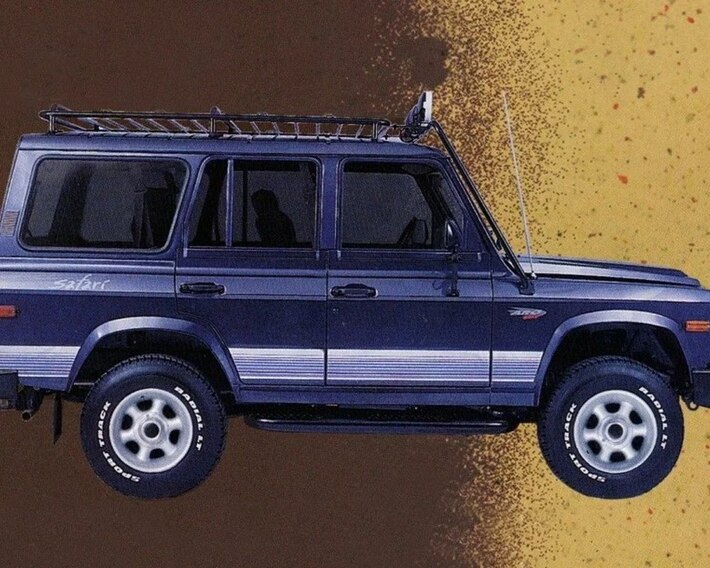
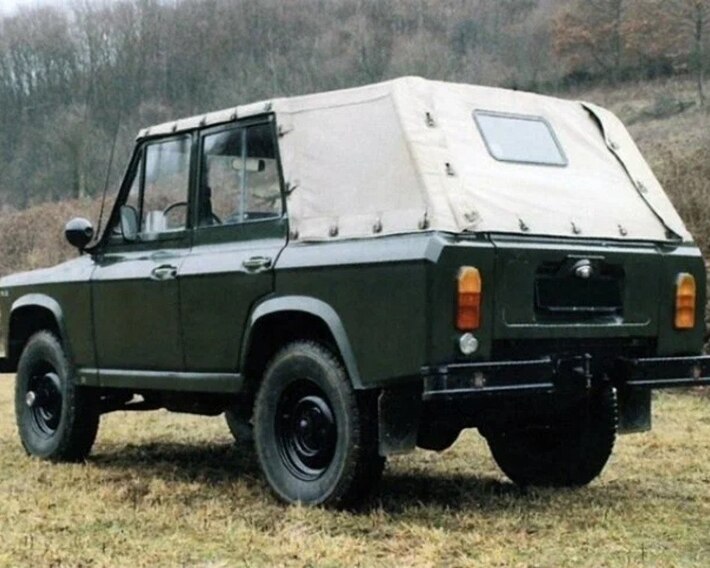
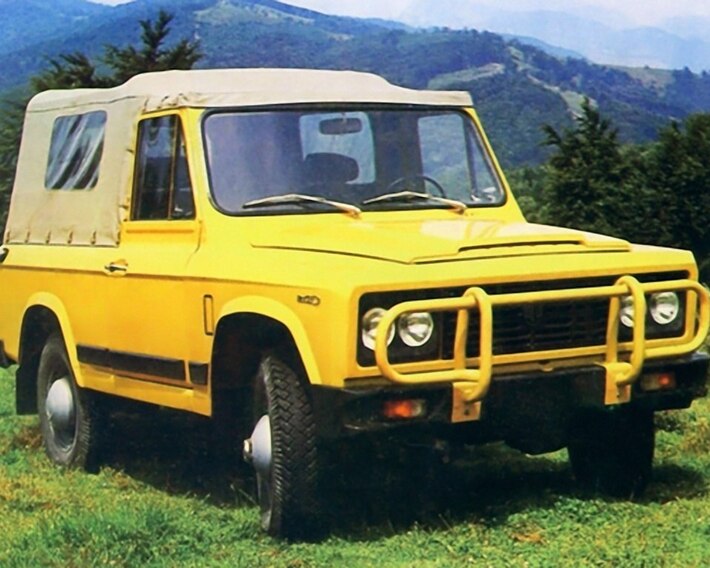
The ARO 24 was introduced in 1972 by Auto Romania Câmpulung as the company's flagship full-size off-road vehicle. Built on a separate ladder chassis with live axle suspension front and rear and a part-time 4WD transfer case, the ARO 24 was conceived for Romania's most demanding environments — the Carpathian mountains, agricultural plains, and forestry operations. It served as both a military utility vehicle and a civilian working 4x4, produced in 2-door and 4-door configurations as well as a pickup variant.
What distinguished the ARO 24 from its Soviet-bloc contemporaries was an ambition to export to Western markets. In the 1980s, the ARO 24 was sold in the United Kingdom, France, Spain, and the United States — marketed as an affordable alternative to the Land Rover and Toyota Land Cruiser at a fraction of the price. Production exceeded 100,000 units across the model's 34-year lifespan, making it one of the most successful Romanian automotive exports of the communist era. Engine options evolved from 2.0-litre OHV petrol units through to 2.5-litre turbodiesel options in later years.
For Azerbaijani buyers today, the ARO 24 is an unusual and increasingly collectable 4x4. It fills the same practical off-road role as a UAZ 469 or early Land Rover Defender, but with a distinct Romanian character and export-market build quality that sits somewhere between its Soviet rivals and British competition. Parts availability is limited compared to UAZ equivalents, but the ARO 24's mechanical simplicity means that many components can be sourced or fabricated locally. A good example in Azerbaijan is a rare find.
Gallery
Key Specifications
| Production Years | 1972 – 2006 |
|---|---|
| Body Styles | 2-door hardtop, 4-door hardtop (ARO 244), pickup (ARO 246), soft-top |
| Construction | Body-on-frame with separate ladder chassis |
| Engine (base) | 2.0L OHV petrol, 83 hp |
| Engine (later) | 2.5L OHV petrol / turbodiesel, up to 100 hp |
| Drivetrain | Part-time 4WD with manual transfer case |
| Gearbox | 4-speed manual |
| Suspension (front) | Live axle with leaf springs |
| Suspension (rear) | Live axle with leaf springs |
| Brakes | Drum brakes all round (later models: front discs on some variants) |
| Kerb weight | approximately 1,300–1,500 kg depending on variant |
| Fuel consumption | approximately 12–16 L/100 km |
| Total production | over 100,000 units |
| Origin | Câmpulung, Romania |
Variant Comparison
| Variant | Engine | Power | Body | Best For |
|---|---|---|---|---|
| ARO 240 (1972) | 2.0L OHV petrol | 83 hp | 2-door hardtop | Original full-size ARO 24 — military and utility use |
| ARO 243 (1980) | 2.0L OHV petrol | 83 hp | 2-door hardtop / soft-top | Refreshed 1980 version with improved interior |
| ARO 244 (4-door) | 2.0L–2.5L petrol / diesel | 83–100 hp | 4-door hardtop | Family and commercial use — best interior space |
| ARO 246 (pickup) | 2.0L–2.5L petrol | 83–95 hp | Pickup truck | Agricultural and commercial load-carrying tasks |
What Makes the ARO 24 Stand Out
Western Export Credibility
Unlike most communist-era Eastern European vehicles, the ARO 24 was officially sold in Western Europe and the United States — submitting to type-approval processes and consumer expectations that Soviet vehicles never faced. This gave the ARO 24 a degree of build credibility beyond its Eastern European rivals.
Long Production Continuity
A 34-year production run from 1972 to 2006 is extraordinary. The ARO 24's longevity reflects both its commercial success and its adaptation across multiple political and economic transitions — from communist state enterprise to post-communist private company attempting survival in a competitive market.
Multiple Body Style Family
The ARO 24 was available as a 2-door short-wheelbase hardtop, a 4-door long-wheelbase family vehicle (ARO 244), and a pickup truck (ARO 246). This versatility made it genuinely useful across a wide range of commercial and private applications throughout its production life.
Proven Off-Road Capability
The ARO 24 served Romania's military, forest service, and border patrol for decades — conditions that demanded genuine off-road capability. Its live axle suspension and part-time 4WD system handle mud, snow, and loose mountain tracks as competently as vehicles that cost many times more.
Collector Rarity Outside Romania
Outside Romania and the immediate Balkan region, well-preserved ARO 24s are genuinely uncommon. An example in running condition in Azerbaijan represents a rare piece of Eastern European automotive history that attracts increasing attention from enthusiast and collector communities internationally.
Maintenance & Repairability in Azerbaijan
The ARO 24's mechanical architecture is broadly similar to Soviet-era off-road vehicles — live axle suspension, a ladder chassis, and carburetted OHV petrol engines. This means that mechanics in Azerbaijan familiar with UAZ, Lada Niva, or GAZ vehicles will find much that is recognisable in the ARO 24's drivetrain. Basic maintenance tasks — oil changes, ignition servicing, carburettor adjustment, and brake adjustment — are well within the capability of any competent general mechanic.
The OHV petrol engine requires regular valve clearance checks (every 20,000–30,000 km) and benefits from quality oil changed frequently. The timing chain is preferable to a belt for longevity, but must be inspected for stretch on older, high-mileage examples. The 4WD transfer case uses robust components designed for military use and is generally reliable if kept properly lubricated. Differential oil changes at 50,000 km intervals are essential.
The primary maintenance challenge in Azerbaijan is parts sourcing. ARO-specific body panels, trim components, and some drivetrain parts require ordering from Romanian suppliers. However, many mechanical consumables — bearings, seals, gaskets, brake components, and standard fasteners — are metric European items available locally or from Turkish suppliers. The leaf-spring suspension uses conventional components that can often be matched from commercial spring suppliers in Baku. Corrosion prevention is critical; the ARO 24's steel bodywork and chassis are susceptible to rust and should be treated proactively if kept as a long-term vehicle.
Competitor Comparison
| Model | Strength vs. ARO 24 | Compromise vs. ARO 24 |
|---|---|---|
| Lada Niva | Better reliability record, simpler drivetrain, much stronger parts supply in the Caucasus | Smaller, less load capacity, no 4-door option, less military heritage appeal |
| UAZ 469 | Proven military lineage, higher ground clearance, enormous parts supply in Azerbaijan and CIS | Older technology, cruder interior, heavier on fuel |
| Land Rover Defender (Series III) | Superior off-road pedigree, global reputation, extensive restoration parts availability | Far more expensive to purchase and maintain, harder to source in the region |
| Toyota Land Cruiser 40 | Legendary reliability, excellent parts availability globally, stronger resale | Much higher price point, considered a premium 4x4 by comparison |
Cost-of-Ownership Calculator
Estimate your annual running costs for an ARO 24 in Azerbaijan. Adjust the values to match your driving profile.
Used Buying Checklist
- Chassis rust inspection — The ladder chassis is the structural foundation. Any surface rust should be assessed for depth; structural rust in chassis rails, outriggers, or crossmembers is expensive to repair properly and a serious safety concern.
- Body panel corrosion — Inspect door bottoms, sills, wheel arches, and roof gutters for rust. Body panels for the ARO 24 are difficult to source; significant panel rust significantly affects both value and repairability.
- Engine condition — Start cold and listen for tappet noise, bottom-end rumble, or excessive smoke. Request a compression test. A well-maintained 2.0L OHV petrol should pull evenly and run smoothly once warm.
- 4WD system engagement — Test engagement and disengagement of both 4WD and the low-range transfer case. Binding, grinding, or refusal to engage indicates worn transfer case components or front differential issues.
- Leaf springs and live axles — Inspect leaf springs for broken leaves and worn eyes. Check differential casings for oil leaks. Listen for axle noise under load, which may indicate worn differential or wheel bearings.
- Interior and electrical — The ARO 24 interior is spartan by any standard, but confirm heater, wipers, and lights function correctly. Wiring condition is important — amateur modifications to older Eastern European vehicles can create fire risks.
- Documentation — Verify the vehicle's identity documents, registration history, and import paperwork. Confirm the VIN matches all records.
Frequently Asked Questions
Should You Buy the ARO 24?
Reasons to Buy
- Genuine proven off-road capability — designed for military and agricultural service
- Over 100,000 produced and exported to Western markets — credible build standard for its era
- Multiple body styles including 4-door and pickup configurations
- Mechanically simple — serviceable by any competent general mechanic
- Collector rarity outside Romania gives long-term appreciation potential
- 34-year production run with gradual refinement across variants
Reasons to Consider Alternatives
- Parts availability in Azerbaijan is limited — Romanian sourcing required for specific components
- Corrosion risk is very serious on all surviving examples
- Modest power (83–100 hp) makes motorway driving slow and loud
- High fuel consumption (12–16 L/100 km) for the performance delivered
- UAZ 469 offers similar capability with far better parts supply in Azerbaijan
- No modern safety features — no airbags, ABS, or crash protection
Verdict: The ARO 24 is a distinctive, historically significant 4x4 that served Romania and dozens of export markets with genuine competence. In Azerbaijan, it is a rarity that will attract enthusiast interest — particularly the 4-door ARO 244 variant, which offers the most practical configuration for modern use. The UAZ 469 remains the more pragmatic choice for anyone who prioritises parts availability, but for the buyer seeking something genuinely unusual with real off-road credentials, the ARO 24 is a rewarding and characterful alternative.
BakuWheels uses cookies to improve your experience, analyse site traffic, and personalise content. By clicking Accept All, you consent to our use of cookies. Learn more in our Cookie Policy.