

Bugatti
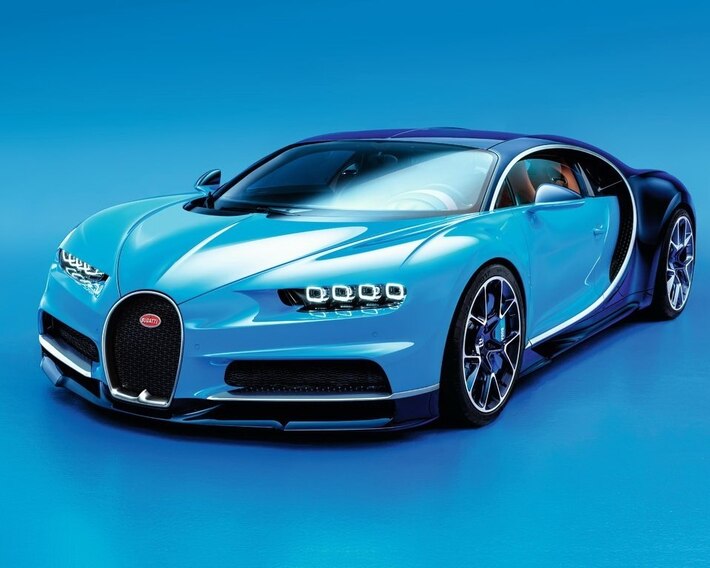
"If comparable, it is no longer Bugatti." Ettore Bugatti's founding principle survives intact after 115 years. Bugatti does not compete in a segment — it defines a category that exists solely for it. The Veyron rewrote the laws of physics; the Chiron surpassed them.
Origins & Heritage
Ettore Arco Isidoro Bugatti was born in Milan on September 15, 1881, to a family of artists — his father Carlo was a celebrated furniture and jewellery designer, his brother Rembrandt a sculptor. Ettore combined artistic sensibility with engineering genius, founding Bugatti Automobiles S.A.S. in Molsheim, Alsace on October 1, 1909.
The pre-war Bugatti Type 35 — produced from 1924 to 1930 — is considered by many automotive historians to be the most beautiful racing car ever built. With a 2.0-litre supercharged straight-eight engine and an aluminium body of extraordinary delicacy, it won over 1,000 races and 14 major race series in its career. Ettore's son Jean — killed testing a racing car at Molsheim in 1939 — was an even more gifted designer; the Type 57 Atlantic, of which only four were built, sells for over €30 million today.
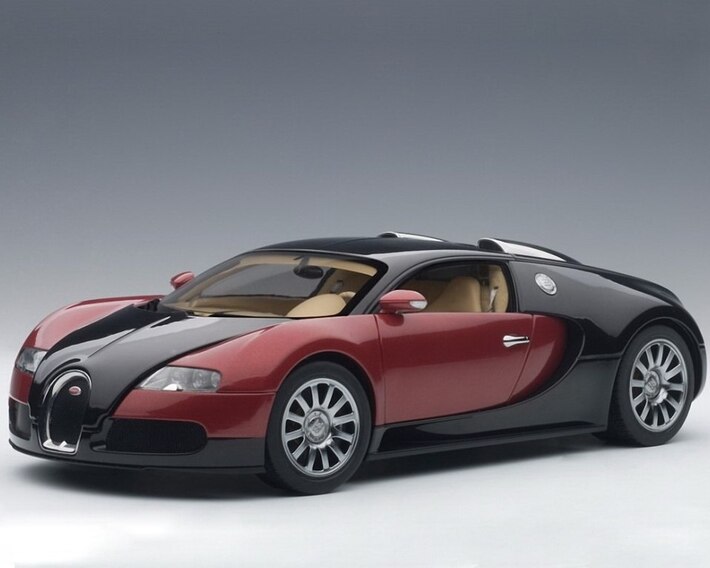
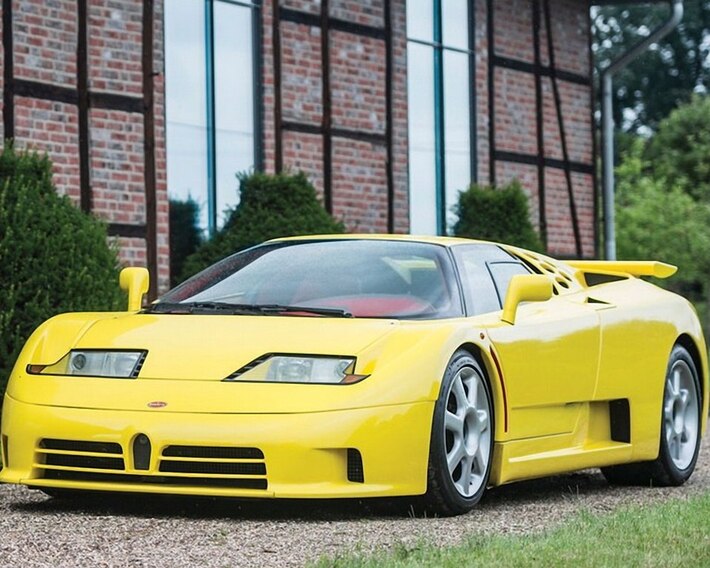
Bugatti lapsed into dormancy after World War II, was revived briefly in the 1990s as a supercar manufacturer (the EB110), and was acquired by Volkswagen Group in 1998. The 2005 Veyron 16.4 — 1,001 hp, 407 km/h, the most complex road car ever engineered — announced Bugatti's return as the world's ultimate hypercar manufacturer.
Key Milestones
Iconic Models in Pictures
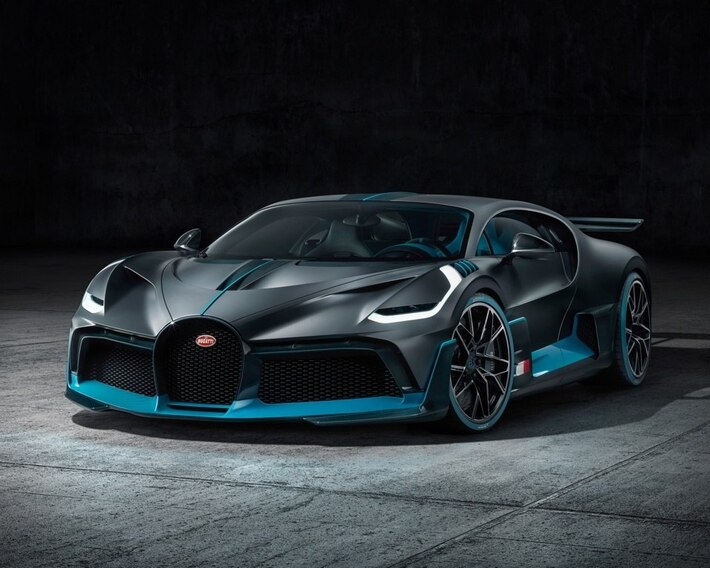
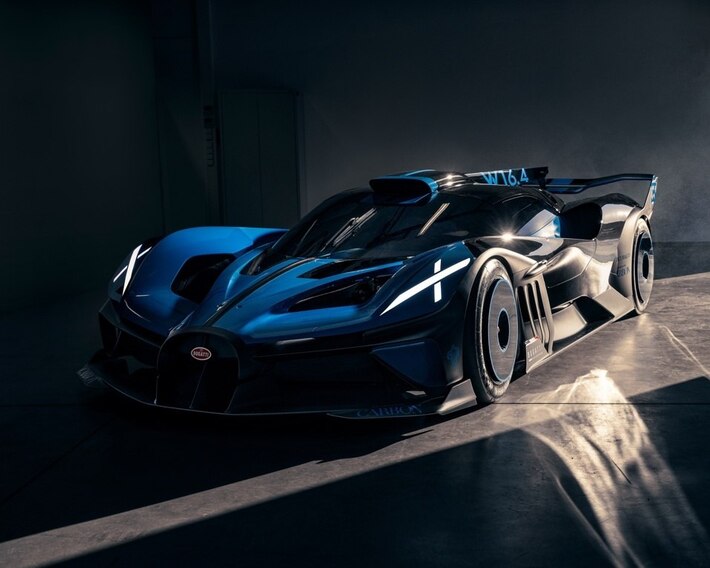
The Veyron that shattered the 400 km/h barrier, the Chiron's 1,500 hp quad-turbocharged W16, and the one-of-a-kind La Voiture Noire — Bugatti occupies a rarefied position beyond conventional automotive superlatives.
Signature Model Lineup
Bugatti's range consists of a handful of models produced in strictly limited numbers — typically fewer than 500 of any single variant. Every Bugatti is individually specified and hand-built at the Atelier in Molsheim, taking up to six months to complete.
All Bugatti Models
Browse the complete Bugatti model guide — each page includes full specifications, production history, variant comparisons, and Azerbaijan-specific collector advice.
Technology & Engineering Extremes
Bugatti's W16 engine — two narrow-angle VR8 units joined at the crank — is the most complex production engine in automotive history. Producing 1,600 hp from 8.0 litres, four turbochargers, 64 injection valves, and 10 radiators, it requires cooling systems more complex than a racing car and more fuel delivery capacity than an aircraft engine.
The new Tourbillon's Cosworth-developed naturally aspirated V16 represents an entirely different engineering philosophy — 900 rpm idle producing a sound described as an orchestra warming up, 9,000 rpm redline screaming at full power. Combined with three electric motors producing 800 hp of instant torque, the total system output of 1,800 hp arrives with a refinement the W16 could never achieve.
- 8.0L W16 quad-turbo — 1,600 hp, 1,600 Nm, 10 radiators, the most complex engine in production
- Cosworth V16 (Tourbillon) — 1,000 hp naturally aspirated plus 800 hp electric = 1,800 hp total PHEV system
- Carbon fibre monocoque — body structure of exceptional rigidity despite Chiron's 1,995 kg weight
- Active aerodynamics — 7 driving modes each selecting different wing angles and cooling configurations
- Michelin Pilot Sport Cup 2 (bespoke) — tyres engineered specifically for Bugatti to withstand 490+ km/h stresses
- Molsheim Atelier hand-building — every Bugatti assembled by a team of 20 specialists, each car taking up to six months
Bugatti in Azerbaijan
Bugatti represents the absolute apex of automotive achievement — and in Azerbaijan, ownership of a Chiron or Veyron signals a level of success and automotive knowledge that commands universal respect. The combination of French artisanal heritage, Volkswagen Group engineering rigour, and world-record performance makes Bugatti uniquely positioned as both an investment and a driving machine of historic significance.
Azerbaijan's most discerning collectors have included Bugatti models in their personal fleets — drawn by the brand's position as an object beyond category. A Bugatti is not simply a fast car; it is a cultural artefact, an engineering monument, and a statement of refined taste that transcends the conventional luxury car hierarchy.
Why Choose Bugatti?
- World speed records: The Chiron Super Sport 300+ holds the production car land speed record at 490.48 km/h — a figure no road-legal car from any manufacturer has approached.
- Art as engineering: Every Bugatti is a functional sculpture — the Tourbillon's central instrument cluster is literally a watchmaker's complication applied to automotive instrumentation.
- Scarcity: Fewer Bugattis are produced annually than any comparable manufacturer — each example is genuinely rare and historically significant.
- Investment value: Bugattis appreciate — Veyrons are worth significantly more than their original issue price, and Chiron limited editions already command premiums.
- W16 legacy: The Mistral is the last W16 Bugatti — ownership preserves one of the greatest engines in automotive history before it retires.
- "If comparable, it is no longer Bugatti." 115 years after Ettore Bugatti wrote these words, they remain literally true.
BakuWheels uses cookies to improve your experience, analyse site traffic, and personalise content. By clicking Accept All, you consent to our use of cookies. Learn more in our Cookie Policy.