

Hawtai
Chinese SUV Engineering for Demanding Roads.
Origins & Heritage
Hawtai Motor Group was established in 1988 in Ordos, Inner Mongolia — an industrial centre that would later boom with coal and energy revenues — initially as a manufacturer of vehicle components and light commercial vehicles. As China's automotive market liberalised and domestic passenger vehicle demand grew through the 1990s, Hawtai pursued agreements with South Korean automaker Hyundai to assemble licensed vehicles, giving the company access to proven platform engineering and quality standards beyond its initial domestic capability.
The pivotal strategic shift came in the mid-2000s when Hawtai began developing its own branded SUV models, moving beyond pure assembly to claim a position in the rapidly growing Chinese domestic SUV market. The Boliger, Saibao, and B35 models — produced through Hawtai's own engineering teams supplemented by foreign consulting — targeted buyers seeking rugged, affordable four-wheel-drive capability with contemporary styling at competitive price points. This approach positioned Hawtai as one of the earlier Chinese brands to build a recognisable SUV-focused identity in domestic and export markets.
Hawtai entered CIS and Middle Eastern markets in the 2010s, finding a receptive audience among buyers who valued SUV practicality, all-terrain capability, and accessible pricing over brand prestige. The brand established an assembly presence in Russia and pursued distribution agreements across the CIS region, building a footprint in markets where Chinese automotive brands were gaining acceptance faster than in Western Europe or North America. While Hawtai's scale remained modest compared to Chinese giants like Chery, Geely, and Haval, its models — particularly the B35 and Saibao V3 — achieved meaningful sales in CIS markets through the mid-2010s.
Key Milestones
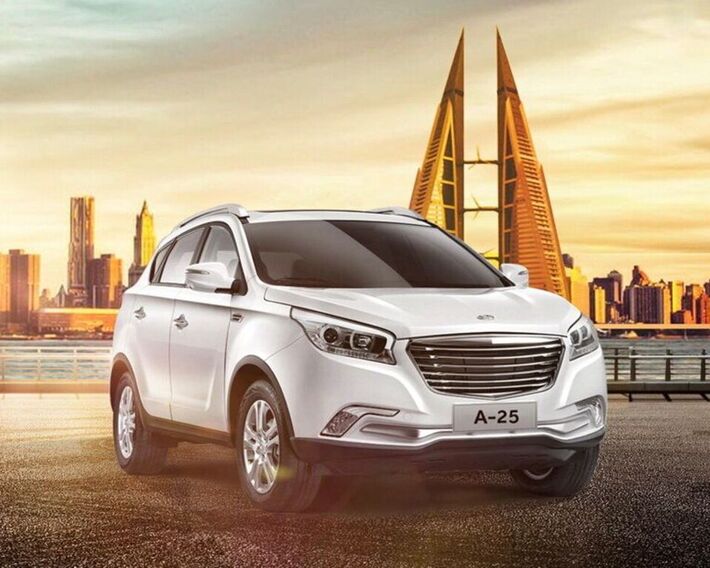
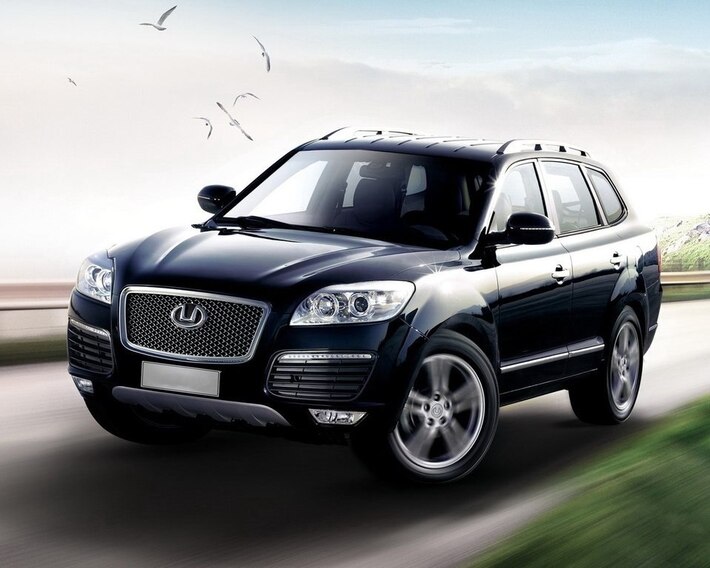
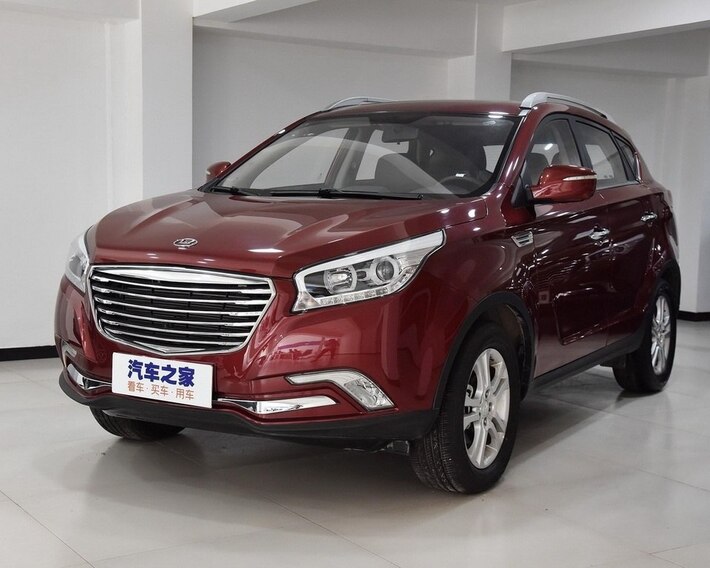
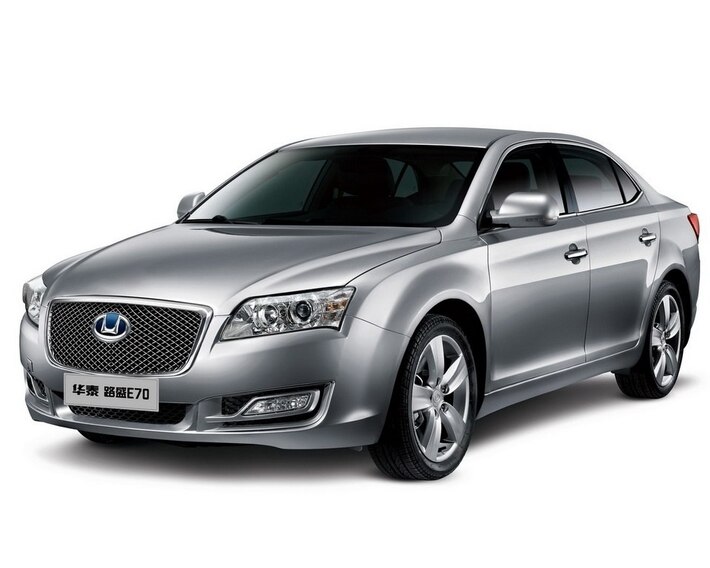
Iconic Models in Pictures
Hawtai's product history reflects China's broader SUV-focused automotive ambitions — from its early Hyundai-licensed models to independently engineered SUVs designed for both the domestic Chinese market and CIS export conditions.
Model Lineup
Hawtai's range is defined by SUVs engineered for all-terrain capability, accessible pricing, and contemporary Chinese automotive design — supplemented by entry-level sedans and emerging new energy vehicle variants for CIS and domestic markets.
Engineering & Technology
Hawtai's engineering approach reflects the pragmatic Chinese automaker model of the 2000s–2010s — combining licensed technology from established partners with domestically developed platforms aimed at delivering competitive specification and acceptable quality at significantly lower price points than established Western or Korean competitors. The Hyundai cooperation gave Hawtai access to proven suspension geometry, engine calibration expertise, and quality management processes that accelerated the brand's capability development.
- Turbocharged four-cylinder petrol engines on B35 and Saibao V3 models — providing competitive power output relative to price point, with accessible fuel consumption for the CIS market's cost-sensitive buyers
- All-wheel-drive systems on Boliger and Saibao V3 variants — electronically controlled torque distribution providing improved traction on the gravel, mud, and uneven surfaces common across Azerbaijani and CIS road networks
- Touchscreen infotainment with GPS navigation, reversing camera, and smartphone connectivity on post-2015 models — matching the technology expectations of Chinese domestic buyers and increasingly demanded by CIS market customers
- Hyundai-derived platform engineering on licensed models — bringing Korean-standard corrosion protection, structural safety engineering, and suspension tuning to a Chinese assembly context with access to Hyundai's parts and service ecosystem
- New energy vehicle drivetrains on B35 EV and hybrid variants — incorporating battery management systems and electric motor integration developed in partnership with Chinese EV component suppliers to meet China's new energy vehicle regulations
Hawtai in Azerbaijan
Hawtai vehicles entered the Azerbaijani market primarily through used car import channels from Russia, where the brand maintained a distribution and assembly presence in the 2010s. The Boliger and Saibao V3 SUVs — valued for their all-terrain capability and Chinese pricing — found buyers among Azerbaijani consumers seeking affordable four-wheel-drive vehicles for use on both urban roads and the more demanding rural and mountain routes outside Baku. The brand's Hyundai-licensed engineering heritage provided reassurance to buyers familiar with Korean automotive quality.
Parts availability for Hawtai models in Azerbaijan follows the broader Chinese brand pattern — general mechanical components and engine parts are serviceable through suppliers familiar with Chinese drivetrains, while body-specific parts may require sourcing from Russia or China directly. For buyers considering a Hawtai in the Azerbaijani used market, the Saibao V3 and B35 offer the most practical ownership proposition due to their more widely understood turbocharged engines and the existence of some Russian-market aftermarket support infrastructure.
Why Consider a Hawtai?
- All-terrain SUV capability at Chinese pricing: Hawtai's Boliger and Saibao V3 deliver genuine four-wheel-drive capability, high ground clearance, and load-bearing capacity at price points significantly below equivalent Japanese or Korean competitors — making them accessible to a broad range of Azerbaijani SUV buyers.
- Hyundai-derived engineering credibility: Hawtai's cooperation with Hyundai Motor provided its licensed models and engineering teams with Korean automotive standards — buyers of Hawtai's Santa Fe-based vehicles gain access to proven Korean platform reliability within a Chinese pricing context.
- Turbocharged engine performance on key models: The B35 and Saibao V3's turbocharged four-cylinder engines deliver competitive power and torque relative to their price class — providing lively on-road performance without the fuel consumption penalty of older, larger-displacement naturally aspirated options.
- Practical SUV dimensions for CIS conditions: Hawtai's SUV range is sized for the CIS market's practical requirements — high enough for rutted rural roads, capable enough for occasional off-road diversions, and compact enough for urban parking — matching the use patterns of Azerbaijani buyers across Baku and regional cities.
- Value retention through scarcity: Hawtai's limited distribution in Azerbaijan means surviving examples are relatively scarce — buyers who maintain vehicles properly and source parts through established Russian supply channels can build reliable transport at a fraction of the cost of comparable Korean or European alternatives.
BakuWheels uses cookies to improve your experience, analyse site traffic, and personalise content. By clicking Accept All, you consent to our use of cookies. Learn more in our Cookie Policy.