

Pagani
Pagani is the most artistically extraordinary hypercar manufacturer in the world — an Italian atelier founded by Horacio Pagani where each car is handcrafted to a standard of material quality and visual detail that separates the brand entirely from its competitors. Pagani does not simply build fast cars; it creates mechanical sculptures where every component is considered an expression of beauty, function, and the joy of extraordinary engineering.
Origins & Heritage
Horacio Pagani arrived in Italy from Argentina in 1983, having written directly to Lamborghini's legendary designer Ferruccio Lamborghini to request a job. Despite being rejected twice, he persisted and eventually joined Lamborghini's composites division, becoming a pioneer in the use of carbon fibre in production car construction. His work on the Countach Anniversary, Diablo, and later the Countach production process established techniques in carbon fibre body construction that are still used today.
In 1988, Pagani began work on a project he called the C8 Project — a personal vision of the ultimate road car. After leaving Lamborghini and founding Modena Design as an engineering consultancy, he continued developing the car alongside commercial work. In 1992, Pagani Automobili was formally established, and with crucial support from Mercedes-AMG for a bespoke V12 engine, the Zonda C12 was revealed at the 1999 Geneva Motor Show.
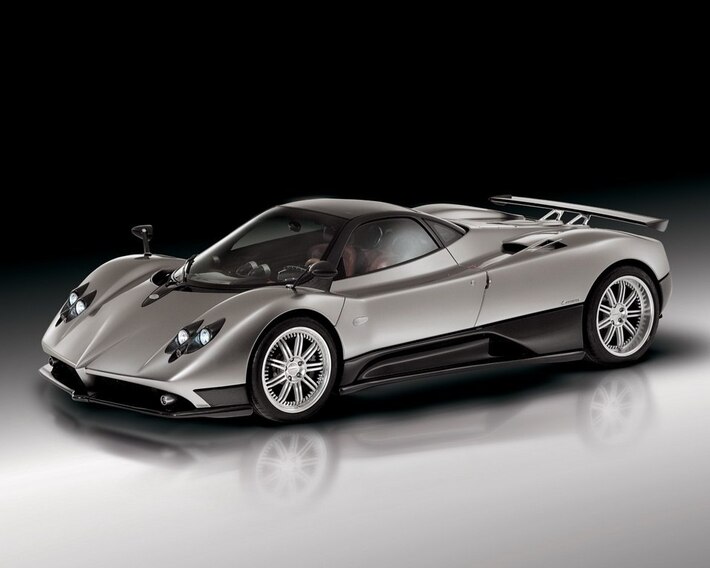
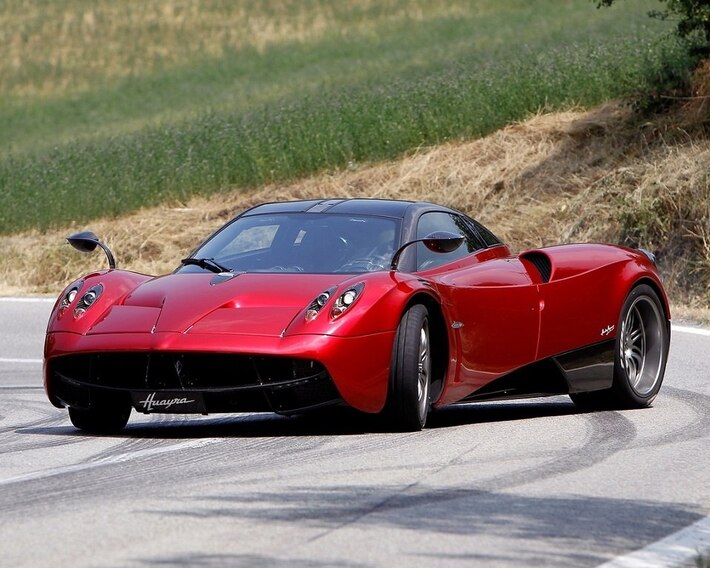
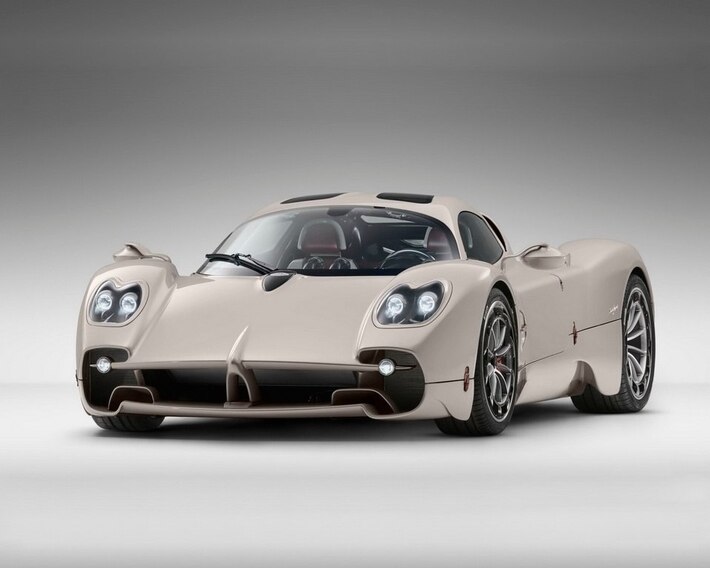
The Zonda was immediately recognised as something entirely different from other hypercars of the era. Its aerodynamic body, exposed carbon fibre and titanium structure, Mercedes-AMG V12 engine, and obsessive attention to material quality in the cockpit combined to create a vehicle that was simultaneously a work of art and a genuine performance machine. Its successor, the Huayra, refined and extended those qualities — and its successor, the Utopia, continues the tradition that Pagani has established over more than three decades.
Key Milestones
Model Lineup
Pagani produces cars in extremely limited numbers — typically fewer than 40 vehicles per year — each one individually specced and finished to its owner's personal requirements. Every Pagani is a unique object.
Pagani in Pictures
Each Pagani is a unique combination of carbon fibre engineering, titanium hardware, and Mercedes-AMG V12 power — a mechanical artwork that represents the highest standard of Italian automotive craft.
Engineering & Craftsmanship
Pagani's engineering philosophy can be expressed in a single phrase: the car as total artwork. Every component visible to the driver or passenger is considered a design element as much as a functional part. Exposed titanium bolts, hand-polished aluminium switchgear, carbon fibre structures that reveal their weave pattern through clear lacquer, leather stitched by hand using techniques borrowed from the finest Italian fashion houses — every detail is intentional.
Technically, Pagani uses Mercedes-AMG-developed V12 engines that are prepared specifically for Pagani application, with outputs varying between 730 hp and 864 hp depending on specification. The chassis and body are constructed entirely in carbon fibre, with Pagani using a proprietary carbon fibre compound called Carbotitanium — a carbon fibre weave infused with titanium strands that increases stiffness while reducing weight compared to conventional carbon fibre.
- Carbotitanium composite — Pagani's proprietary material combining carbon fibre and titanium threads delivers exceptional strength-to-weight performance beyond standard carbon fibre
- Mercedes-AMG V12 partnership — Pagani's exclusive relationship with AMG provides access to bespoke V12 engines tuned specifically for Pagani application, unavailable to any other manufacturer
- Active aerodynamics (Huayra) — four independently controlled aerodynamic flaps modulate downforce and drag in real time, responding to speed, braking, and cornering load
- Handcrafted cockpit detail — Pagani's in-house craftspeople spend hundreds of hours on each car's interior, matching leather, polishing aluminium, and verifying titanium fastener alignment to standards beyond any production car
- Manual gearbox availability (Utopia) — in an era when every competitor uses paddle-shift transmissions exclusively, Pagani offers a six-speed manual in the Utopia, preserving driver engagement
Pagani in Azerbaijan
Pagani's production volumes are among the lowest of any automotive manufacturer — fewer than 40 cars per year for the entire global market. Ownership in Azerbaijan is accordingly rare, limited to the most dedicated collectors and enthusiasts who appreciate both the performance and the artistic dimension of these extraordinary cars.
The appreciation for mechanical artistry that makes Pagani special has found a receptive audience among Azerbaijan's growing community of premium automotive collectors. BakuWheels provides information and connectivity to specialist importers for buyers interested in exploring Pagani ownership or finding examples available in the wider region.
Why Pagani?
- <strong>Automotive artistry without parallel:</strong> No other car manufacturer combines mechanical engineering with artistic craft to the degree that Pagani does — each car is simultaneously a performance machine and a hand-finished sculpture of extraordinary quality.
- <strong>Mercedes-AMG V12 exclusivity:</strong> Pagani is one of the few manufacturers in the world with access to bespoke Mercedes-AMG V12 engines — powerplants of legendary character unavailable to other hypercar builders.
- <strong>Carbotitanium technology:</strong> Pagani's proprietary composite material, unavailable from any supplier, gives Pagani cars structural properties that conventional carbon fibre cannot match.
- <strong>Extreme exclusivity with collector value:</strong> Fewer than 200 Zondas and approximately 1,000 Huayras have been built across all variants — making every Pagani a significant collector's piece with a track record of value appreciation.
- <strong>Personalisation as art:</strong> Each Pagani is built to individual specification in a process that takes months — buyers are not configuring a production car but commissioning a unique object created for them specifically.
BakuWheels uses cookies to improve your experience, analyse site traffic, and personalise content. By clicking Accept All, you consent to our use of cookies. Learn more in our Cookie Policy.