

Tatra
Tatra — founded in 1850 in Kopřivnice, now the Czech Republic — is one of the world's oldest surviving vehicle manufacturers. Renowned for its radically innovative rear-mounted air-cooled engines, aerodynamic bodies, and backbone chassis, Tatra's engineering philosophy directly influenced Ferdinand Porsche and shaped the thinking behind the Volkswagen Beetle and the Porsche 911.
History & Origins
The company that became Tatra was founded in 1850 by Ignaz Schustala in Nesselsdorf (now Kopřivnice), then part of the Austro-Hungarian Empire, initially manufacturing horse-drawn carriages. In 1897 it produced its first motor vehicle — making it one of the world's three oldest surviving car manufacturers alongside Daimler and Peugeot. Hans Ledwinka joined in 1916, beginning a period of radical technical innovation that would define Tatra for the next three decades.
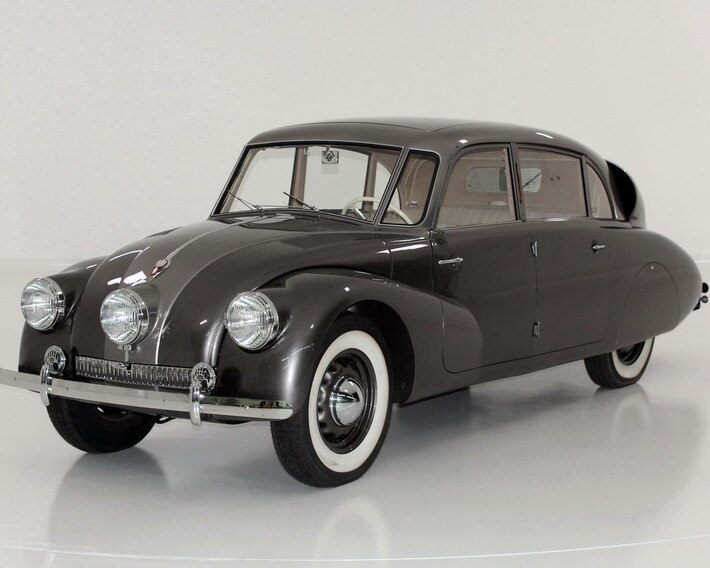
Ledwinka's designs for Tatra were decades ahead of their time. His backbone chassis, independent swing-axle rear suspension, and air-cooled engine layout appeared in Tatra models from the 1920s. The Tatra 77 (1934) was the world's first production saloon with a genuinely aerodynamic body — styled with a Cd of 0.212 using a full wind-tunnel design process. The Tatra 87 (1936) refined this further, with a rear-mounted air-cooled V8 producing 75 hp and a claimed top speed of 160 km/h. Nazi Germany's military leadership drove Tatra 87s through World War II — the cars proved so fatally fast that Hitler reportedly banned German officers from driving them.
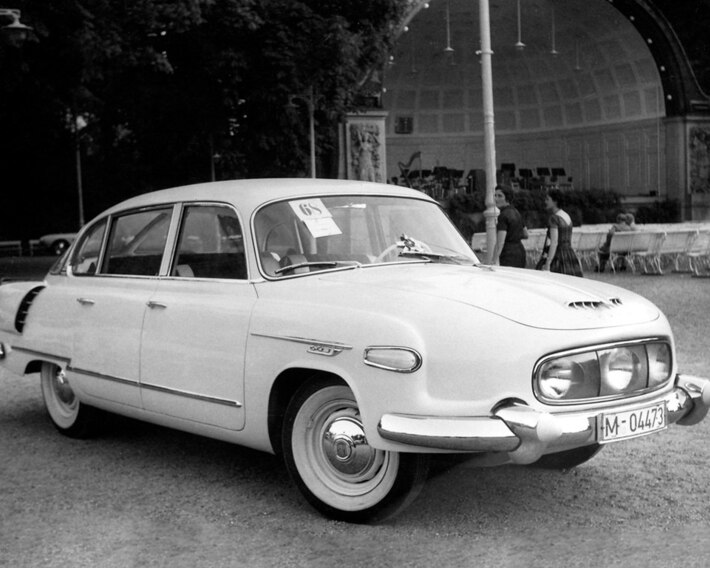
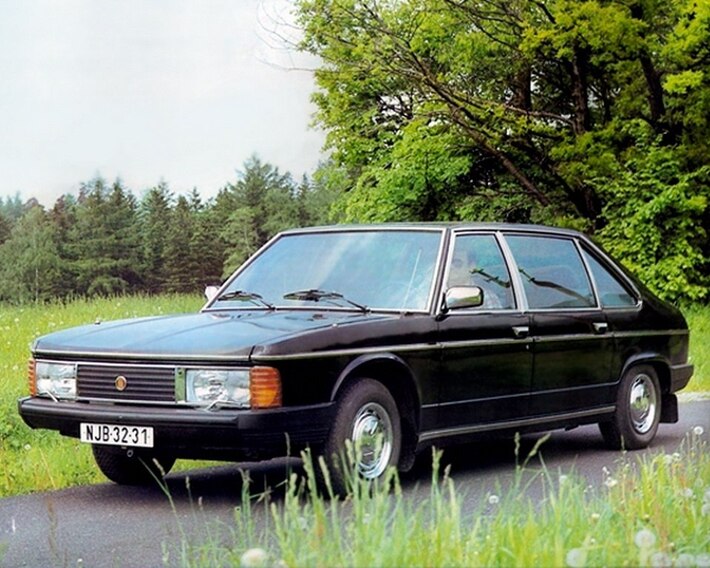
After World War II Tatra car production continued under the Czechoslovak communist government, producing models including the T600 Tatraplan and T613. The final passenger car, the T700, was produced until 1999. Tatra today focuses exclusively on heavy trucks — the T158 Phoenix — which remain famous for extreme off-road capability and have competed in the Dakar Rally with considerable success. Tatra trucks are used by military forces, civil engineering projects, and off-road racing teams worldwide.
Key Milestones
Iconic Models in Images
Tatra's vehicles span nearly 175 years of engineering history — from the aerodynamic pioneers of the 1930s to the modern off-road trucks that compete at the Dakar Rally.
Model Range
Tatra's passenger car legacy spans from 1897 to 1999, with a final focus on heavy trucks that continues to the present day.
Technology & Engineering
Tatra's engineering legacy rests on three pillars: the backbone chassis (a central tube carrying all mechanical loads), independent swing-axle rear suspension (giving excellent rough-road capability decades before it became mainstream), and air-cooled rear-mounted engines (eliminating the need for a front radiator and improving aerodynamics). All three innovations appeared in Tatra cars from the 1920s.
- Backbone chassis — central tubular backbone carrying drivetrain and suspension loads, providing rigidity without a conventional perimeter frame
- Rear-mounted air-cooled flat-4 and V8 engines — no radiator needed, improved front aerodynamics, simpler cooling system
- Independent swing-axle rear suspension — superior rough-road capability, decades ahead of mainstream adoption
- Aerodynamic bodywork designed using wind-tunnel testing from 1934 — Tatra 77's Cd of 0.212 remains impressive today
- Tatra T158 Phoenix truck uses air-cooled or turbodiesel engines with permanent all-wheel drive and self-locking differentials on all axles
Tatra in Azerbaijan
Tatra passenger cars are exceptionally rare in Azerbaijan — the brand's Czechoslovak/Czech origin and small production volumes limited its geographic reach. During the Soviet era, some Tatra 613 limousines appeared in official capacities in socialist bloc countries, but the Caucasus region saw very few examples. Today, classic Tatra passenger cars are prized collector items worldwide.
Tatra heavy trucks (T158 Phoenix) are occasionally encountered in Azerbaijan in civil engineering, mining, and heavy commercial applications — the brand's extreme off-road capability and high torque output making it suitable for challenging terrains. For vehicle enthusiasts, knowing Tatra's story is essential: the brand's aerodynamic and engineering innovations directly shaped both the Volkswagen Beetle and the Porsche 911.
Why Choose Tatra?
- World's third oldest manufacturer: Tatra built its first motor vehicle in 1897 — making it one of the world's three oldest surviving vehicle manufacturers.
- Engineering that shaped history: Tatra's backbone chassis, swing-axle suspension, and air-cooled rear engine directly influenced Ferdinand Porsche's designs, shaping both the VW Beetle and the Porsche 911.
- Aerodynamic pioneer: The Tatra 77 (1934) was the world's first production saloon with a wind-tunnel-designed aerodynamic body — decades ahead of mainstream automotive styling.
- Dakar Rally heritage: Modern Tatra T158 trucks compete at the Dakar Rally with genuine success — a demonstration of the brand's extreme off-road engineering surviving into the present day.
- Unique collector significance: Classic Tatra passenger cars — especially the T87 and T613 — are genuinely rare worldwide, representing irreplaceable pieces of European engineering history.
BakuWheels uses cookies to improve your experience, analyse site traffic, and personalise content. By clicking Accept All, you consent to our use of cookies. Learn more in our Cookie Policy.