
Alpine
Alpine is France's purest expression of driving pleasure — a lightweight sports car maker born in Dieppe, celebrated on rally stages across the world, and now reborn as Renault Group's performance and electric sub-brand for a new generation of enthusiasts.
Origins & Heritage
Alpine was founded in 1955 by Jean Rédélé, a young Renault dealer from Dieppe with a passion for motorsport. Rédélé had competed in the Mille Miglia and Coupe des Alpes rallies using modified Renault 4CVs, and his success convinced him that a dedicated lightweight sports car built around Renault mechanicals could win at the highest level. The name "Alpine" was a tribute to the mountain rally where Rédélé had earned his first major victories — the Coupe des Alpes.
The company's philosophy was crystallised from the very beginning: low weight, efficient aerodynamics, and perfect balance over raw power. Rédélé believed that a car weighing 700 kg with a modest engine could outperform a heavy car with twice the horsepower on the winding mountain roads that defined European motorsport. This doctrine would define every Alpine ever built.
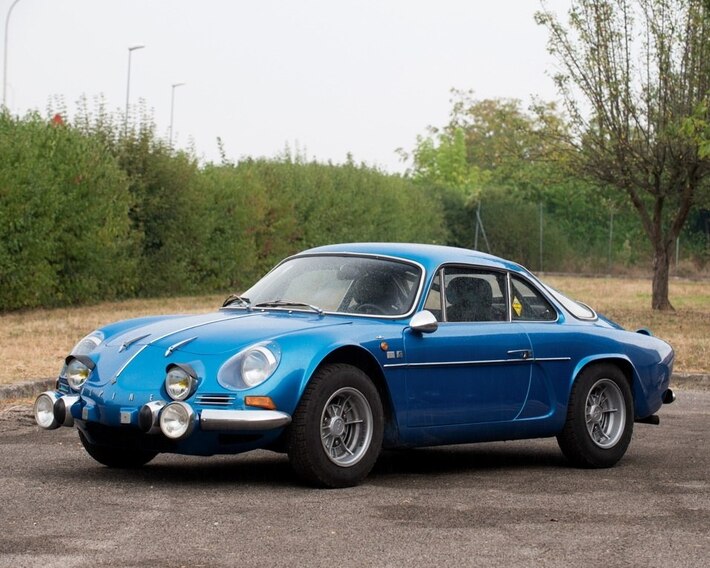
Alpine's most celebrated creation — the A110 Berlinette — debuted in 1961 and became a rally weapon of legendary status. With its fibreglass body, rear-mounted Renault engine, and impossibly nimble handling, the A110 dominated the World Rally Championship in its formative years. Renault acquired Alpine in 1973, and the marque went dormant in the 1990s before Renault revived it in 2017 with a stunning reimagination of the A110 that honoured the original's lightweight ethos completely.
Key Milestones
Iconic Models in Pictures
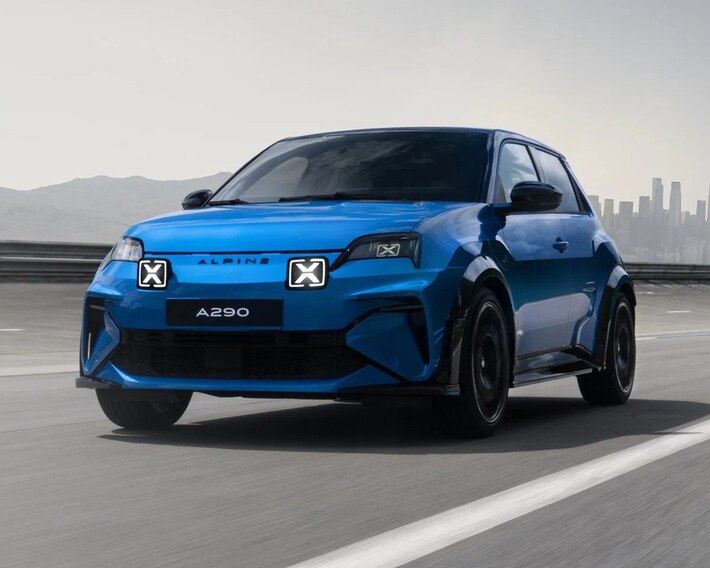
From the original fibreglass A110 Berlinette of the 1960s to the reborn lightweight sports car of 2017, Alpine's models share a common thread of elegant minimalism and driver-focused precision.
Model Lineup
Alpine's current lineup blends the brand's celebrated lightweight tradition with a forward-looking electric future. Every model is built at the historic Dieppe factory in Normandy, France — the same facility where the original A110 was assembled.
Technology & Innovation
Alpine's technology philosophy has always prioritised the intelligent application of engineering over brute force. The reborn A110 is a case study in this approach: its aluminium bonded chassis structure weighs just 108 kg, the body panels are aluminium, and the mid-mounted turbocharged engine produces enough power to exploit the minimal mass without overwhelming it. The result is a car that generates 0.9g lateral grip on standard tyres — comparable to much more powerful cars with wider rubber.
As Alpine transitions into the electric era, the brand is developing EV platforms in collaboration with Renault's engineering centres. The A290's electric drivetrain has been specifically tuned by Alpine's chassis engineers to deliver the brand's characteristic feel — adjustable torque vectoring, sport-calibrated regenerative braking, and a steering setup tuned for feedback rather than comfort. Formula 1 learnings from Alpine's F1 team feed directly into the brand's road car development programmes.
- Bonded aluminium chassis — A110 structure weighs only 108 kg, achieving rigidity without mass
- Mid-engine layout — perfect 44/56 front-rear weight distribution for neutral, predictable handling
- Formula 1 knowledge transfer — Alpine F1 team insights applied to road car dynamics
- Adjustable torque vectoring — available on electric models for precise cornering control
- Dieppe heritage manufacturing — every Alpine built at the historic Normandy factory since 1969
Alpine in Azerbaijan
Alpine's presence in Azerbaijan is niche but growing — the brand appeals to the country's enthusiast drivers who prioritise driver engagement and European prestige over the mass-market alternatives. Baku's street circuit has introduced Azerbaijani motorsport fans to the Formula 1 Alpine team, which competes on Baku's famous City Circuit each year — creating brand awareness and aspiration among a younger, performance-oriented audience.
The A110's lightweight sports car credentials make it an aspirational purchase in the Azerbaijani market, where the winding roads of the Greater Caucasus range offer exactly the kind of driving conditions that the Dieppe-built car was designed for. As Alpine expands its electric lineup, the growing EV infrastructure in Azerbaijan positions the brand well for future growth.
Why Choose Alpine?
- Lightweight philosophy: The A110 weighs just 1,100 kg — delivering driving purity that heavier, more powerful rivals simply cannot replicate on challenging roads.
- Motorsport DNA: World Rally Championship heritage from the original A110 and ongoing F1 involvement give Alpine authentic performance credentials.
- French exclusivity: Alpine is one of very few genuine French sports car brands — offering a rare alternative to Italian and German performance cars at competitive pricing.
- Electric future: A290 and A390 signal a credible EV transition that preserves the brand's driver-focused ethos rather than abandoning it.
- Dieppe craftsmanship: Hand-built in Normandy at a storied factory — Alpine ownership connects buyers to a living piece of European automotive history.
BakuWheels uses cookies to improve your experience, analyse site traffic, and personalise content. By clicking Accept All, you consent to our use of cookies. Learn more in our Cookie Policy.