
Renault
From the cobblestoned streets of early 20th-century Paris to the cutting edge of Formula One technology, Renault has shaped the democratic automobile for 125 years — building accessible, innovative cars that millions of people across six continents call their own.
Origins & Heritage
Renault was born in a Parisian workshop and a family garage in Billancourt in October 1898, when 21-year-old Louis Renault drove his self-built voiturette up the steep Rue Lepic in Montmartre to demonstrate that a small, light motor vehicle could conquer Paris's most challenging gradient. The demonstration drew twelve orders on the spot. Société Renault Frères was formally incorporated on 25 February 1899 by Louis and his brothers Marcel and Fernand — three young engineers who believed that the automobile could be elegant, reliable, and attainable.
Within five years, Renault had become one of the world's most prominent automobile manufacturers, competing aggressively in the great city-to-city road races of the early 1900s — Paris–Vienna, Paris–Berlin, Gordon Bennett Cup. Marcel Renault was killed in the 1903 Paris–Madrid race, and Louis himself narrowly survived the same event. Undeterred, Louis Renault channelled his grief into building one of the most significant industrial enterprises in French history, eventually employing tens of thousands in Billancourt.
Post-World War II, Renault was nationalised by the French government as punishment for wartime collaboration. Under state ownership, the Régie Nationale des Usines Renault became a symbol of French industrial ambition, producing the affordable 4CV that helped motorise post-war France, followed by the iconic 4L, the groundbreaking front-wheel-drive R16, and the revolutionary Espace — the car that created the European minivan segment in 1984.
Key Milestones
Iconic Model Lineup
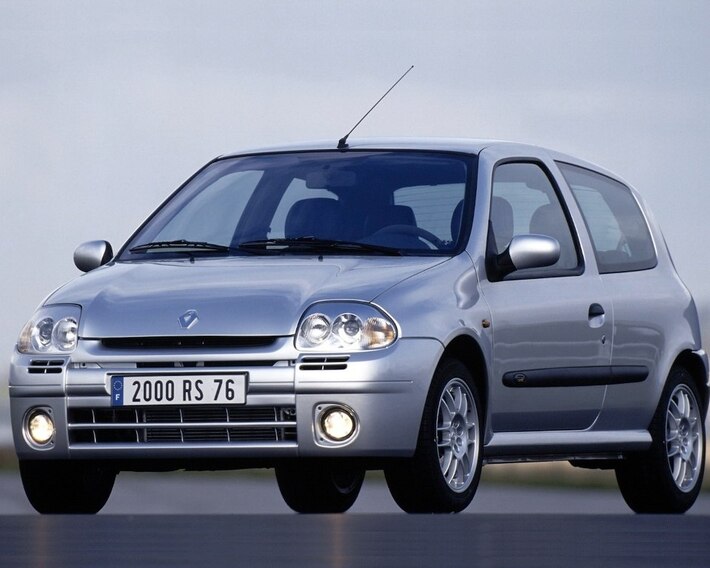
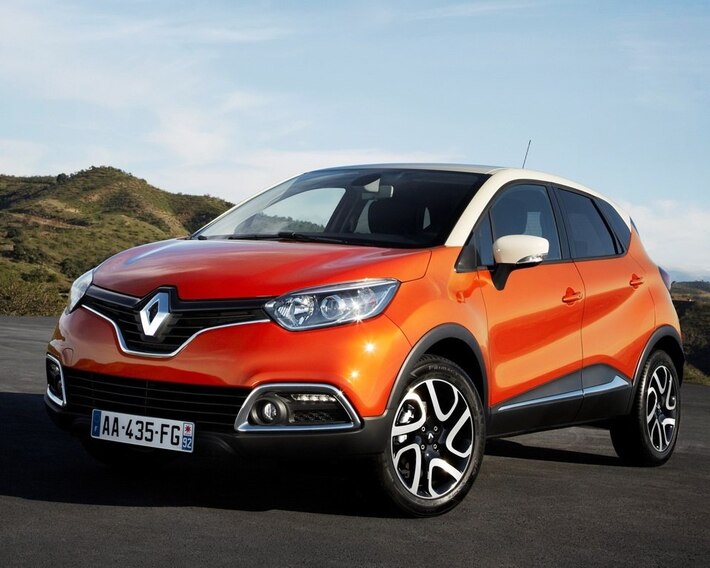
Renault's product range is built around accessible family cars, crossovers, and electric vehicles for mainstream buyers. The Clio supermini anchors volume sales, the Captur and Kadjar crossovers dominate family SUV choices, and the Mégane family covers the C-segment comprehensively. The Austral, the new R5 Electric, and the forthcoming R4 Electric signal Renault's aggressive electrification strategy centred on the values of the original icons.
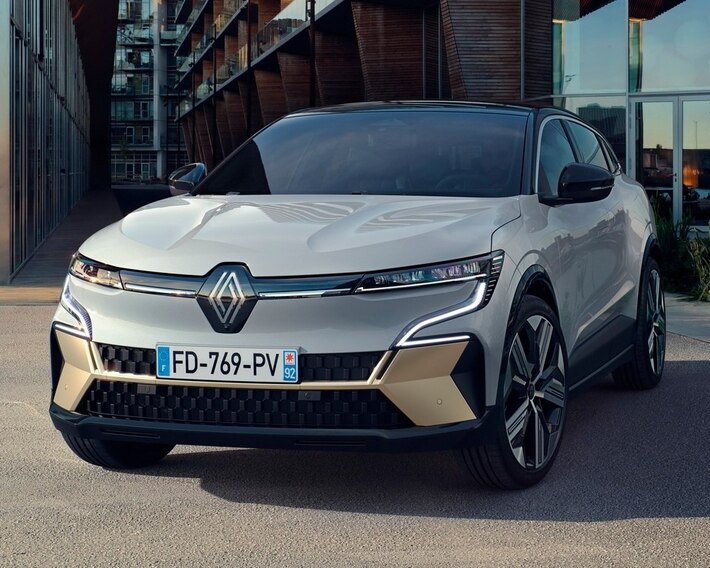
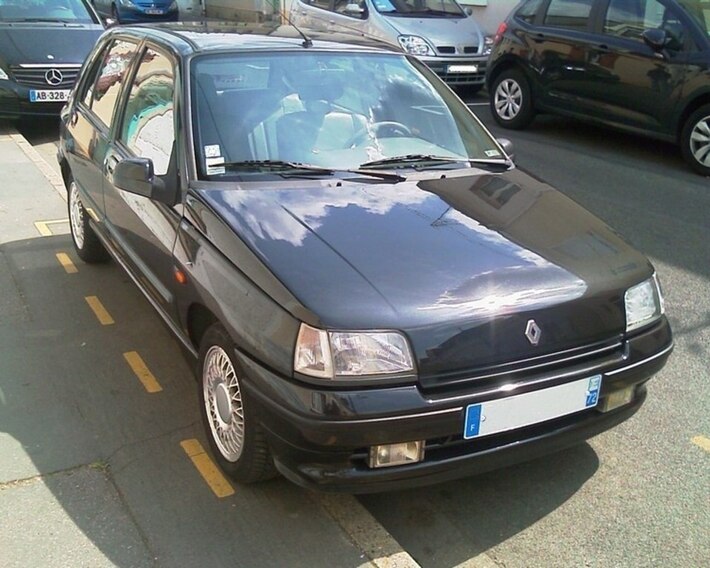
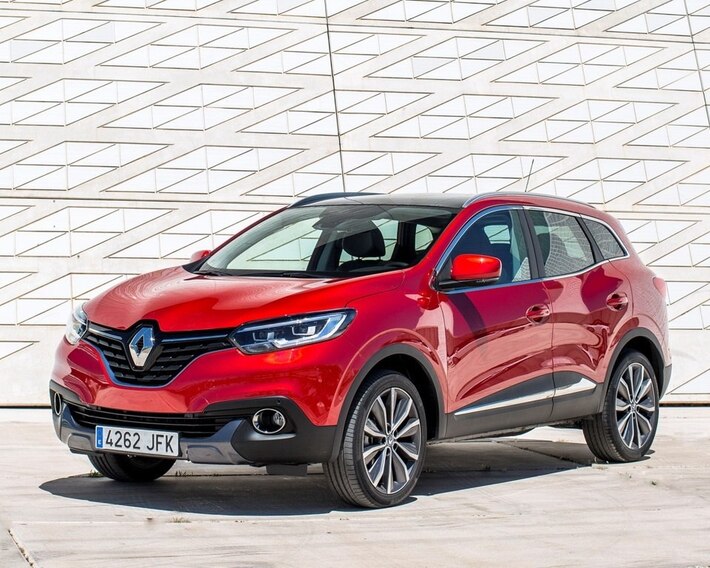
Iconic Models in Pictures
Renault's century-spanning model heritage ranges from the revolutionary Clio hot hatch to the all-electric Mégane E-Tech, embodying French flair at every price point.
Formula One — Engineering at the Limit
Renault's Formula One involvement spans five decades and encompasses both engine supply and full constructor participation. As an engine supplier, Renault-badged units powered Williams to four consecutive constructors' championships (1992–1995) and Nigel Mansell, Alain Prost, Damon Hill, and Jacques Villeneuve to drivers' titles. The Renault V10 of that era is widely regarded as the finest normally aspirated Formula One engine ever produced.
Renault returned as a constructor in 2001 and achieved dominance with Fernando Alonso, securing back-to-back world championships in 2005 and 2006. The Renault RS5 V10 and later turbo hybrid units provided the foundation for Alonso's 32 victories. Today, Renault competes through the Alpine F1 Team — a brand integration that brings the Alpine performance sub-brand into the world's most watched motorsport series.
- 12 Formula One World Championship titles as engine supplier and constructor
- Williams–Renault domination 1992–1995 — four consecutive constructors' titles
- Fernando Alonso — 2005 & 2006 World Drivers' Champion with Renault
- Alpine F1 Team — Renault's current F1 programme integrating Alpine brand identity
- Le Mans victories via Alpine brand — the A220 and A442 won outright in 1978
Renault in Azerbaijan
Renault has maintained a consistent and popular presence in Azerbaijan's mainstream automotive market. Models like the Clio, Captur, and Logan are practical, reliable choices for urban Azerbaijani buyers seeking European engineering at accessible price points. The Duster — Renault's value-priced rugged crossover — has been especially popular given Azerbaijan's mixed urban and rural road conditions.
The arrival of the Mégane E-Tech Electric represents an important step toward EV adoption in Azerbaijan, backed by Renault's reputation for dependable everyday transportation. Renault's broad service network and competitive pricing continue to make it one of the most accessible European brands in the Azerbaijani market.
Why Choose Renault?
- Value for money: Renault consistently delivers European design quality, safety technology, and driving refinement at prices accessible to mainstream buyers.
- Hybrid leadership: E-Tech full hybrid system in the Clio and Captur delivers 40–60% fuel economy improvement with zero engine retuning required by the driver.
- EV pioneer: The Mégane E-Tech and upcoming R5 Electric bring affordable, stylish electric mobility backed by the most extensive EV experience of any European manufacturer.
- Formula One technology: F1 development feeds directly into production car efficiency — Renault's E-Tech hybrid uses a claw clutch gearbox adapted from F1 without a clutch pedal.
- Safety excellence: Renault vehicles consistently achieve five-star Euro NCAP ratings — advanced autonomous emergency braking and lane-keeping systems are standard across most models.
- Alliance scale: Renault–Nissan–Mitsubishi Alliance membership means shared platform investment and component efficiency without compromising each brand's distinctive character.
BakuWheels uses cookies to improve your experience, analyse site traffic, and personalise content. By clicking Accept All, you consent to our use of cookies. Learn more in our Cookie Policy.