

Autobianchi
Italy's pioneering compact car laboratory — Autobianchi was the Fiat Group's test bed for front-wheel drive and modern hatchback architecture, producing beloved small cars that shaped Italian urban motoring for four decades.
Italy's Compact Car Pioneer
Autobianchi was founded in 1955 as a joint venture between three Italian industrial groups: Fiat, the tyre manufacturer Pirelli, and the Bianchi company — which had itself pioneered Italian bicycle, motorcycle, and automobile manufacturing since 1885. The partnership was established to produce small, premium-quality compact cars in a dedicated facility in Desio, near Milan, with Fiat providing the mechanical underpinnings and overall technical direction.
The company's most historically significant contribution came with the Primula of 1964 — the first front-wheel-drive car produced by the Fiat Group, and one of the earliest European applications of the transverse-engine, front-wheel-drive layout that the Mini had pioneered in Britain in 1959. The Primula's technical architecture directly informed the development of the Fiat 128 and the subsequent generation of front-wheel-drive Fiats that transformed the company's product range through the 1970s and 1980s.
Autobianchi was fully absorbed into the Fiat Group and subsequently aligned with Lancia in 1968, functioning as the upmarket sub-brand of the small Fiat platform while Lancia occupied the medium-to-large luxury segment. The A112 and Y10 models sold under the Autobianchi name in Italy were marketed as Lancia models in export markets — a dual-identity arrangement that persisted until the brand was finally discontinued in 1996.
Brand Milestones
Notable Models
Autobianchi's range consistently offered something beyond the standard Fiat — whether in design refinement, technical innovation, or driving character, each model justified the premium that buyers were asked to pay over equivalent Fiat-badged alternatives.
Autobianchi in Pictures
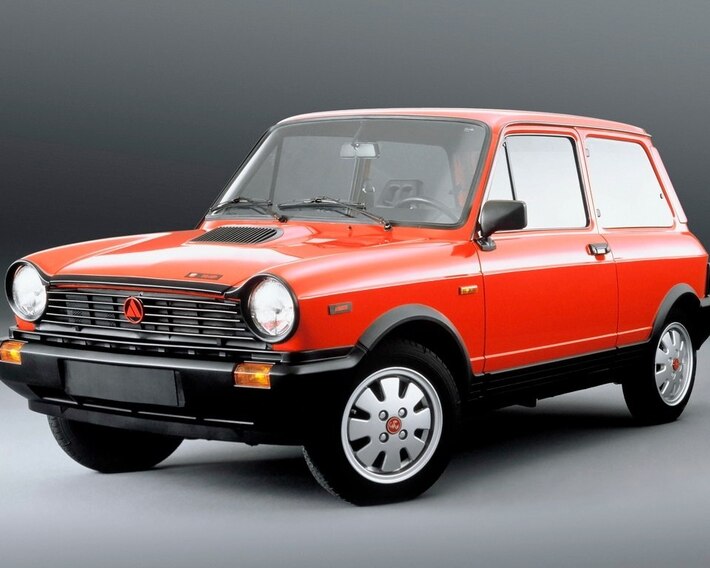
From the charming Bianchina's cabriolet elegance to the A112 Abarth's pocket-rocket aggression, Autobianchi created a gallery of Italian small cars that remain admired today.
Technical Pioneer
Autobianchi's most important technical contribution to automotive history was the development and refinement of front-wheel-drive architecture within the Fiat Group. The Primula of 1964 was the proof-of-concept vehicle that demonstrated the practicality of mounting the engine transversely across the front of a family car, driving the front wheels through a gearbox integrated into the engine unit — the layout that Alec Issigonis had pioneered in the Mini in 1959.
The A112's application of this architecture in a more sophisticated form than the Mini — with a proper boot, a more refined suspension system, and significantly better interior packaging — demonstrated to Fiat's engineers that front-wheel drive could serve as the basis for a mainstream family car rather than just a compact economy vehicle. The Fiat 128 of 1969, which used a refined version of the Primula's layout, became the archetype for the European front-wheel-drive family car of the 1970s.
- Transverse front-wheel-drive pioneer — the Autobianchi Primula was among the first European cars to demonstrate that transverse-engine FWD architecture could work in a practical family car, directly informing the development of the Fiat 128 and all subsequent Fiat-group front-drive platforms
- A112 Abarth performance specification — the 1050cc engine of the A112 Abarth produced 58 bhp in a car weighing approximately 700 kg, giving a power-to-weight ratio comparable to contemporary hot hatches at a fraction of the price
- MacPherson strut front suspension — adopted in the A112, the MacPherson strut layout provided a compact, effective independent front suspension solution that maximised engine bay packaging and delivered handling precision
- Bianchina cabriolet engineering — the convertible version of the Bianchina demonstrated Autobianchi's ability to engineer a structurally sound open-top body on the compact Fiat 500 platform, providing a degree of refinement absent from the standard Cinquecento
- Integrated Abarth collaboration — the relationship between Autobianchi and Abarth produced a series of performance variants that combined factory refinement with genuine competition credibility, most notably in the A112 Abarth which was used extensively in Italian national rally competition
Autobianchi in Azerbaijan
Autobianchi vehicles are uncommon in Azerbaijan, with any examples present in the country typically representing imports from Italy and Central Europe where the brand was originally sold. The A112 in particular — especially the Abarth performance variant — has a dedicated collector following across Europe that occasionally extends to the Azerbaijani market through specialist vintage Italian car enthusiasts.
For collectors interested in Italian automotive history and the specific chapter of small car development that Autobianchi represents, these vehicles offer an accessible entry point into Italian classic car collecting. BakuWheels connects enthusiasts with specialist Italian classic car importers who can source A112 Abarth and Bianchina examples from the Italian and broader European market.
Why Autobianchi?
- Technical historical significance: Autobianchi's Primula was one of the vehicles that demonstrated the viability of front-wheel drive for mainstream European family cars — making it one of the genuinely significant technical milestones in 20th-century automotive history.
- A112 Abarth cult status: The A112 Abarth is one of Italy's most beloved performance cars — a genuine pocket rocket that provides engaging, entertaining performance at a level that rivals from the same era could not match at the price. Its cult following ensures active parts and restoration support.
- Italian design quality: Even at the economy end of the market, Autobianchi consistently delivered superior interior quality and more considered design than equivalent Fiat models — justifying the premium and creating cars that have aged more gracefully than their more prosaic siblings.
- Collector accessibility: Autobianchi models — particularly the A112 — are among the more affordable entries into Italian classic car collecting, with sound examples available at accessible prices that make participation in the Italian classic car community achievable for collectors at various budget levels.
- Motorsport credentials: The A112 Abarth was used extensively in Italian national rally competition during the 1970s and 1980s, providing a motorsport heritage that adds authentic sporting significance to a car that is already charming in standard specification.
BakuWheels uses cookies to improve your experience, analyse site traffic, and personalise content. By clicking Accept All, you consent to our use of cookies. Learn more in our Cookie Policy.