
FSO
FSO — Poland's National Automaker, Builder of the Iconic Polonez and Fiat-Licensed Classics That Defined Eastern European Motoring
Origins & Heritage
FSO (Fabryka Samochodów Osobowych — Factory of Passenger Cars) was established in Warsaw in 1948 as Poland's state-owned passenger car manufacturer under the post-war communist economic system. Like many Eastern European automotive enterprises of the era, FSO was founded as a strategic national industrial project — a symbol of Poland's post-war reconstruction and modernisation under the new political order. The factory was built on a site in the Żerań district of Warsaw, which had been devastated during the Second World War, and its establishment represented a significant investment in rebuilding Polish industrial capacity while simultaneously asserting the new government's commitment to domestic manufacturing as a cornerstone of economic policy.
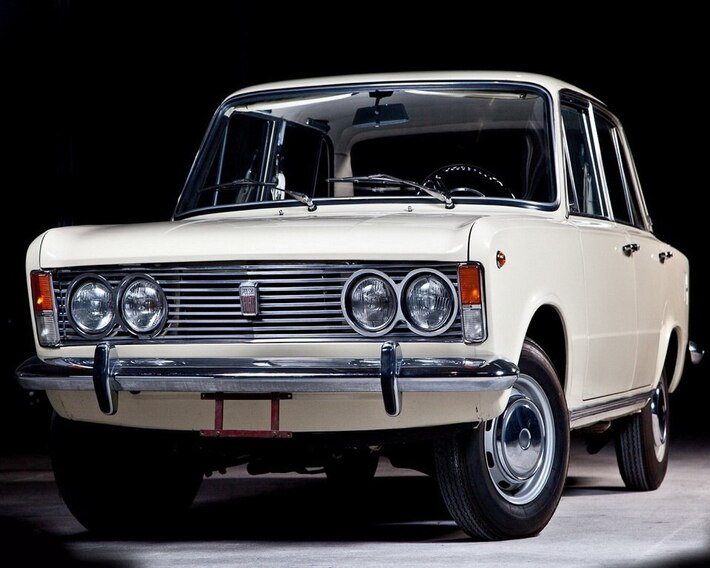
FSO's most historically significant relationship was with Italian automaker Fiat, which licensed its technology to the Polish factory under a series of agreements that defined FSO's product range for much of its history. The FSO Syrena, produced from 1955 onwards, was a domestic Polish design; but the massive volume model that transformed FSO into a genuinely large-scale manufacturer was the Fiat 125 — produced under licence as the FSO Fiat 125p (known to Poles as "Duży Fiat" — "Big Fiat") from 1967. Over 1.4 million units of the 125p were produced at the Warsaw factory over 24 years, making it one of the most produced vehicles in European history and the dominant car on Polish roads for a generation.
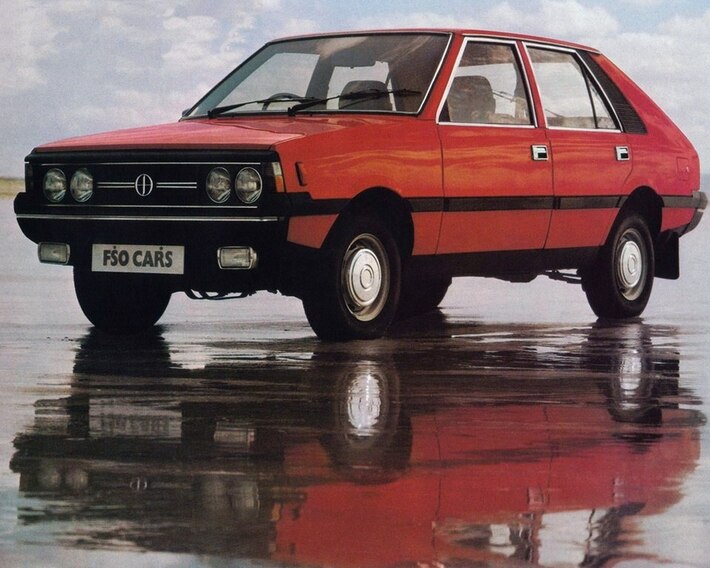
The 1978 introduction of the FSO Polonez — a hatchback designed entirely in Poland but mechanically derived from the Fiat 125p platform — represented FSO's greatest achievement in independent automotive design. The Polonez's distinctive wedge-shaped hatchback body, designed with assistance from Italian designer Giorgetto Giugiaro's Italdesign studio, gave Poland a genuinely distinctive national automobile that stood apart from the standardised Soviet-bloc vehicles dominating other Eastern European markets. After Poland's transition to a market economy in 1989, FSO formed a partnership with South Korean Daewoo, producing Daewoo-branded vehicles alongside its own models until financial difficulties led to the factory's eventual closure in 2011.
Key Milestones
Gallery
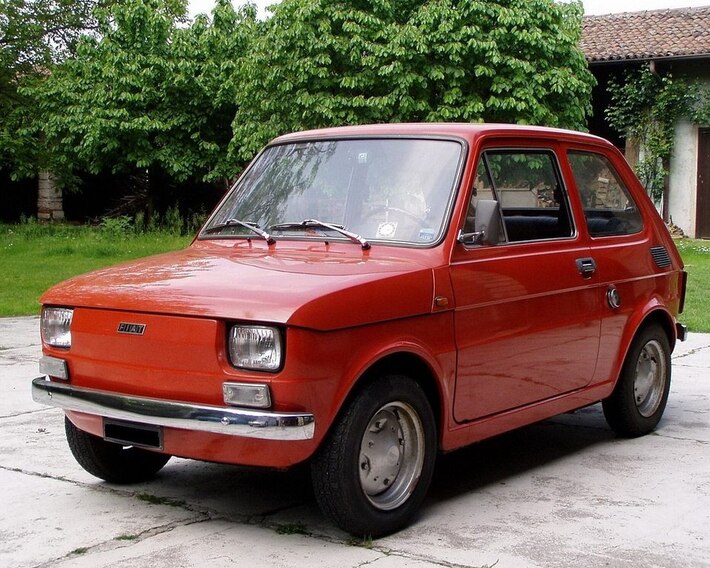
FSO vehicles spanning six decades of Polish automotive history — from the iconic Fiat 125p to the distinctive Polonez hatchback that defined a generation of Eastern European motoring.
Key Models
FSO's production history spans domestically designed classics, Fiat-licensed volume models, and Korean joint-venture products — each representing a distinct era in the Warsaw factory's six decades of operation.
Engineering & Technology
FSO's engineering approach was defined by the constraints and opportunities of its dual heritage — Fiat's Italian mechanical engineering knowledge, transferred through licensing agreements, combined with the adaptations and incremental developments made by Polish engineers working within the economic and supply-chain limitations of communist-era production. The result was a series of vehicles that, at their best, demonstrated that good engineering fundamentals could be adapted and developed to produce products well above the average quality of Soviet-bloc vehicles.
- Fiat DOHC engine adaptation — FSO engineers developed significant expertise in adapting and improving Fiat's 1.3 and 1.5-litre DOHC engines for the specific conditions and component-sourcing constraints of Polish production; the engine's fundamental design — shared with iconic Fiat sports cars of the era — gave FSO vehicles a mechanical calibre above most Eastern European competitors
- Independent suspension design — both the Fiat 125p platform and the original Polonez design incorporated independent front suspension geometry that provided handling superior to the Soviet-era vehicles with beam axles that dominated other Eastern European markets; this suspension sophistication contributed to the Polonez's positive export reception in Western European markets where both comfort and handling were evaluated
- Long-production-run mechanical refinement — FSO's engineering teams spent years refining each platform in service, developing improvements to reduce known failure points and improve durability; vehicles produced in later years of each model run benefited from this accumulated field experience and typically show superior durability to early-production examples
- Daewoo-era quality system integration — the FSO-Daewoo partnership brought Korean production quality management systems to Warsaw, improving manufacturing consistency and reducing defect rates for the Korean-derived models produced in the factory's final decade; this quality improvement legacy is visible in later FSO-branded and Daewoo-branded vehicles produced at Warsaw
- Widespread CIS parts ecosystem — FSO vehicles, particularly the Polonez and 125p, were exported extensively to Eastern European, Soviet, and Middle Eastern markets, creating a substantial parts and service infrastructure that continues to support vehicle ownership across the CIS region; in Azerbaijan, both formal parts suppliers and informal import networks can access FSO components through established Eastern European automotive parts distributors
FSO in Azerbaijan
FSO vehicles — principally the Polonez and Fiat 125p — reached Azerbaijan through the Soviet-era distribution networks that supplied Eastern European vehicles across the USSR, and later through the informal used-vehicle trading that has connected Eastern European and CIS markets since the 1990s. The Polonez in particular was familiar in Azerbaijan as an example of Eastern European automotive design that was notably more modern and dynamically capable than Soviet domestic vehicles of the same era, and surviving examples continue to appear occasionally on the Azerbaijani used-car market as collector or working vehicles.
For Azerbaijani buyers interested in FSO vehicles, the attraction lies primarily in the historical significance of the models, the simplicity of Fiat-derived mechanics that CIS-experienced engineers understand well, and the availability of parts through the European automotive parts networks that serve both Fiat owners and FSO owners simultaneously. Buyers seeking a functional classic car, a mechanically simple project vehicle, or simply an affordable and distinctive used car with genuine Eastern European heritage will find FSO models a practical and characterful choice supported by accessible spare parts and widespread mechanical familiarity.
Why Consider an FSO?
- Fiat-derived mechanical simplicity with Eastern European provenance: FSO's Fiat-licensed engineering means that the key mechanical components — engines, transmissions, suspension geometry — share DNA with Fiat's well-understood and extensively documented platform, making FSO vehicles accessible to the wide network of mechanics experienced with Fiat architecture across Azerbaijan and the CIS region.
- The Polonez as a unique Eastern European classic: The Polonez's Italdesign-assisted body and Fiat mechanical foundation give it a design quality level above most Soviet-era vehicles, creating a genuinely interesting and historically significant classic car for collectors and enthusiasts who appreciate Eastern European automotive history.
- Parts accessibility through dual networks: FSO Fiat 125p and Polonez owners benefit from access to both FSO-specific parts through Eastern European specialist suppliers and compatible Fiat components through the well-stocked global Fiat parts distribution network — a practical advantage that reduces ownership cost relative to more obscure makes.
- Affordable entry to Eastern European automotive history: FSO vehicles offer accessible purchase prices for buyers interested in the automotive history of the communist era and Poland's place within it — a specific appeal for collectors or enthusiasts who want an authentic piece of Eastern European motoring heritage at a realistic acquisition cost.
- Daewoo-era models with established CIS distribution: The FSO-produced Daewoo Lanos and Nubira models carry the benefit of the wide Daewoo parts distribution network across the CIS region, providing owners with practical support through the established channels that have served the large fleet of Daewoo-branded vehicles in Azerbaijan for decades.
BakuWheels uses cookies to improve your experience, analyse site traffic, and personalise content. By clicking Accept All, you consent to our use of cookies. Learn more in our Cookie Policy.