

Hudson
The American automaker that dominated NASCAR in the early 1950s with the revolutionary Hornet — a car whose low centre of gravity and twin H-power engine made it the machine to beat on American oval tracks.
Origins of Hudson
Hudson Motor Car Company was founded in 1909 in Detroit, Michigan, named after department store magnate Joseph L. Hudson, whose financial backing made the venture possible. The company's first car, the Hudson Model 20, was an immediate success — Hudson sold 4,556 cars in its first year of operation, an astonishing achievement for a new automobile manufacturer. By 1916, Hudson had become one of the largest automobile manufacturers in the United States, demonstrating remarkable commercial success in the intensely competitive early American auto industry.
Hudson's most significant engineering achievement came in 1948 with the introduction of the Step-Down design — a revolutionary approach to vehicle architecture in which the passenger cabin floor dropped below the sill line, creating a dramatically lower centre of gravity than any competitor. This engineering innovation produced a vehicle of exceptional road holding and handling for its era, and the subsequent Hornet model (1951-1954) built on this architecture to dominate early NASCAR racing. The Hudson Hornet's racing success was so total — winning 27 of 34 NASCAR events in the 1952 season — that it achieved legendary status in American motorsport history.
Despite its racing success and engineering innovation, Hudson faced mounting financial pressures through the early 1950s as General Motors and Ford's greater resources allowed them to offer broader model ranges at competitive prices. In 1954, Hudson merged with Nash-Kelvinator to form American Motors Corporation. The merged company initially continued the Hudson name on Nash-based platforms, but by 1957 the Hudson brand was discontinued. The company's legacy lives on primarily through its NASCAR history and the affection of classic car collectors worldwide.
Key Milestones
Notable Models
Hudson's model history includes some of the most technically innovative and racing-successful American automobiles of the post-war era.
Technology & Engineering
Hudson's engineering culture emphasised handling and dynamic performance — an unusual priority among American manufacturers of the era, producing vehicles that were genuinely superior to most competitors on winding roads and racing circuits.
- Step-Down body architecture — the floor and frame of the passenger compartment sit inside the perimeter frame rails rather than on top of them, dramatically lowering the centre of gravity and fundamentally improving handling and rollover resistance
- Twin H-Power dual carburettor system — a performance induction system that improved fuel distribution and engine breathing across the rev range, extracting significantly more power from Hudson's straight-six engine than single-carburettor installations achieved
- Monobuilt unitary construction — Hudson's approach to body-chassis integration provided greater structural rigidity than contemporary body-on-frame designs while reducing weight, contributing to the Step-Down's exceptional cornering behaviour
- Advanced suspension and steering geometry — Hudson's engineers optimised the Step-Down's suspension specifically to exploit its low centre of gravity, creating a car that genuinely handled better than its competitors rather than simply being lower
Hudson in Azerbaijan
Hudson automobiles have no presence in Azerbaijan. As classic American vehicles from the 1910s through 1950s, Hudson cars are found almost exclusively in the United States, in private collections and at specialist classic car events. Their import to Azerbaijan would be purely as collector items.
For Azerbaijani automotive enthusiasts interested in American automotive history, Hudson represents one of the most technically interesting chapters — a manufacturer that prioritised engineering innovation over marketing power, achieved genuine racing dominance with a road car, and ultimately succumbed to the commercial pressures of competing against the vast resources of GM and Ford. The Hudson Hornet's story in particular illustrates that engineering excellence can triumph even against greater corporate scale — at least until the budget runs out.
Why Hudson Matters
- NASCAR dominance with genuine engineering: The Hudson Hornet's racing success in early NASCAR was not built on special racing machinery — it was achieved with a production road car that happened to be genuinely better engineered than its competitors. This distinction makes Hudson's racing legacy uniquely credible.
- Step-Down revolution: The 1948 Step-Down body design was a genuine engineering breakthrough — a rethinking of vehicle architecture that produced measurably superior handling and safety characteristics years before most competitors began exploring similar approaches.
- Independent spirit: Hudson's history as an independent American manufacturer — never part of the General Motors, Ford, or Chrysler empires until its final absorption into AMC — represents the entrepreneurial tradition in American automotive manufacturing that produced some of the industry's most innovative vehicles.
- Classic car culture significance: Hudson Hornets, Super Sixes, and Commodores occupy a revered place in American classic car culture, with a dedicated collector community that ensures these vehicles are well-maintained and celebrated at major automotive events throughout the United States.
Iconic Models in Pictures
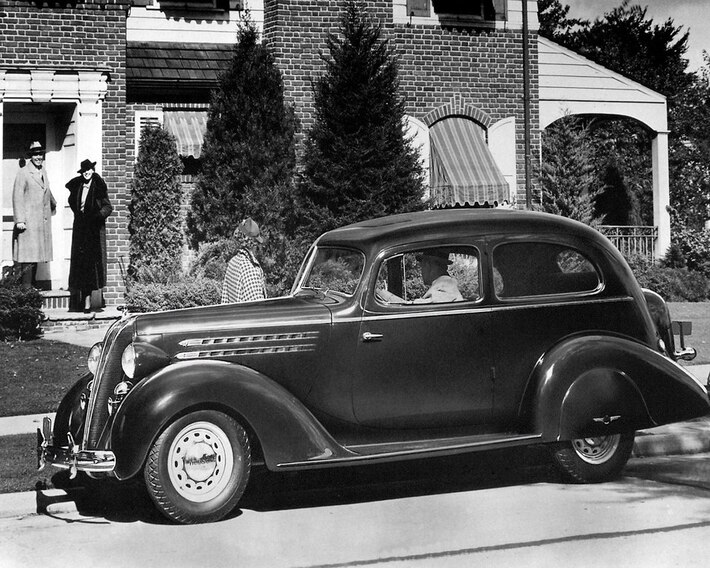
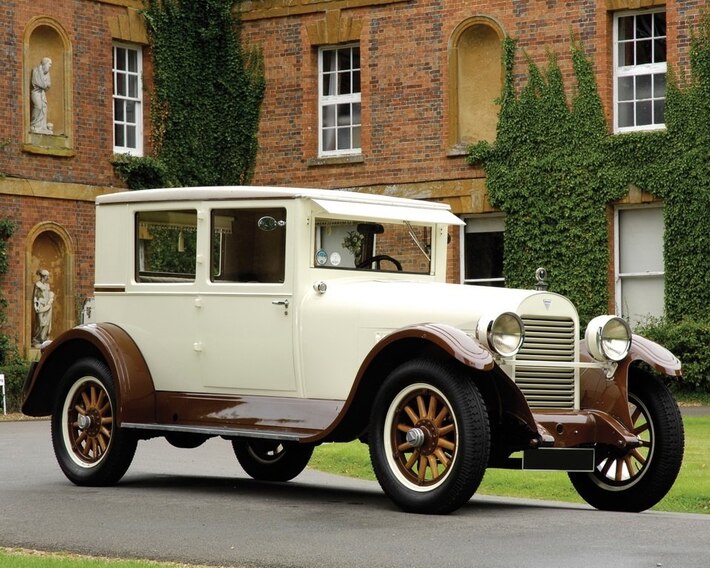
Hudson vehicles — a visual selection of the iconic models produced by this manufacturer.
BakuWheels uses cookies to improve your experience, analyse site traffic, and personalise content. By clicking Accept All, you consent to our use of cookies. Learn more in our Cookie Policy.