
Infiniti
Infiniti was born with a single purpose — to challenge the European luxury establishment with Japanese engineering precision, driver-focused dynamics, and an unconventional relationship between driver and machine built on sensory delight rather than mere transport.
Origins & Heritage
Infiniti was launched on 8 November 1989 — the same year as Lexus, and for the same fundamental reason: Japanese automakers had proven they could build world-class vehicles but recognised that the prestige segment demanded a dedicated brand identity to shed the volume-market associations of their parent companies. While Lexus pursued the near-perfect execution of established luxury conventions, Infiniti took a more adventurous path, targeting buyers who wanted emotional engagement alongside executive refinement.
The brand's visual identity — a road stretching to an infinite horizon between two mountain ridges — encapsulates its philosophy perfectly. Infiniti pursues the limitless: the limitless precision of steering feel, the limitless connection between driver and road, the limitless potential of Nissan's engineering capability applied without the constraints of mass-market cost engineering. The name itself was chosen to evoke boundlessness — a deliberate contrast to the carefully metered, value-balanced thinking of mainstream automotive design.
Over three decades, Infiniti has established a reputation for avant-garde design, particularly under the direction of Alfonso Albaisa, whose crescent-cut C-pillar and double-arch grille gave the QX60, Q60, and QX80 their distinctive silhouettes. The brand's partnership with Renault's Formula 1 team (supplying engines to Red Bull Racing and later Renault Sport F1) brought genuine motorsport credibility that resonated with enthusiast buyers.
Key Milestones
Iconic Models in Pictures
The Q50's sports saloon character, the QX80's commanding presence, and the G35's cult sports-car following define Infiniti as Nissan's premium expression of Japanese luxury and performance.
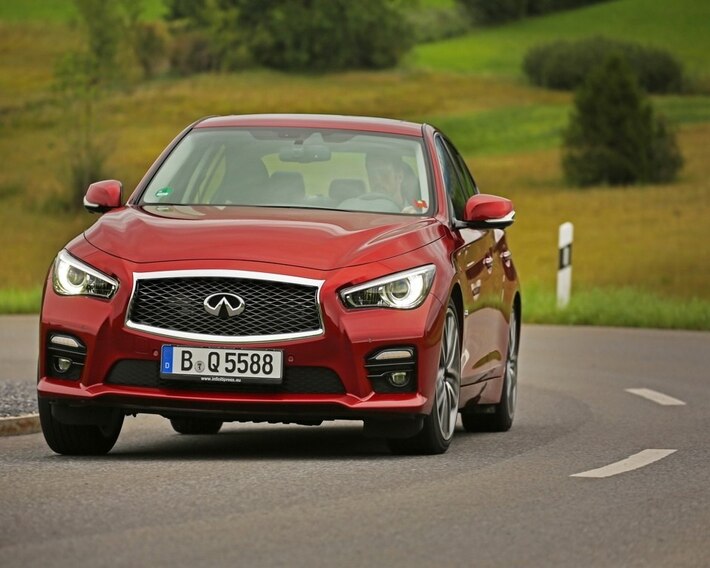
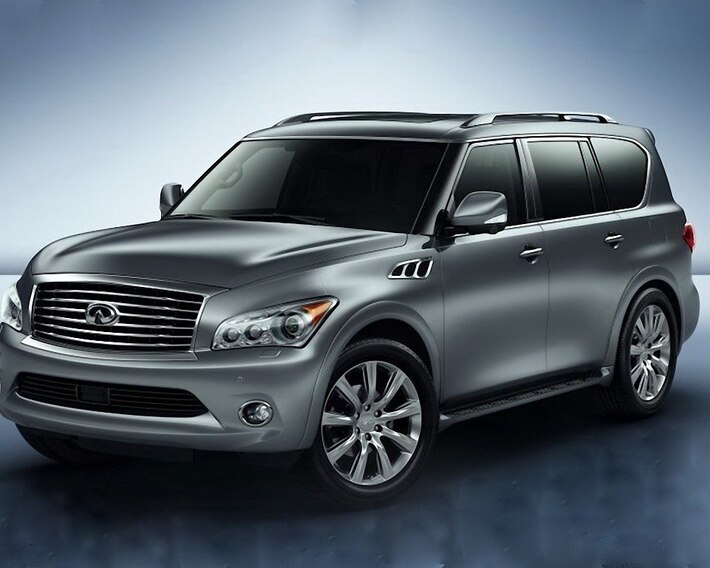
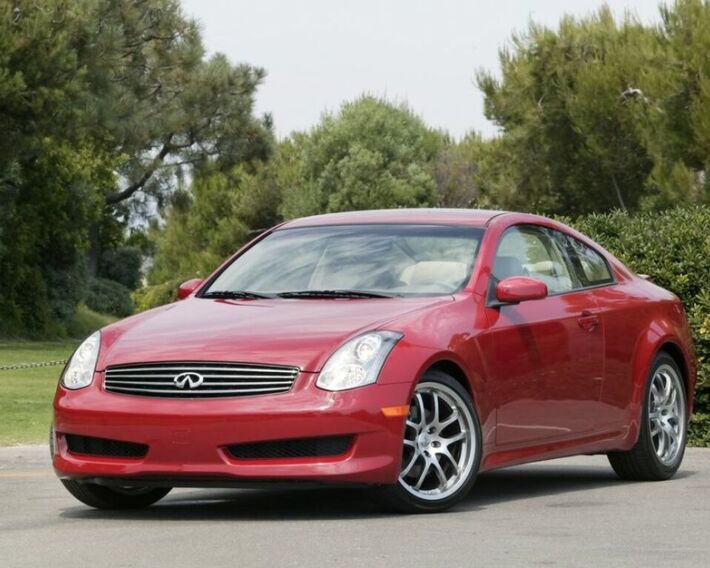

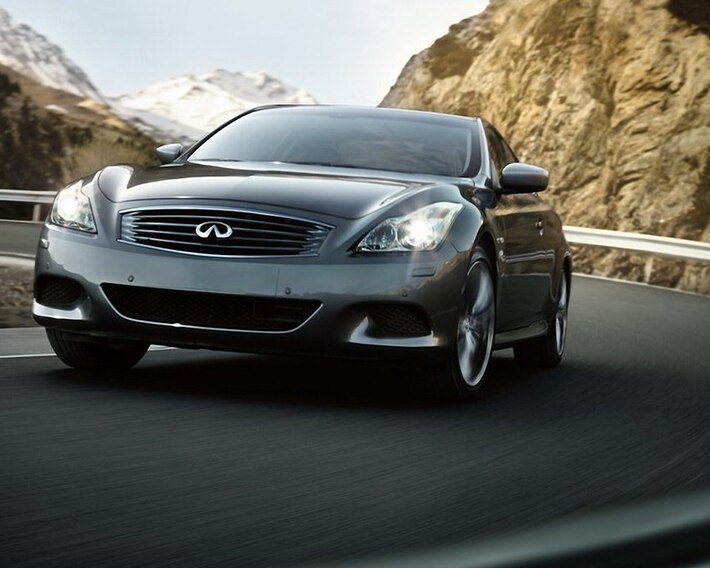
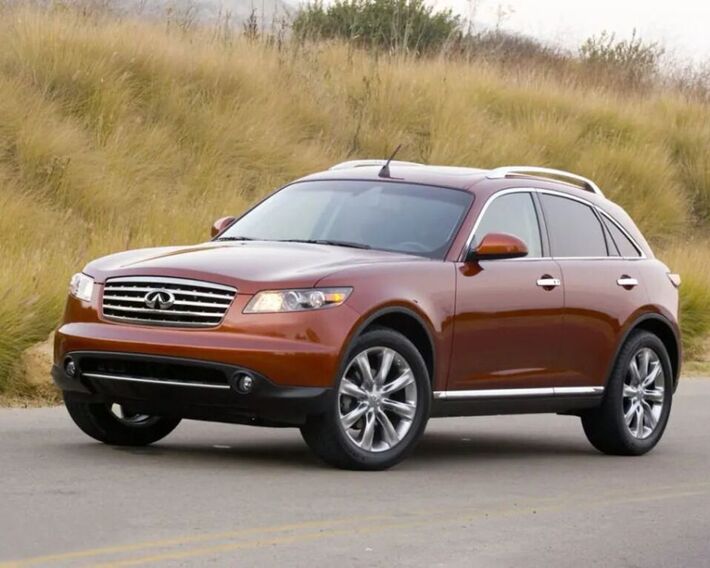
Iconic Model Lineup
Engineering Innovation
Infiniti's engineering division has produced two genuinely world-first technologies that demonstrate a commitment to invention rather than incremental improvement. Direct Adaptive Steering, introduced on the Q50 in 2014, replaces the mechanical connection between steering wheel and front wheels with a steer-by-wire system — using electronic actuators to translate driver inputs into wheel movement with adjustable response rates and no road vibration transmitted to the driver unless specifically desired.
The VC-Turbo (Variable Compression-Turbocharged) engine — launched in the QX50 in 2018 — is a genuinely unprecedented mechanical achievement. A multi-link mechanism continuously varies the engine's effective compression ratio from 8:1 (maximum power mode, equivalent to a high-performance petrol engine) to 14:1 (maximum efficiency mode, equivalent to a diesel) based on real-time demand. No production engine before it had achieved true continuous variable compression.
- Direct Adaptive Steering — world's first production steer-by-wire system for adjustable, vibration-free steering
- VC-Turbo engine — world's first continuously variable compression ratio production engine
- Infiniti InTouch dual-screen infotainment — separate upper and lower touchscreens for navigation and climate control
- ProPILOT Assist — hands-on highway driving assistant with lane centring and adaptive cruise control
- Bose Performance Series audio — specifically tuned for each Infiniti cabin geometry
Infiniti in Azerbaijan
Infiniti enjoys a dedicated following in Azerbaijan, particularly among business professionals and executives who value the brand's combination of Japanese engineering reliability with luxury appointments and driver-focused character. The QX60 SUV is the most popular model in the Azerbaijani market, offering seven-seat practicality combined with premium interior quality at a price point that represents strong value against European three-row luxury SUVs.
Infiniti's reputation for reliability — derived from the Nissan engineering foundation that underpins its models — is a significant selling point in Azerbaijan, where long-term dependability and parts availability are practical considerations. The brand's warranty and after-sales support through authorised dealers in Baku provide peace of mind for buyers making a premium investment.
Why Choose Infiniti?
- World-first technologies: VC-Turbo engine and Direct Adaptive Steering represent genuine engineering firsts that demonstrate Infiniti's innovation ambition.
- Japanese reliability: Nissan engineering foundation delivers long-term dependability that consistently scores well in consumer satisfaction surveys.
- Driver engagement: Sport-tuned dynamics and available twin-turbo V6 engines deliver genuine driving pleasure unlike softer luxury alternatives.
- Premium appointment: Semi-aniline leather, genuine wood and metal trim, and Bose audio systems standard on higher trims — luxury without compromise.
- F1 motorsport heritage: Engine supply partnership with Formula 1 teams brings tangible performance engineering credibility to road car development.
- Value proposition: Infiniti consistently offers higher specification levels than European rivals at equivalent price points — more technology for the money.
BakuWheels uses cookies to improve your experience, analyse site traffic, and personalise content. By clicking Accept All, you consent to our use of cookies. Learn more in our Cookie Policy.