Maybach
Where automotive artistry meets uncompromising luxury — Maybach redefines what it means to have arrived.
Origins & Heritage
The Maybach story begins not with cars but with aero engines. Wilhelm Maybach, one of the greatest engineers of the nineteenth century, partnered with Gottlieb Daimler to develop the first high-speed internal combustion engines. After Daimler's death in 1900, Wilhelm and his son Karl allied with Count Ferdinand von Zeppelin to design the powerful, lightweight engines that powered the iconic Zeppelin airships across European skies. It was this engineering tradition — precision, power, and no compromise — that gave life to Maybach Motorenbau GmbH, formally established in Friedrichshafen, Germany, in 1909.
The transition from aero engines to automobiles came in 1921, when Maybach presented its first passenger car, the W3, at the Paris Motor Show. The W3 was a revelation — technically advanced, beautifully crafted, priced beyond the reach of ordinary buyers, and a genuine achievement. Throughout the 1920s and 1930s, Maybach produced a succession of extraordinary automobiles, culminating in the 1928 DS 7 Zeppelin and its successor, the 1931 DS 8 Zeppelin. Named in honour of the airship dynasty, the DS 8 Zeppelin was motivated by an 8.0-litre V12 engine producing close to 200 hp — a remarkable figure for the era — with coachwork by Europe's most prestigious craftsmen. These cars competed with Rolls-Royce and Hispano-Suiza for the attention of royalty, industrialists, and heads of state.
World War II ended automobile production entirely; the difficult conditions of post-war Germany made a return to ultra-luxury niches impossible. The brand entered a long dormancy. In 1960, Daimler-Benz acquired Maybach Motorenbau, preserving the name and engineering heritage while redirecting operations to diesel engines for heavy railway and marine applications.
The modern Maybach chapter opened at the 1997 Tokyo Motor Show, where Daimler-Benz unveiled the Maybach concept car to thunderous applause. After five years of development, the brand relaunched in 2002 as an independent ultra-luxury marque, presenting the Maybach 57 and the extended Maybach 62 limousine in direct competition with the Rolls-Royce Phantom. Despite the technical excellence of these vehicles, sales figures never sufficed to sustain an independent brand; Daimler announced in 2012 that standalone Maybach production would end.
In 2015, three years later, Maybach was reborn in a strategically more astute form: as the Mercedes-Maybach sub-brand, positioned above the Mercedes-Benz S-Class at the apex of the three-pointed star's luxury hierarchy. This structure proved far more commercially successful. The 2021 Mercedes-Maybach S-Class (W223 platform) gained wide recognition as the finest long-wheelbase luxury sedan outside bespoke Rolls-Royce; the addition of the Mercedes-Maybach GLS 600 brought ultra-luxury to the SUV segment for the first time under the Maybach banner.
Key Milestones
Iconic Model Lineup
The current Mercedes-Maybach range is intentionally narrow: each model is developed with the same uncompromising brief — to offer the finest rear cabin space, materials, and refinement in its segment. From the S-Class sedan to the GLS SUV and the battery-electric EQS, every Maybach variant adds significant wheelbase, enhanced acoustics, and exclusive Manufaktur personalisation above the standard Mercedes equivalent.
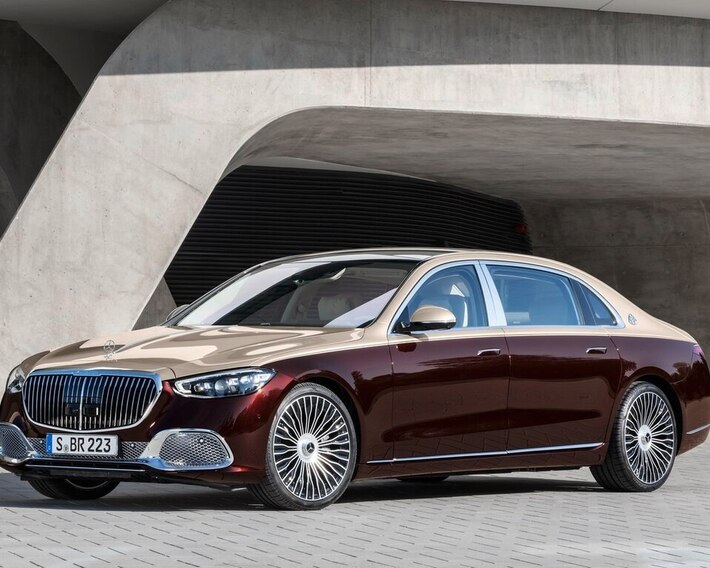
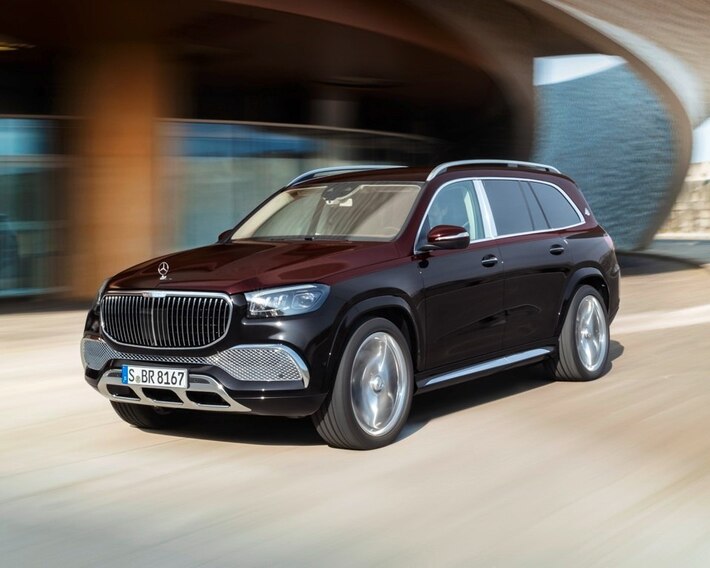
Iconic Models in the Gallery
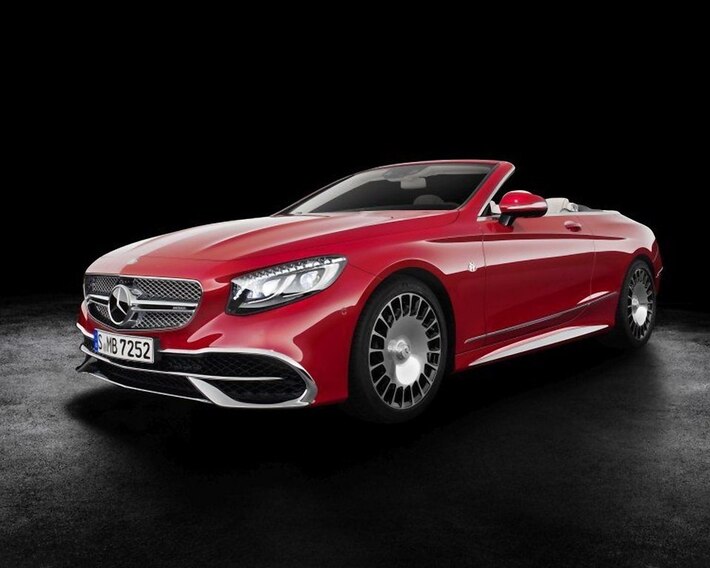
From the historic DS 8 Zeppelin to the modern EQS 680, Maybach's visual identity is defined by commanding proportions unlike anything else on public roads, exclusive colour palettes, and cabin theatre.
Craftsmanship & Technology
Every Mercedes-Maybach is a product of Daimler's Manufaktur bespoke personalisation programme, through which buyers work directly with the brand's artisan team to specify unique exterior colours, cabin leather materials, trim veneer, and monograms. The depth of personalisation is comparable to Rolls-Royce's Bespoke division, with the Haute Voiture collections at the extreme end of the spectrum: fewer than 150 cars per release, each distinguished by unique fabric treatments drawn from the world of haute couture.
The flagship S 680's 6.0-litre M279 biturbo V12 is among the last hand-assembled twelve-cylinder engines offered in a production passenger car — producing 612 hp and 900 Nm, delivery is so smooth as to feel almost supernatural. Air suspension, rear-wheel steering, and active noise cancellation together create a cabin acoustic environment quieter than many recording studios.
Maybach owners are enveloped in hand-stitched semi-aniline Nappa leather. Optional Swarovski crystal ambient lighting, Burmester premium 3D surround-sound audio systems, massaging, ventilated, and calf-rest executive rear seats, and champagne coolers together create a cabin experience that erases the boundary between automotive luxury and five-star hotel service.
- Manufaktur bespoke programme — near-unlimited personalisation of exterior and interior
- 6.0-litre biturbo V12 (S 680) — among the last hand-assembled V12 production engines in the world
- MBUX Hyperscreen — 141 cm curved display spanning the full dashboard width
- Burmester High-End 4D surround-sound audio — with seat resonators
- Semi-aniline Nappa leather — hand-stitched, available in exclusive Maybach-only shades
- Swarovski crystal ambient lighting — 254 individually controlled light points in the cabin
- Night View Assist — pedestrian and animal detection beyond headlight range
- HEPA-grade cabin filtration — medical-quality air for rear passengers
Maybach in Azerbaijan
Azerbaijan's position as one of the Caspian region's wealthiest nations — underwritten by decades of oil and gas revenue — has created a market for ultra-luxury automobiles that few countries of comparable size can sustain. The concentration of high-net-worth individuals in Baku aligns closely with the cities where Maybach has historically maintained its strongest presence: Moscow, Dubai, and Riyadh.
The Mercedes-Maybach S-Class and GLS 600 are frequent presences in Baku's diplomatic and governmental circles, serving as official transport for senior figures. The extended-wheelbase sedan's armour-ready structural architecture — available through Mercedes-Benz Special Protection — makes it a natural selection for VIP motorcades along the city's ceremonial boulevards. Azerbaijan's oil-wealth elite — from energy sector executives to property developers with international portfolios — increasingly regard Maybach as a statement of arrival recognised from Baku hotel forecourts to London.
Why Choose Maybach?
- Unrivalled rear cabin luxury: The Maybach S-Class rear compartment is engineered entirely around the passenger experience — the same philosophy as bespoke business-class aviation seating.
- Unlimited personalisation: The Manufaktur programme and Haute Voiture capsule collections ensure no two Maybachs are identical.
- Mercedes engineering foundation: Beneath every Maybach sits the world's most comprehensive luxury car service infrastructure — Mercedes-Benz safety technology, reliability, and dealer network.
- V12 heritage: The S 680's hand-assembled V12 is a collector-grade powertrain, one of a dwindling number of survivors — a sound and sensation no electric motor can replicate.
- Cultural prestige: Over a century of association with royal families, heads of state, and cultural figures of influence grants Maybach a historical authority new luxury brands simply cannot create.
- EV-ready future: The EQS 680 proves Maybach's luxury philosophy translates seamlessly to battery-electric architecture — for buyers seeking zero-emission ultra-luxury.
BakuWheels uses cookies to improve your experience, analyse site traffic, and personalise content. By clicking Accept All, you consent to our use of cookies. Learn more in our Cookie Policy.