

Rambler
Rambler is one of America's oldest car names — revived multiple times across the 20th century as a brand representing sensible, economical American motoring at a time when the Big Three were building ever-larger cars.
Origins & History
The Rambler name first appeared in 1900 when Thomas B. Jeffery produced a small, practical automobile in Kenosha, Wisconsin — one of the earliest American production cars. The Jeffery Company eventually became Nash Motors, and the Rambler name lay dormant for decades before being revived in 1950 when American Motors Corporation's George Mason introduced a new compact Rambler as a practical alternative to the large American cars that dominated the postwar market.
The second chapter of Rambler's story coincided with America's first serious interest in compact, economical cars. When Nash and Hudson merged to form American Motors Corporation in 1954, Rambler became the primary brand of the new company — producing smaller, more fuel-efficient cars at a time when the Big Three were locked in a horsepower and chrome race. Rambler's sensible approach resonated with buyers seeking practical value, and the brand achieved genuine commercial success in the late 1950s.
Rambler's peak came in 1958 when it briefly outsold both Plymouth and Pontiac to become the third best-selling American car brand — a remarkable achievement for a company competing against General Motors, Ford, and Chrysler. As American consumer tastes shifted back toward larger cars in the 1960s, Rambler faced increasing pressure, and AMC eventually phased out the Rambler name in 1969, replacing it with the American Motors brand. The Rambler story represents a recurring American automotive theme: the tension between the desire for practical economy and the cultural pull of large, powerful cars.
Key Milestones
Notable Models
Rambler's vehicle range centred on practical, economical compact American cars — vehicles designed to offer sensible transportation at a time when American automotive culture was dominated by larger, more flamboyant cars.
Engineering Philosophy
Rambler's engineering philosophy prioritised practical efficiency over performance or luxury — designing cars that were economical to operate, simple to maintain, and proportioned for the realities of American family transportation rather than styling or prestige competition.
- Unitised body construction — Rambler was among the first American manufacturers to adopt fully unitised body construction for its cars, providing structural rigidity with lower weight than conventional body-on-frame construction
- Compact proportioning — Rambler's smaller dimensions than Big Three full-size cars provided genuine advantages in fuel economy, parking, and urban maneuverability, anticipating the shift toward compact cars that would transform the American market in the following decades
- Economy-focused powertrain tuning — Rambler engines were tuned for economy rather than performance, providing adequate power with fuel consumption figures that compared favourably with far larger competitors
- Practical feature focus — Rambler emphasised practical features like reclining seats and fold-flat rear seat backs (which could form a double bed) over the chrome, fins, and power accessories that characterised Big Three styling competition
Rambler in Azerbaijan
Rambler vehicles are not present in Azerbaijan — the brand was exclusively American-market and ceased production over half a century ago. Any Rambler in Azerbaijan would be an extraordinary personal import from a dedicated American classic car collector.
For students of automotive history, Rambler's story is one of the most interesting in American automotive history — a brand that achieved genuine commercial success by offering practical economy at a time when the dominant American automotive culture was moving in the opposite direction, anticipating by decades the compact car revolution that imported brands would eventually complete.
Why Rambler Matters
- American compact car pioneer: Rambler's commercial success with compact, economical cars in the late 1950s demonstrated that a market existed for sensible American cars — a lesson that would take the Big Three another two decades to fully absorb as Japanese imports captured the compact segment.
- Unitised construction innovation: Rambler's early adoption of unitised body construction for American cars was technically progressive — bringing European structural engineering practice to American automobiles at a time when most competitors still used body-on-frame construction.
- Economy versus prestige tension: Rambler's story illustrates the enduring tension in American automotive culture between practical economy and the prestige associated with large, powerful cars — a tension that continues to shape American vehicle preferences.
- Independent manufacturer survival: American Motors Corporation's survival as a major independent manufacturer for decades against the resources of GM, Ford, and Chrysler is a remarkable story of commercial tenacity — with Rambler as the primary brand that sustained the company's market position.
Iconic Models in Pictures
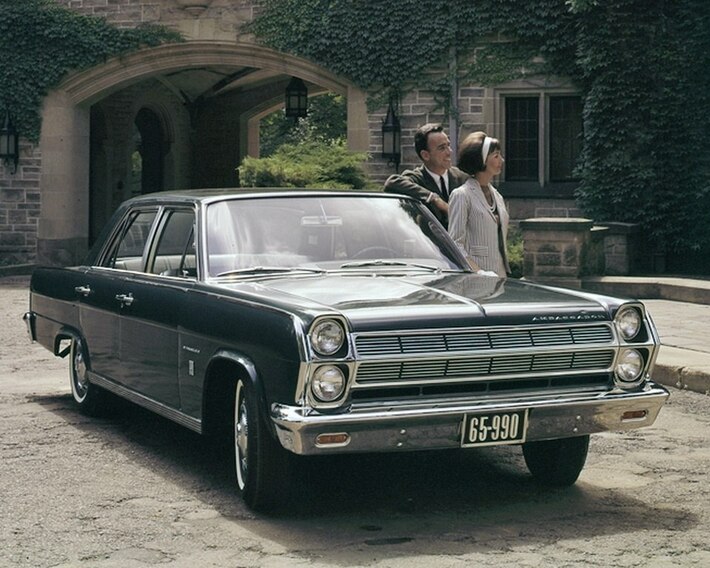
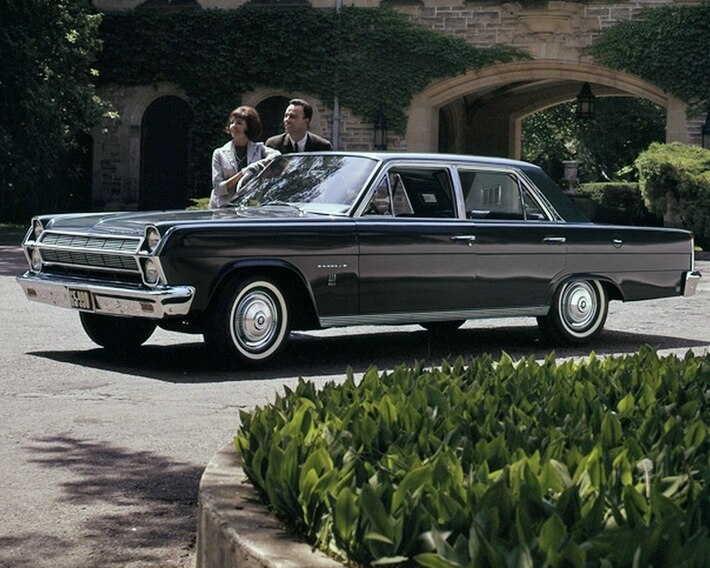
Rambler vehicles — a visual selection of the iconic models produced by this manufacturer.
BakuWheels uses cookies to improve your experience, analyse site traffic, and personalise content. By clicking Accept All, you consent to our use of cookies. Learn more in our Cookie Policy.