

TagAZ
TagAZ — the Taganrog Automobile Plant — was one of Russia's most significant automotive assembly operations, producing Korean and Chinese-designed vehicles under local license from 2001 to 2013. At its peak, TagAZ assembled Hyundai Accents, SsangYong off-roaders, and Chery compact cars for the vast Russian and CIS market. Hundreds of thousands of TagAZ vehicles remain in daily use across post-Soviet countries, including Azerbaijan, making it an important brand in the regional used car market.
Origins & Heritage
TagAZ (Taganrog Automobile Plant) was established in 2001 in the southern Russian city of Taganrog, building on the existing Tagmet metalworks infrastructure. The plant was created specifically to produce foreign-designed vehicles for the Russian market under licence agreements — a model that had proved commercially successful for other Russian assembly operations. The initial partner was Hyundai, whose Accent sedan became the plant's first major product.
The strategy was straightforward but effective: import knock-down kits from Korean and later Chinese partners, assemble them in Taganrog using Russian labour, and sell the vehicles at prices that undercut fully-imported alternatives while meeting local content requirements. TagAZ expanded rapidly, adding SsangYong's Korando-based Tager SUV, the Hyundai H1-derived Road Partner minivan, and later a range of Chery-based compact cars under proprietary TagAZ branding.
By 2008, TagAZ had become one of Russia's largest domestic vehicle producers, with annual output exceeding 100,000 units. The 2008-2009 financial crisis, combined with rising import kit costs as the rouble weakened, severely damaged the business. Production declined sharply through 2010-2012, and the plant entered bankruptcy proceedings in 2012, ceasing vehicle production in 2013. The large number of TagAZ vehicles sold during the boom years ensures that the brand remains widely represented in the CIS used car market today.
Key Milestones
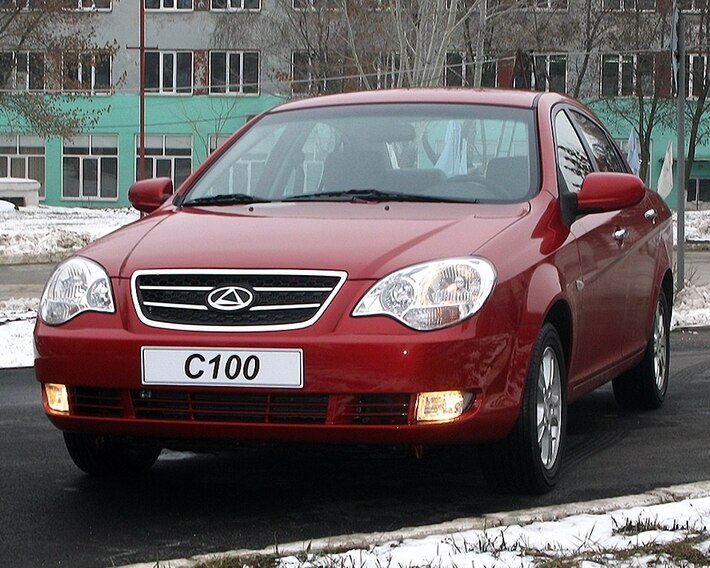
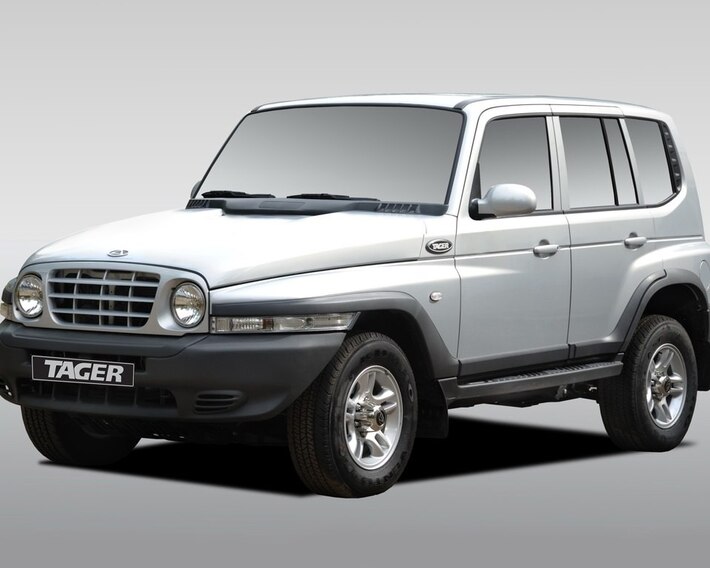
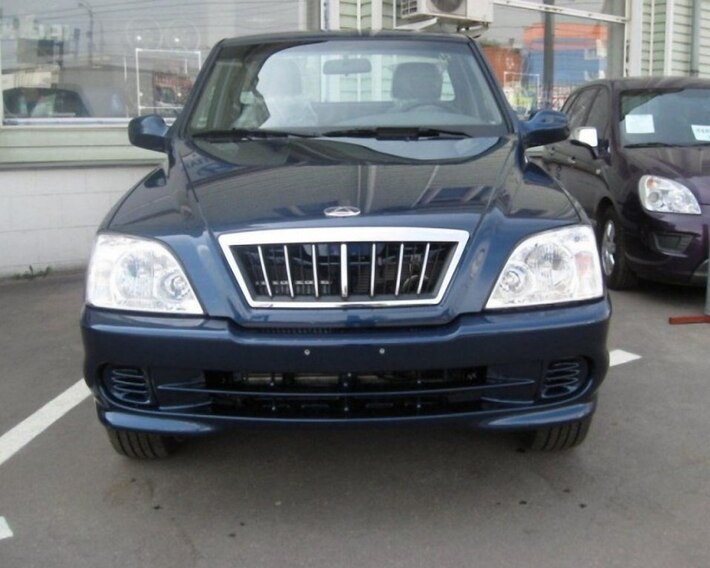
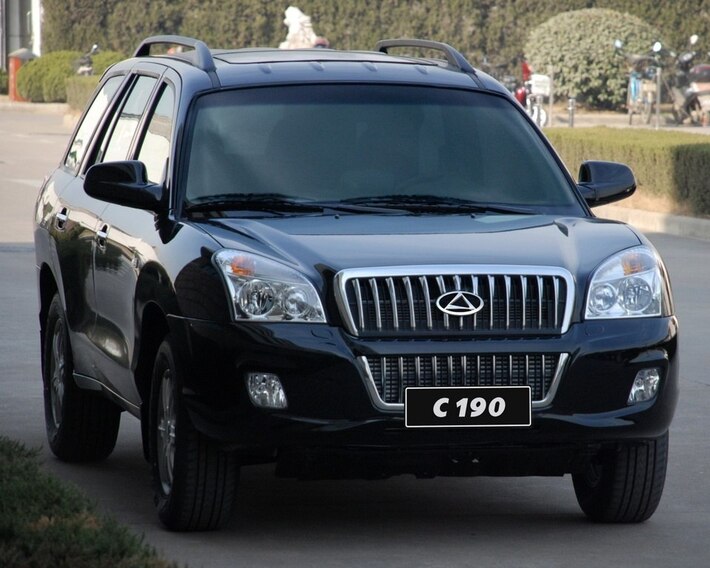
Iconic Models in Pictures
TagAZ's lineup combined Korean reliability with Russian market pricing — from the practical Vega sedan to the capable Tager SUV and the versatile Road Partner minivan.
Model Lineup
TagAZ produced a range of sedans, SUVs, minivans, and compact cars, all based on licensed designs from Hyundai, SsangYong, and Chery.
Engineering & Assembly
TagAZ vehicles were built on licensed platforms from established Korean and Chinese manufacturers, combining foreign engineering expertise with Russian local assembly. The approach prioritised proven, reliable technology over innovation — sensible for a market where repairability and parts availability were primary buyer concerns. All major mechanical systems were sourced from the original licensor, ensuring compatibility with the extensive service networks those brands had already established across Russia and the CIS.
- Hyundai 1.5L and 1.6L DOHC petrol engines — proven, widely understood by Russian mechanics, with broad parts availability
- SsangYong 2.3L petrol and 2.9L diesel engines in the Tager — robust, suited to demanding off-road use
- Five-speed manual and four-speed automatic transmissions from Korean suppliers — straightforward to service and rebuild
- Body-on-frame construction on the Tager providing genuine off-road durability and easier collision repair
- Parts interchangeability with original Hyundai, SsangYong, and Chery models — components available through established spare parts channels across CIS
TagAZ in Azerbaijan
TagAZ vehicles, particularly the Vega sedan and Tager SUV, reached Azerbaijan through the Russian used car market and were also sold new through regional dealers during the mid-2000s. The Tager proved especially well-suited to Azerbaijan's varied terrain — from urban Baku roads to the challenging mountain passes and rural tracks of the regions. Its body-on-frame construction and diesel engine option made it practical for buyers who needed genuine capability rather than car-based SUV compromises.
Today, TagAZ vehicles in Azerbaijan are found exclusively in the used car market, where their Korean-derived mechanical components make servicing straightforward for mechanics familiar with Hyundai and SsangYong platforms. For buyers considering a TagAZ purchase, the Vega and Tager represent good value at the budget end of the market — provided the vehicle's history is verified and condition is carefully inspected, as these are now older vehicles that require attention to corrosion and wear items.
Why Consider a TagAZ?
- Korean engineering at budget prices: TagAZ Vega and Road Partner share mechanical platforms with Hyundai models, delivering proven reliability at significantly lower used-car prices.
- Genuine off-road capability (Tager): The Tager's SsangYong Korando foundation provides body-on-frame construction and low-range gearing that compact crossovers cannot match.
- Widely serviced platform: Hyundai and SsangYong parts compatibility means Azerbaijani mechanics can service these vehicles without specialist knowledge or exclusive parts channels.
- Strong used market pricing: TagAZ vehicles are priced at the accessible end of the Azerbaijani used car market, offering practical transport for buyers with limited budgets.
- Established CIS heritage: Hundreds of thousands of TagAZ vehicles were sold, creating an established community of owners, spare parts traders, and experienced mechanics across the CIS region.
BakuWheels uses cookies to improve your experience, analyse site traffic, and personalise content. By clicking Accept All, you consent to our use of cookies. Learn more in our Cookie Policy.