
Hyundai
South Korea's automotive giant that conquered global markets with quality, value, and bold innovation.
Origins & Heritage
Hyundai Motor Company was born out of the broader Hyundai conglomerate founded by Chung Ju-yung, a self-made entrepreneur who rose from rural poverty to build one of Asia's most powerful industrial empires. In 1967, Chung established Hyundai Motor Company in Seoul, South Korea, with an audacious ambition: to produce a genuinely Korean automobile at a time when the country's industrial base was still nascent. The early years were shaped by a partnership with Ford, which provided engineering knowledge as Hyundai assembled the Ford Cortina under licence from 1968.
The watershed moment came in 1976, when Hyundai introduced the Pony — South Korea's first domestically designed and engineered passenger car. Styled by the Italian designer Giorgetto Giugiaro and powered by a Mitsubishi engine, the Pony was an act of national pride as much as a commercial product. It proved enormously popular in South Korea and was exported to markets including Canada, where it rapidly became one of the bestselling vehicles on offer.
The 1980s brought rapid expansion into new markets. Hyundai entered the United States in 1986 with the Excel subcompact, which sold 168,882 units in its first year — the best debut year ever recorded for an import in the American market at that time. The company's comprehensive quality improvement programme over the following decade reshaped manufacturing processes, supply chain standards, and design philosophy from the ground up.
By the early 2000s, Hyundai had emerged as a genuinely credible alternative to Japanese and European competitors, and its acquisition and integration of Kia Motors created the Hyundai Motor Group. The 2020s have seen Hyundai make its most significant strategic bet yet: a full-scale commitment to battery-electric vehicles through the IONIQ sub-brand and the purpose-built E-GMP platform.
Key Milestones
Iconic Model Lineup
Hyundai's portfolio stretches from the affordable i30 hatchback through to the critically acclaimed IONIQ 5 and IONIQ 6 electric vehicles, the Tucson and Santa Fe crossovers, and the sporty i30 N performance variant. Each model is engineered to deliver value that systematically exceeds buyer expectations.
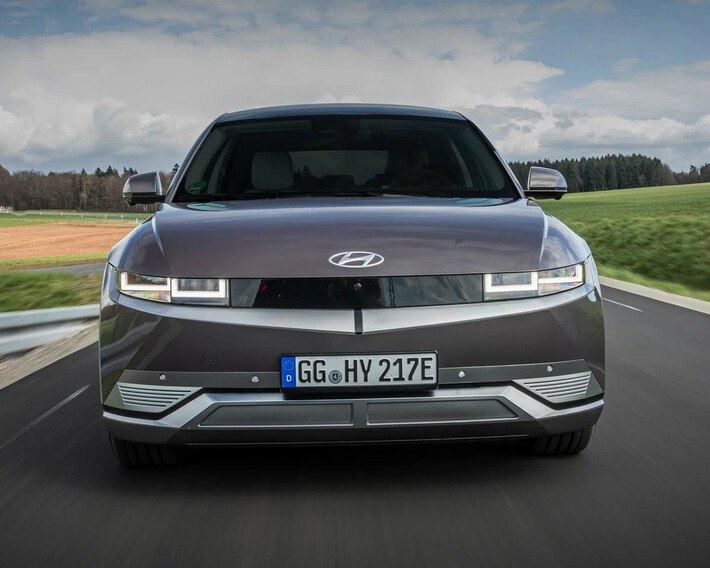
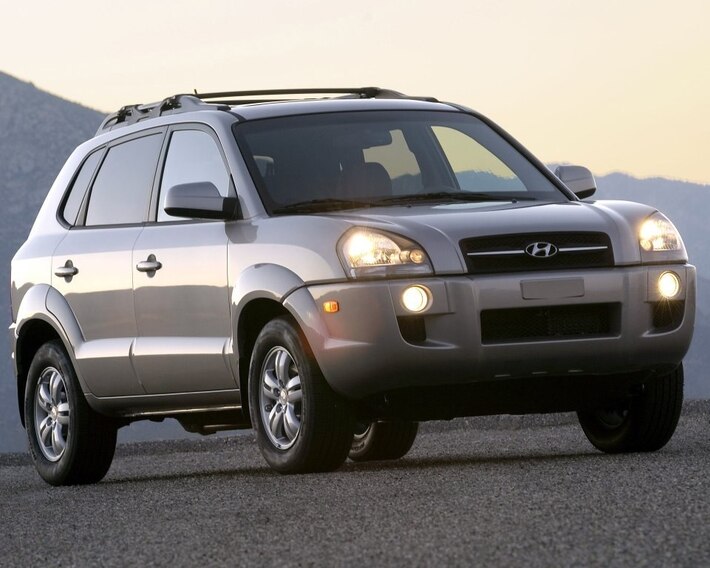
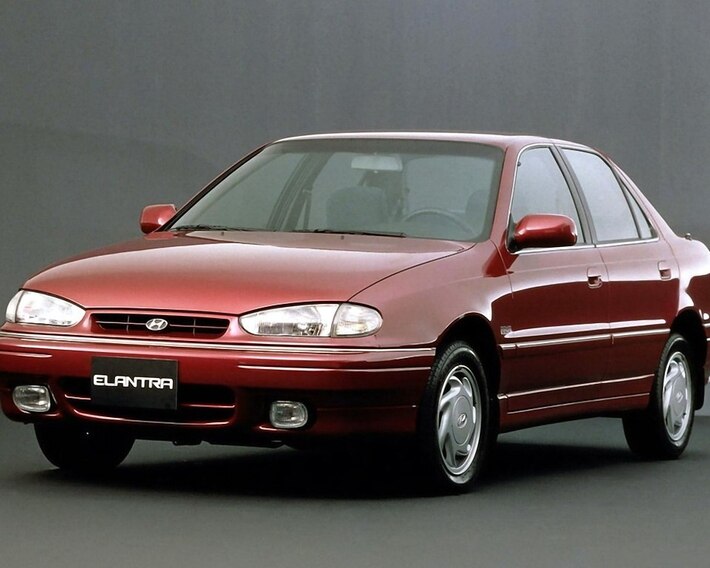
Iconic Models in Pictures
From the retro-futurist IONIQ 5 to the timeless Tucson and the sharply styled Elantra, Hyundai's design language has undergone a transformation that places it among the most visually distinctive manufacturers in the world.
Innovation & Technology
Hyundai's technological inflection point arrived with the development of the Electric-Global Modular Platform (E-GMP), a ground-up battery-electric architecture that underpins the IONIQ 5, IONIQ 6, and Genesis GV60. Unlike adapted combustion platforms, E-GMP was designed from the outset around the unique packaging advantages of battery-electric vehicles: a flat floor, ultra-low centre of gravity, and optimised weight distribution.
The platform's headline technical achievement is its support for 800V charging architecture, enabling peak charging rates of 350 kW where infrastructure permits — the ability to add approximately 100 km of range in under five minutes on a compatible ultra-fast charger.
Beyond electrification, Hyundai's SmartSense suite brings forward collision avoidance, lane keeping, blind spot collision warning, rear cross-traffic alert, and highway driving assist to vehicles across the model range.
- E-GMP dedicated BEV platform — purpose-built for electric vehicles with 800V ultra-fast charging
- IONIQ sub-brand — dedicated EV family encompassing IONIQ 5, 6, and forthcoming IONIQ 7
- 800V fast charging — up to 350 kW peak charge rate; 10–80% in approximately 18 minutes
- i-Pedal one-pedal driving — full regenerative deceleration to a complete stop without touching the brake
- HTRAC AWD with torque vectoring — electronically controlled all-wheel drive for dynamic handling
- SmartSense ADAS suite — comprehensive active safety across the full model range as standard
- BlueLink connected services — remote monitoring, OTA updates, and smartphone integration
Hyundai in Azerbaijan
Hyundai has developed a substantial and loyal following in Azerbaijan, where its reputation for reliable, well-equipped vehicles at competitive prices resonates strongly with urban buyers in Baku and secondary cities alike. The Tucson has consistently ranked among the most popular imported SUVs in the country, and the Elantra and i30 are well-regarded choices in the compact car segment.
The arrival of the IONIQ 5 in the Azerbaijani market has attracted significant attention from technology-conscious buyers. As Azerbaijan's government continues to develop urban charging infrastructure, Hyundai's comprehensive electrified lineup — spanning mild hybrid, full hybrid, plug-in hybrid, and pure electric powertrains — positions the brand advantageously for the decade ahead.
Why Choose Hyundai?
- Outstanding value proposition: Hyundai consistently delivers specification levels, safety equipment, and technology features that rival competitors at significantly higher price points.
- Award-winning EV leadership: The IONIQ 5's triple World Car of the Year victory confirmed Hyundai as a genuine EV pioneer.
- Bold, distinctive design: Hyundai's design centres in Seoul, Frankfurt, and Los Angeles have produced some of the most visually striking vehicles of the 2020s.
- Comprehensive electrification: From 48V mild-hybrid to full BEV, Hyundai offers an electrified powertrain option across virtually every model in its range.
- Proven quality improvement: From quality concerns of the late 1980s, Hyundai has engineered one of the most remarkable reliability turnarounds in automotive history.
- Generous warranty: Hyundai's five-year warranty programme reflects the brand's confidence in its manufacturing quality and provides buyers with exceptional peace of mind.
BakuWheels uses cookies to improve your experience, analyse site traffic, and personalise content. By clicking Accept All, you consent to our use of cookies. Learn more in our Cookie Policy.