

Honda
The Power of Dreams — Honda's engineering brilliance spans cars, motorcycles, aircraft engines, and robotic exploration.
Origins & Heritage
Honda Motor Co., Ltd. was born from the singular obsession of one man: Soichiro Honda, a self-taught engineer who disassembled engines as a child and never lost his compulsion to understand how things worked. Founded on 24 September 1948 in Hamamatsu, Japan, the company began by attaching surplus Army radio generator engines to bicycles — creating affordable motorised transport for a nation devastated by war. The Dream D-Type motorcycle of 1949 marked Honda's first true purpose-built product, and it announced to the world that this new company intended to be different.
Honda entered the automobile business in 1963 with the T360 mini truck and the S500 sports car, powered by a four-cylinder engine that revved to 9,000 rpm — a motorsport-grade specification in a production road car. The 1972 Civic established Honda as a mass-market force, but it was the Civic's CVCC engine that truly announced the company's engineering DNA: at a time when the US Clean Air Act of 1970 was forcing every other manufacturer to develop catalytic converters, Honda's stratified-charge combustion technology met the emissions standards without one. In 1976 the Accord arrived, giving Honda a premium family car that would eventually become America's best-selling car for three consecutive years.
The 1986 launch of Acura made Honda the first Japanese manufacturer to establish a dedicated luxury brand in North America. Three years later, the VTEC system debuted in the 1989 Integra, giving the world a naturally aspirated engine that delivered both low-speed efficiency and high-rpm exhilaration. The 1990 NSX supercar, developed with direct input from Ayrton Senna, proved Honda could compete with Ferrari and Porsche on engineering alone. On the Formula 1 stage, Honda engines powered Williams to the Constructors' Championship in 1986 and 1987, then McLaren to four consecutive championships from 1988 to 1991.
Key Milestones
Iconic Models in Pictures
From the beloved Civic to the thrilling NSX Type S and the versatile CR-V Hybrid, Honda's range embodies the full breadth of the Power of Dreams.
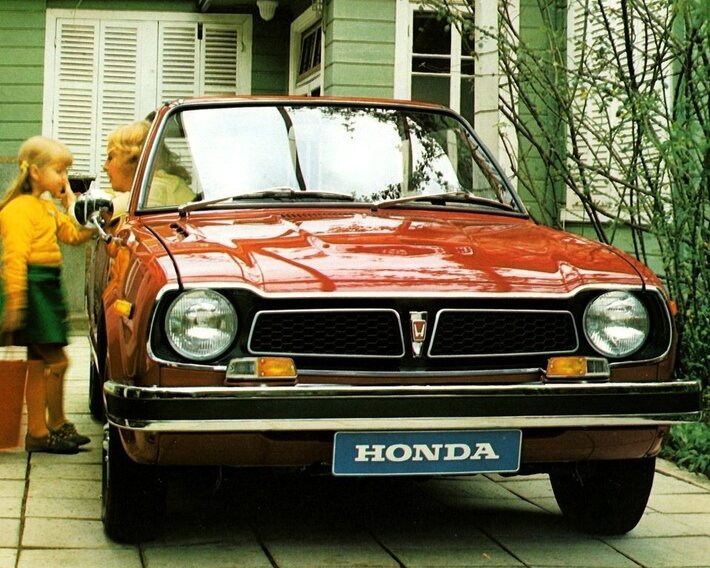
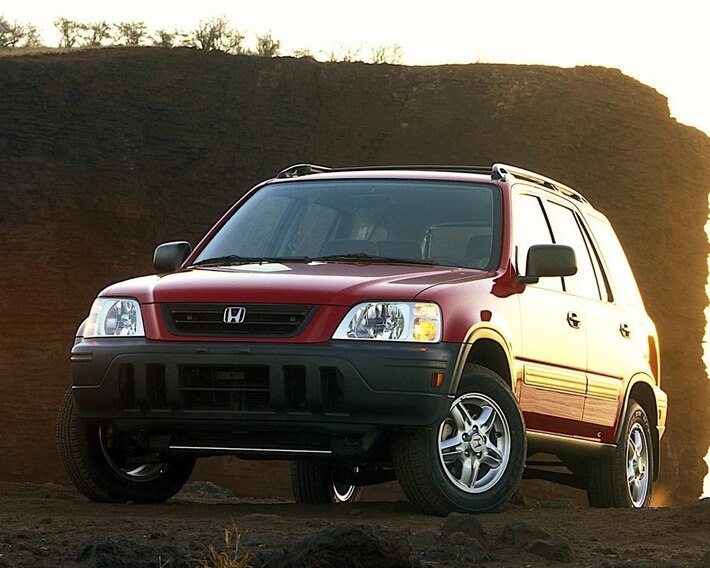
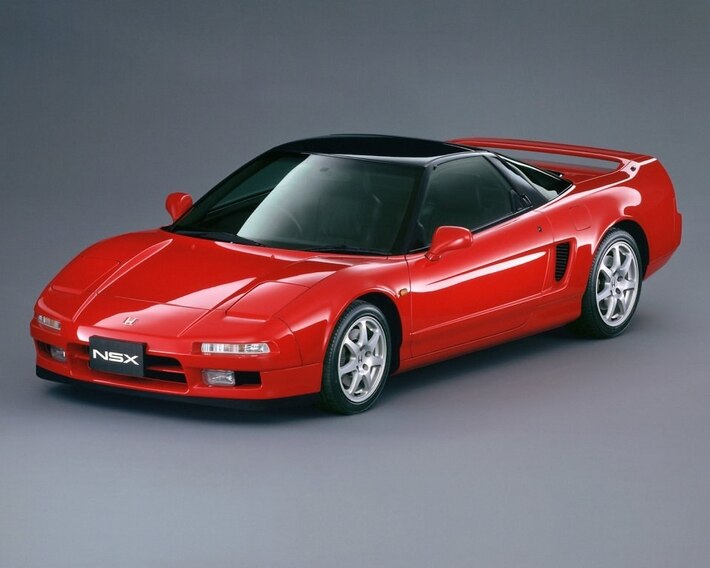
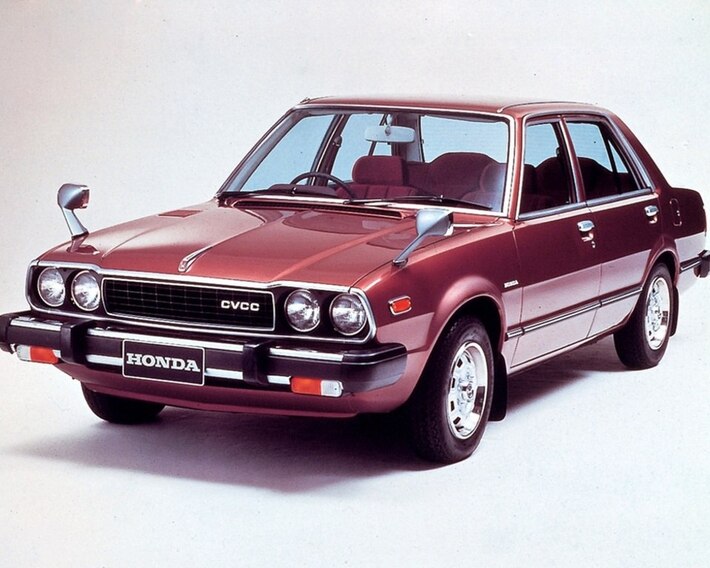
Iconic Model Lineup
Honda's catalogue ranges from the evergreen Civic and Accord sedans to the best-selling CR-V crossover, the high-revving NSX supercar, and a growing family of e:HEV hybrid models that apply the brand's two-motor system across the entire range.
Innovation & Technology
Honda's technology story is inseparable from the VTEC system, introduced in 1989. Variable Valve Timing and Lift Electronic Control allows a single engine to behave like two: a smooth, efficient unit at low revs that transforms into a high-revving performance engine above the VTEC crossover point. The system inspired a generation of engineers and enthusiasts, and its underlying principle remains central to Honda's i-VTEC technology used today.
The e:HEV two-motor hybrid system represents Honda's contemporary answer to electrification. Unlike Toyota's power-split planetary hybrid, Honda's architecture primarily uses the combustion engine as a generator at cruising speeds, with the electric motor driving the wheels directly — delivering an EV-like driving character that surprises owners with its refinement.
Honda Sensing, the brand's comprehensive safety suite, brings Collision Mitigation Braking System (CMBS), Lane Keeping Assist System (LKAS), Adaptive Cruise Control with low-speed follow, and Lane Departure Warning as standard across the global lineup. On the performance side, SH-AWD (Super Handling All-Wheel Drive) on the Acura and NSX platforms uses torque vectoring to direct drive to the outside rear wheel in corners, actively improving both stability and agility.
- VTEC and i-VTEC variable valve timing — decades of refinement delivering efficiency and high-rpm exhilaration from one engine
- e:HEV two-motor hybrid system — EV-like smoothness across Civic, Jazz, CR-V, Accord, and HR-V
- Honda Sensing safety suite — CMBS, LKAS, ACC, and LDW as standard across the global range
- Earth Dreams powertrain family — DOHC direct-injection engines optimised for thermal efficiency
- SH-AWD torque vectoring — active rear torque distribution for superior cornering dynamics on Acura and NSX
- HondaJet — over-the-wing engine mount design proving Honda's engineering ambition extends far beyond the automobile
Honda in Azerbaijan & the Caucasus
Honda has built a loyal following in Azerbaijan, where the brand's reputation for reliability and engineering quality resonates strongly with a market that values long-term ownership costs. The Civic is particularly popular among younger urban drivers in Baku who appreciate its sharp styling, engaging handling, and proven dependability in city traffic. The CR-V serves family buyers who need space and practicality without sacrificing refinement.
The Accord occupies the executive segment, attracting professionals and business users who want a refined saloon with the quiet confidence of Japanese engineering. As awareness of hybrid technology grows in Azerbaijan and fuel costs remain a consideration for everyday drivers, Honda's e:HEV hybrid models are gaining attention as a practical, no-compromise path to lower running costs — with no need to find a charging point.
Why Choose Honda?
- Engineering-first culture: From VTEC engines to the HondaJet, Honda's obsession with engineering solutions that challenge convention produces consistently innovative vehicles.
- Proven reliability: Consistently ranks among the top manufacturers in long-term reliability studies — Honda engines routinely exceed 300,000 km with proper maintenance.
- e:HEV without compromise: Honda's two-motor hybrid system delivers EV-like smoothness and efficiency without any charging infrastructure dependency.
- Driver engagement: Even mainstream models like the Civic retain a sense of involvement and precision that rivals from larger conglomerates rarely match.
- Safety leadership: Honda Sensing suite included as standard across the lineup — not reserved for higher trim levels.
- F1 engineering DNA: Four decades of Formula 1 involvement feeds directly into production powertrain development, creating engines that punch above their displacement.
BakuWheels uses cookies to improve your experience, analyse site traffic, and personalise content. By clicking Accept All, you consent to our use of cookies. Learn more in our Cookie Policy.