
Mazda
Zoom-Zoom — Mazda's pursuit of driving pleasure and Jinba Ittai (horse and rider as one) philosophy.
Origins & Heritage
Mazda's origins lie not in steel or combustion, but in cork. Founded in 1920 in Hiroshima as Toyo Cork Kogyo Co., Ltd., the company initially manufactured cork products before pivoting to machine tools as industrial demand in Japan evolved through the 1920s. The transition to vehicles began in 1931 with the production of three-wheeled trucks — a practical solution for Japanese small businesses and farmers navigating tight urban streets and rural terrain alike.
Hiroshima's significance to the Mazda story extends beyond geography. The company's headquarters stood just far enough from the 1945 atomic bomb detonation point to survive the blast, and in the years of reconstruction that followed, Mazda became a cornerstone of Hiroshima's economic recovery — a responsibility the company has never taken lightly. This intimate connection to survival and renewal runs through the brand's DNA, perhaps explaining its relentless pursuit of engineering solutions that defy conventional wisdom.
The year 1960 marked Mazda's formal entry into the passenger car market with the R360 Coupe, a lightweight two-door designed for Japan's emerging middle-class motorist. The following year, 1961, brought one of the most consequential decisions in Mazda's history: the acquisition of a licence from NSU Motorenwerke AG to develop the Wankel rotary engine. While every other major manufacturer eventually abandoned the rotary concept as impractical, Mazda persisted — refining, solving, and ultimately mastering it to produce the Cosmo Sport in 1967, the world's first production rotary car, followed by the legendary RX-7.
A strategic partnership with Ford, forged in 1979 and lasting until 2015, provided Mazda with capital and global distribution while Mazda contributed engineering expertise — particularly in small-car development and fuel-efficient powertrains. The eventual dissolution of the Ford alliance freed Mazda to pursue a fully independent identity, crystallised in the SKYACTIV philosophy: a holistic approach to engineering that optimises everything from engine compression ratios to body weight, braking systems, and transmission design. The Mazda3 and CX-5, launched in 2011 and 2012 respectively, demonstrated that SKYACTIV was not marketing language but a genuine engineering commitment that delivered measurably superior efficiency and driving dynamics.
Key Milestones
Iconic Models in Pictures
From the timeless MX-5 roadster to the award-winning CX-5 and the revolutionary RX-7, Mazda's portfolio is built around the belief that every car should be a joy to drive.
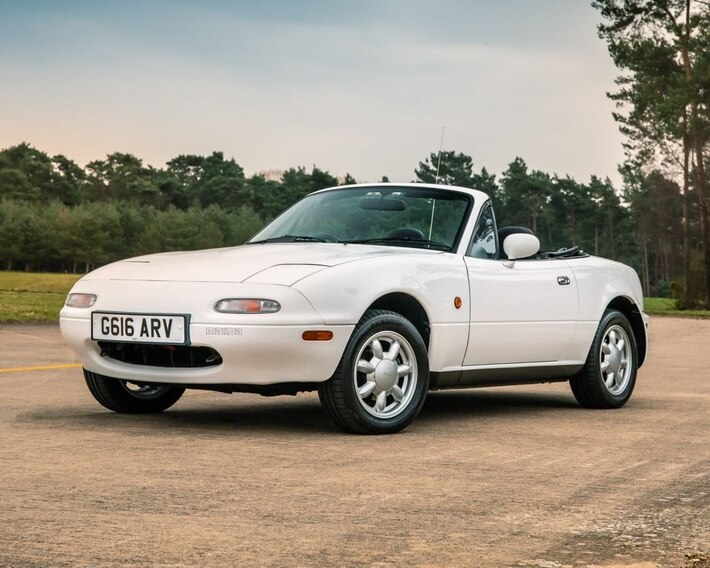
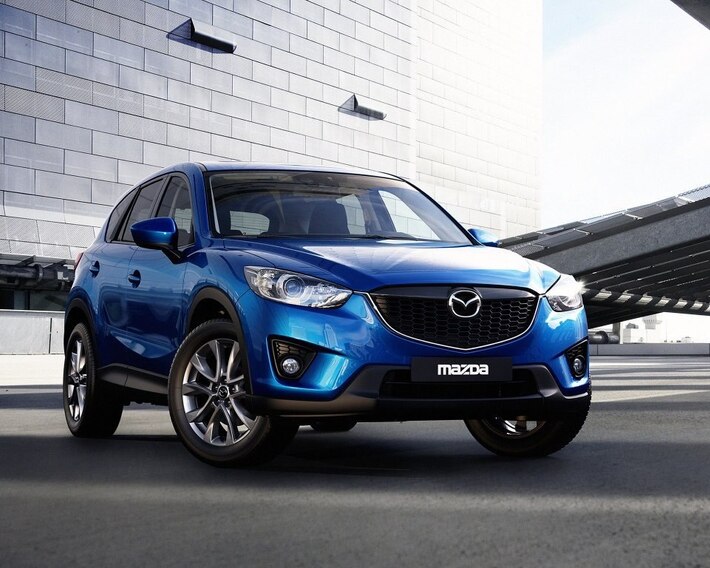
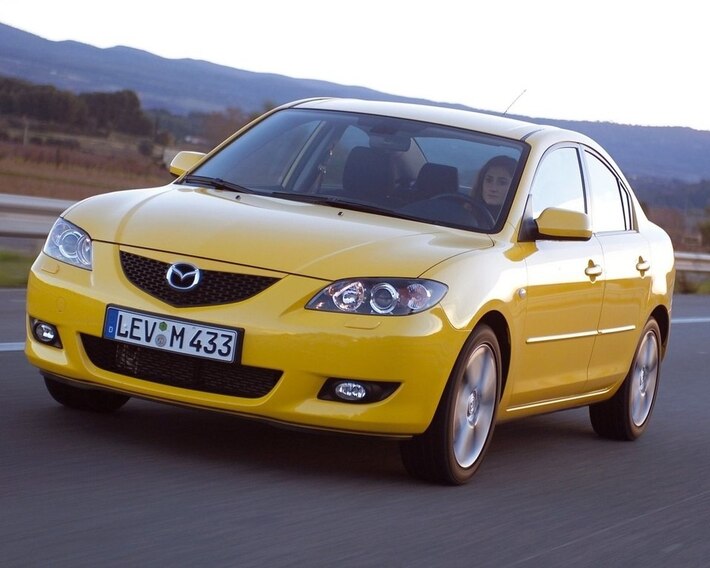
Model Lineup
Mazda's contemporary range reflects a brand that refuses to be ordinary. Every model, from the entry-level Mazda3 to the flagship CX-90, is engineered with driver engagement at its core — a living expression of the Jinba Ittai philosophy that equates the driver-car relationship to the unity between horse and rider.
Innovation & Technology
Mazda's SKYACTIV technology represents something genuinely unusual in contemporary automotive engineering: a philosophy that rejects the assumption that improving efficiency requires electrification, and instead asks how far conventional combustion can be taken when every component is optimised holistically. The answer, Mazda has demonstrated, is considerably further than most believed.
The most remarkable expression of this philosophy is SKYACTIV-X — a petrol engine that achieves compression-ignition, the same principle used in diesel engines, under controlled conditions. Spark Controlled Compression Ignition (SPCCI) allows the engine to ignite fuel without a spark plug in certain operating conditions, delivering diesel-like efficiency from a petrol engine with none of the particulate emissions associated with diesel combustion. No other mass-production manufacturer has achieved this.
Beyond combustion, Mazda's rotary heritage lives on in the MX-30 R-EV, where a compact single-rotor Wankel engine functions not as a primary drive unit but as a range extender for the electric drivetrain — a uniquely elegant application of a technology Mazda never abandoned.
- SKYACTIV-X compression-ignition petrol engine — unique in the industry, achieving diesel efficiency from a petrol unit
- SKYACTIV-G direct-injection petrol and SKYACTIV-D diesel — class-leading efficiency across the combustion range
- MX-30 EV with rotary range extender — the Wankel engine reborn as an elegant solution to EV range anxiety
- Kodo "Soul of Motion" design philosophy — award-winning exterior language that treats sheet metal as sculpture
- i-ACTIVSENSE safety suite — radar-guided pre-collision braking, lane-keep assist, and blind-spot monitoring across the range
- Bose premium audio partnership — custom-tuned sound systems designed specifically for each Mazda model's acoustic environment
Mazda in Azerbaijan
Mazda has cultivated a loyal following in Azerbaijan among drivers who prioritise the quality of the driving experience over brand prestige alone. The CX-5 is a particular favourite, combining the refinement of a premium SUV with running costs and reliability figures that rival any Japanese competitor. Its Soul Red Crystal paint, exclusive to Mazda and achieved through a multi-layer application process unavailable on conventional production lines, has become one of the most recognisable colours on Baku's streets.
The Mazda3, available in both hatchback and sedan configurations, appeals strongly to younger Azerbaijani buyers and urban professionals who appreciate its interior quality — widely acknowledged as punching well above its price class — and the tactile satisfaction of its driver-focused ergonomics. As Mazda expands its PHEV and EV offerings with the CX-60 and MX-30, Azerbaijani market interest in the brand's electrified models is expected to grow alongside the country's charging infrastructure.
Why Choose Mazda?
- Driver-first engineering: Every Mazda is engineered around the Jinba Ittai principle — the car and driver move as one, delivering a tactile, connected experience unmatched at its price points.
- SKYACTIV efficiency: Mazda consistently achieves best-in-class fuel economy through engineering innovation rather than hybridisation, keeping running costs low without compromise.
- Premium interior quality: Mazda cabins are consistently rated above their price class by independent reviewers — materials, fit, finish, and ergonomics all benchmark against luxury rivals.
- Kodo design: Award-winning styling philosophy produces cars of genuine aesthetic merit — the CX-5 and Mazda3 are among the best-looking vehicles in their respective segments.
- Japanese reliability heritage: Mazda's Japanese manufacturing standards and rigorous quality control deliver ownership reliability that consistently ranks among the industry's best.
- Unique rotary legacy: No other manufacturer has pursued and mastered the Wankel engine with Mazda's commitment — a point of genuine engineering distinction that defines the brand's character.
BakuWheels uses cookies to improve your experience, analyse site traffic, and personalise content. By clicking Accept All, you consent to our use of cookies. Learn more in our Cookie Policy.