

Vector Motors
Vector Motors — founded in Wilmington, California in 1971 by Gerald Wiegert — is America's most audacious supercar brand. Inspired by aerospace technology rather than European tradition, Vector produced some of the most powerful and uncompromising supercars of its era, leaving behind a short but dramatic corporate history that is as fascinating as the cars themselves.
History & Origins
Vector Motors — formally the Vector Aeromotive Corporation — was founded in 1971 by Gerald Wiegert, a car designer with an ambition to create a high-performance vehicle rooted not in European supercar aesthetics, but in the technology of America's aerospace industry. The company name itself was a statement of intent: Vector — direction and velocity.
The W2 prototype, developed in the late 1970s, was Vector's first public appearance. Its sharply angled, wedge-like bodywork, use of exotic materials, and twin-turbocharged V8 drivetrain announced something entirely different from Detroit muscle: American aerospace aesthetics applied to the road-going supercar. Wiegert's vision took more than a decade to produce a production-ready car.
In 1989, Vector finally delivered the W8 Twin Turbo — the car the company had always promised. Armed with a twin-turbocharged V8 drawing on the Chevrolet Corvette engine producing 625 hp, the W8 claimed to be among the world's fastest production vehicles. Only 17–22 examples were built. A subsequent corporate takeover by Megatech Ltd brought the Lamborghini Diablo-engined M12 — but the new ownership ended with Wiegert's ousting and the brand quickly collapsed.
Key Milestones
Iconic Models in Images
Vector's brief production run left behind a collection of extraordinarily rare exotica — each one a unique chapter in the history of American supercar ambition.
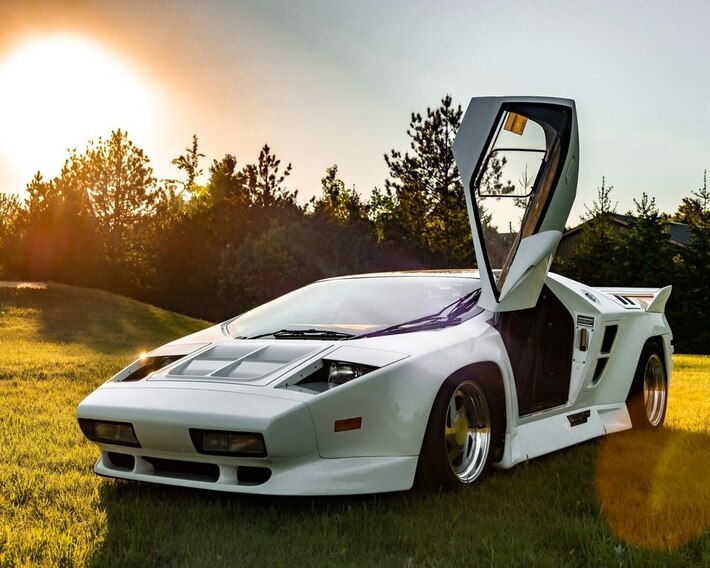
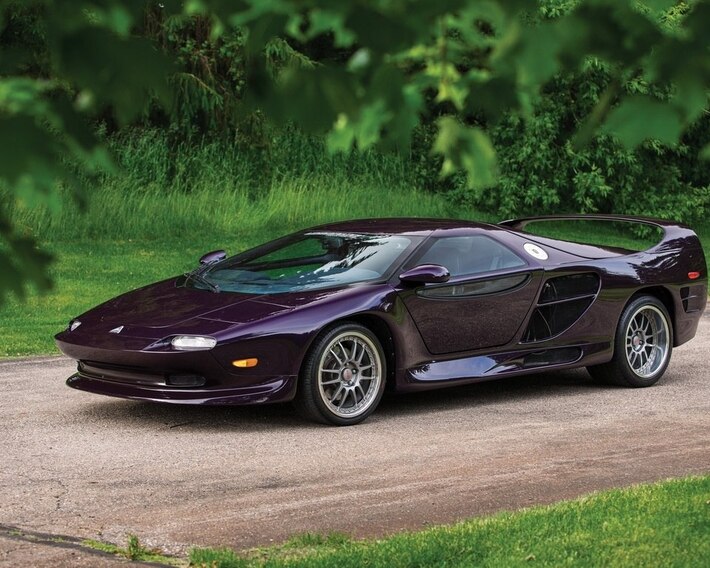
Model Range
Vector produced very few vehicles in total, yet each occupies a distinct chapter in American supercar history.
Technology & Engineering
Vector vehicles drew directly on technology from California's aerospace industry. The W8 was constructed around an aluminium honeycomb monocoque chassis, Kevlar composite body panels, and an aviation-inspired cockpit interior — all distinguishing it from European competitors of the 1980s.
- 625 hp drawn from a twin-turbocharged Chevrolet Corvette L98 V8 engine — the W8's primary powerplant
- Aluminium honeycomb monocoque chassis for a high strength-to-weight ratio
- Aerospace-grade Kevlar, carbon fibre, and polymer composite body panels
- Aviation-inspired cockpit interior including instrument panel data displays
- Lamborghini Diablo V12 engine in the M12 — the unique powertrain choice of the Megatech era
Vector in Azerbaijan
Vector vehicles are virtually absent from Azerbaijan — hardly surprising given that only 30–40 examples were ever built worldwide. Nonetheless, knowing about Vector is essential to understanding American supercar history; the brand represents the United States' most audacious attempt to field a rival to Ferrari, Lamborghini, and Bugatti from American soil.
Among high-performance vehicle enthusiasts in Azerbaijan, Vector endures as a word-of-mouth legend — much discussed, rarely seen. The probability of encountering a Vector in Azerbaijan is extremely low; but for collectors seeking an irreplaceable piece of American supercar heritage, the marque carries a perennial special attraction.
Why Vector?
- American aerospace aesthetic: Vector adopted a design language entirely distinct from European supercars — a deeply American carbon-aluminium body inspired by aviation, NASA, and Cold War technology.
- Exceptional rarity: Only 30–40 Vector vehicles were produced worldwide. Each W8 example is an extraordinarily rare collector vehicle commanding the highest interest from serious collectors.
- American V8 power: Unlike European rivals' exotic V12 engines, Vector utilised a twin-turbocharged American V8 — making it the carrier of an entirely different engineering philosophy.
- Corporate drama: The Megatech acquisition, Wiegert's ousting, and the M12's brief production run make Vector's history — with all its dramatic elements — one of automotive collecting's most compelling stories.
- Historical significance: Vector represents Americans' most courageous attempt to prove they could compete with Ferrari, Lamborghini, and Bugatti from American soil — it failed, but the attempt is historically priceless.
BakuWheels uses cookies to improve your experience, analyse site traffic, and personalise content. By clicking Accept All, you consent to our use of cookies. Learn more in our Cookie Policy.