

Venucia
Venucia (启辰, Qǐchén) is the Chinese domestic market sub-brand of Dongfeng Nissan Passenger Vehicle Company, a joint venture between Dongfeng Motor Corporation and Nissan Motor. Established in 2010, Venucia builds on Nissan's engineering DNA to deliver mainstream sedans, SUVs, MPVs, and electric vehicles tailored specifically for Chinese buyer preferences and price expectations.
Origins & Heritage
Venucia was established in 2010 as the Chinese domestic market arm of the Dongfeng Nissan joint venture. The brand was created with a clear purpose: to give the joint venture a locally-owned sub-brand identity that could compete more directly with domestic Chinese manufacturers on price and branding, while drawing on Nissan's engineering foundations for quality and reliability assurance. The name "Venucia" (启辰, meaning "the dawn of a new beginning" in Chinese) was chosen to signal fresh automotive ambitions for Chinese buyers.
The early Venucia models were based on previous-generation Nissan platforms — a strategic choice that allowed Dongfeng Nissan to extract additional value from existing engineering investments while offering Chinese buyers access to proven, reliable technology at domestic price points. This approach proved effective in the fiercely competitive Chinese mainstream market, where price sensitivity is high and brand trust is increasingly important. The D50 sedan (2012) and D60 (2018) established Venucia's credentials in the compact sedan segment.
As China's automotive market evolved through the 2010s, Venucia expanded its lineup to include SUVs, MPVs, and electric vehicles. The T90 SUV brought the brand into the booming Chinese crossover market, while the e30 electric vehicle positioned Venucia within the country's rapidly growing new-energy vehicle sector. By the late 2010s, Venucia had established itself as a credible mainstream Chinese domestic brand with a product range spanning multiple body types and powertrains — a significant achievement in one of the world's most competitive automotive markets.
Key Milestones
Iconic Models in Pictures
Venucia's model range is built around practical, well-equipped vehicles that offer Nissan-backed engineering quality with Chinese market pricing — making the brand a credible mainstream choice in its home market.
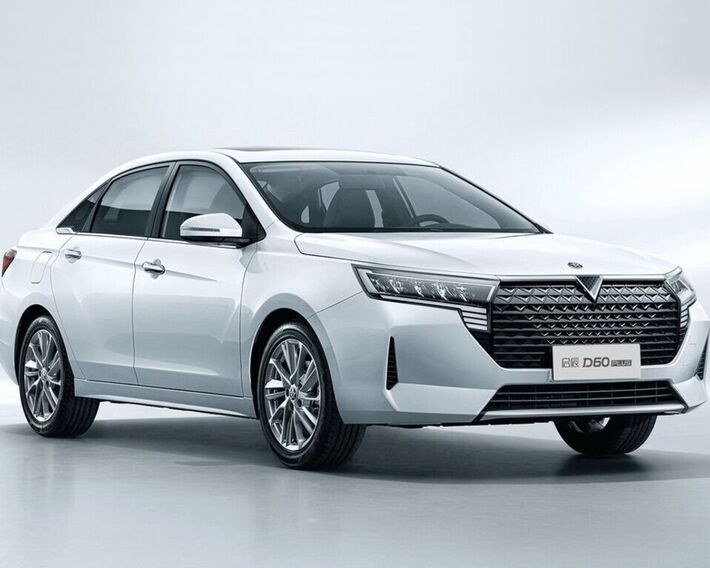
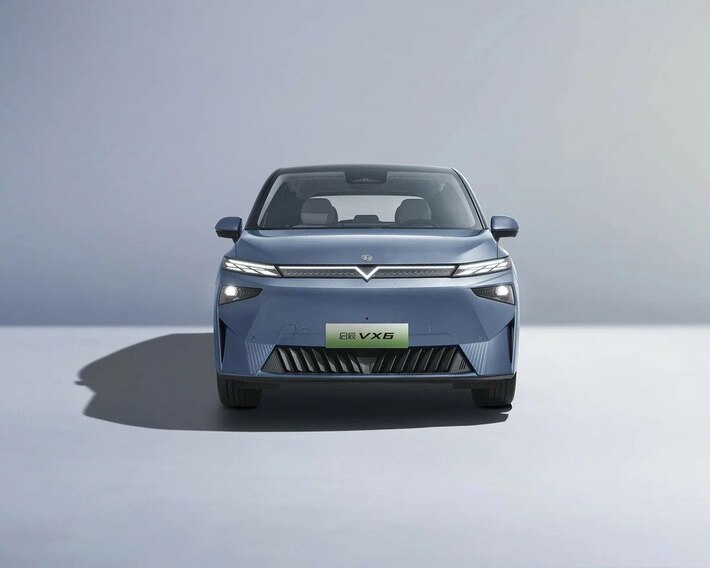
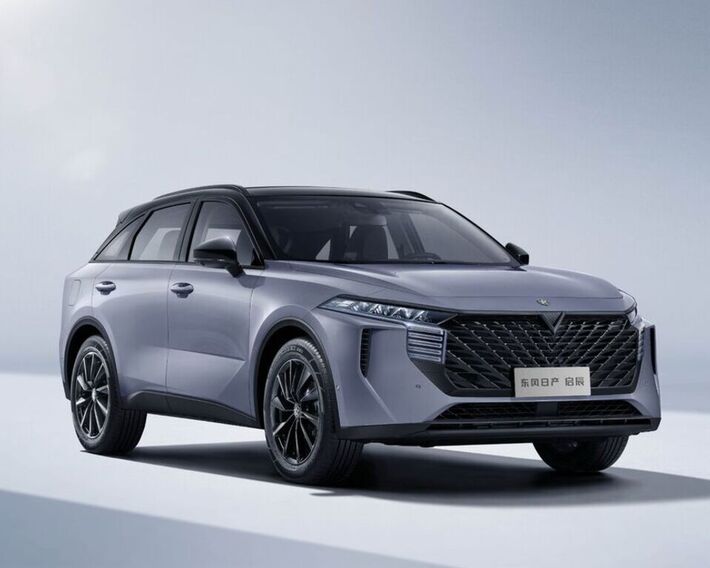
Model Lineup
Venucia offers a broad product range covering compact sedans, mid-size SUVs, electric vehicles, and MPVs — all tailored to the specific preferences and price expectations of the Chinese domestic market.
Technology & Engineering
Venucia vehicles are built on Nissan-derived platforms and powertrains, giving them a quality foundation unusual among Chinese domestic brands at equivalent price points. The use of proven Nissan engineering means Venucia models benefit from the Japanese manufacturer's extensive testing, emissions compliance, and quality control processes — meaningful advantages in a market where reliability concerns can be a barrier for domestic brand adoption.
- Nissan-derived 1.6L and 2.0L naturally aspirated and turbocharged petrol engines with proven reliability records
- CVT and 6-speed automatic transmissions sourced from Nissan's proven powertrain components catalogue
- Nissan-platform chassis engineering providing well-calibrated ride and handling balance appropriate for Chinese road conditions
- Modern infotainment systems with large touchscreens, Chinese-ecosystem connectivity (Baidu maps, WeChat integration), and OTA update capability
- Comprehensive active safety systems including AEB, lane departure warning, and blind spot monitoring in higher-specification variants
Venucia in Azerbaijan
Venucia is not an established presence in the Azerbaijani new car market — the brand is produced exclusively for the Chinese domestic market and has not pursued international distribution. However, as China's used car export activity has grown and regional traders bring Chinese-market vehicles into CIS countries, occasional Venucia examples may enter the used market through Russian or Georgian trading channels. For Azerbaijani buyers exploring Chinese brand alternatives, understanding Venucia's Nissan parentage is key: the underlying engineering quality is meaningfully higher than many fully independent Chinese brands.
Venucia's relevance to Azerbaijan is primarily educational — it illustrates how major Japanese manufacturers like Nissan have engaged with China's domestic market through joint-venture sub-brands. Buyers interested in value-oriented Chinese vehicles with established engineering heritage should look for Venucia's Nissan-platform DNA as a marker of quality assurance relative to fully independent Chinese domestic alternatives.
Why Consider a Venucia?
- Nissan engineering foundation: Venucia models are built on proven Nissan platforms and powertrains, providing a quality and reliability baseline significantly higher than many fully independent Chinese brands.
- Value pricing relative to equivalent Nissan models: Venucia offers Nissan-derived technology at Chinese domestic market pricing — substantially lower than equivalent Nissan-badged models in export markets.
- Broad model range: Sedans, SUVs, MPVs, and electric vehicles give Venucia coverage across multiple segments, making it a versatile brand choice for diverse family and urban needs.
- Modern features: Venucia vehicles are well-equipped for their price points, featuring touchscreen infotainment, connectivity, and safety features that rival more expensive alternatives.
- EV option: The e30 electric model gives Venucia relevance in China's growing new-energy vehicle sector — important context as electric vehicles become more common in CIS used car channels.
BakuWheels uses cookies to improve your experience, analyse site traffic, and personalise content. By clicking Accept All, you consent to our use of cookies. Learn more in our Cookie Policy.