
Alfa Romeo 33 (1983–1995)
The Alfa Romeo 33 was the last Alfa Romeo to carry the famous flat-four boxer engine inherited from the Alfasud — a unique engine configuration that gave the car a low centre of gravity, a distinctive exhaust note, and a handling balance unlike any other compact hatchback of the 1980s. Available as a three-door hatchback, five-door hatchback, estate wagon (Giardinetta/Sport Wagon), and even a rare AWD variant, the 33 offered Italian character in an accessible, everyday format.
Overview
The Alfa Romeo 33 arrived in 1983 as the direct replacement for the Alfasud and Alfasud Sprint, inheriting the Alfasud’s most defining mechanical characteristic: the flat-four (boxer) horizontally-opposed engine with its distinctive low centre of gravity and characteristic sound. The Alfasud had been a landmark car when it appeared in 1971 — a technically sophisticated front-wheel-drive compact with superb handling balance — and the 33 continued its philosophy while updating the body, interior, and specification for the 1980s.
The flat-four engine was the 33’s most distinctive mechanical feature. Horizontally opposed cylinders create a naturally balanced engine (opposing forces cancel each other); the flat configuration keeps the engine’s mass low in the car and slightly behind the front axle centreline, giving the 33 a lower centre of gravity and more balanced weight distribution than any rival that used a conventional upright inline engine. The result was a compact hatchback with handling that consistently surprised drivers unfamiliar with the type — flat through corners, responsive to steering inputs, and predictable at the limit.
The boxer engine also produced a sound unlike any rival: at idle, it settled into a smooth, burbling note with a slight tremor that was distinctively un-German and un-Japanese; under acceleration, it developed a flat, mechanical rasp that was not the high-rpm scream of the twin-cam inline engines in the 105/115 cars but was equally distinctive in its own way. Alfa Romeo enthusiasts regard the boxer as one of the great small engines in terms of character, even if its power outputs were modest compared to contemporary rivals.
Later in the 33’s production life, Alfa Romeo introduced an inline-four option — the 1.7 16-valve — which provided significantly more power (136 hp) but abandoned the boxer configuration for a more conventional upright four-cylinder. This engine made the 33 1.7 16v one of the fastest compact hatchbacks of the early 1990s but departed from the Alfasud-derived boxer tradition. The inline-four variants are faster; the boxer variants are more characterful. Both have their advocates among 33 enthusiasts.
The 33 was replaced by the Alfa Romeo 145 and 146 in 1994. With its replacement, the last direct connection to the Alfasud’s unique engineering philosophy was severed. The 33 is now the only way to experience the boxer Alfa Romeo compact hatchback as Alfasud creator Rudolf Hruska intended it: a light, responsive, front-drive car with a flat-four engine that keeps its weight low and its handling honest.
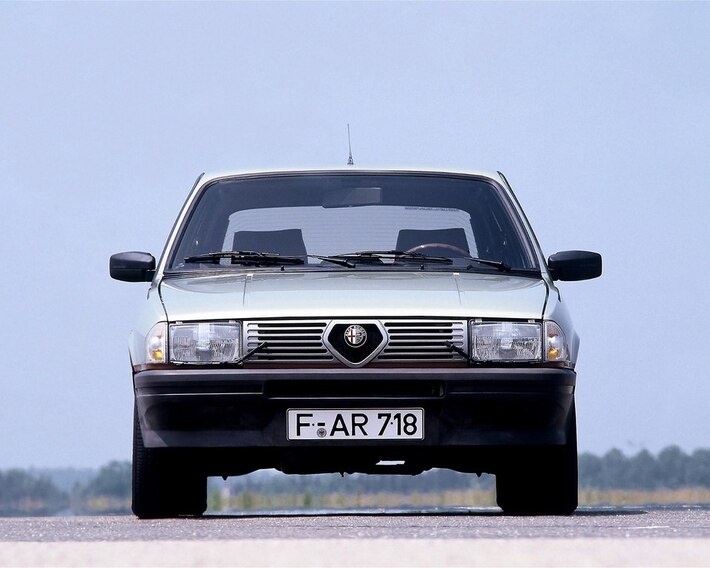
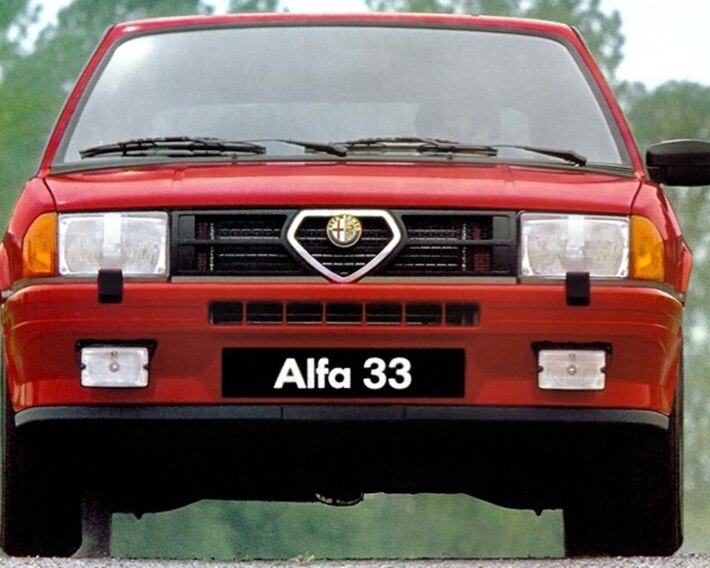
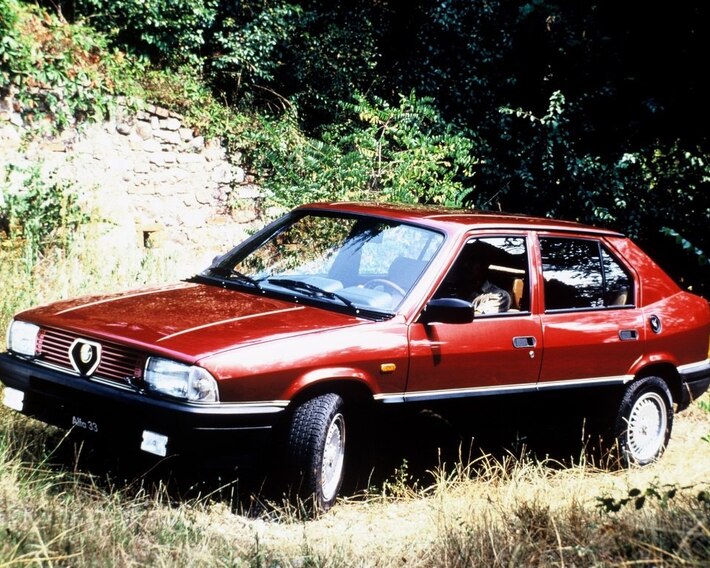
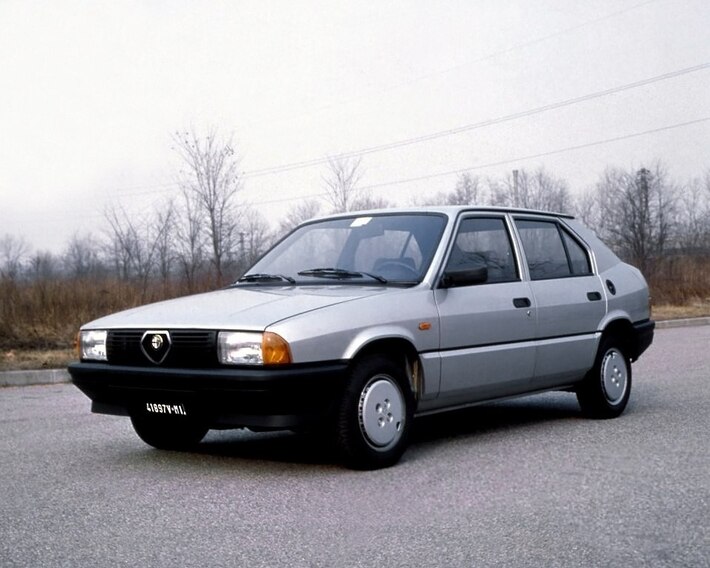
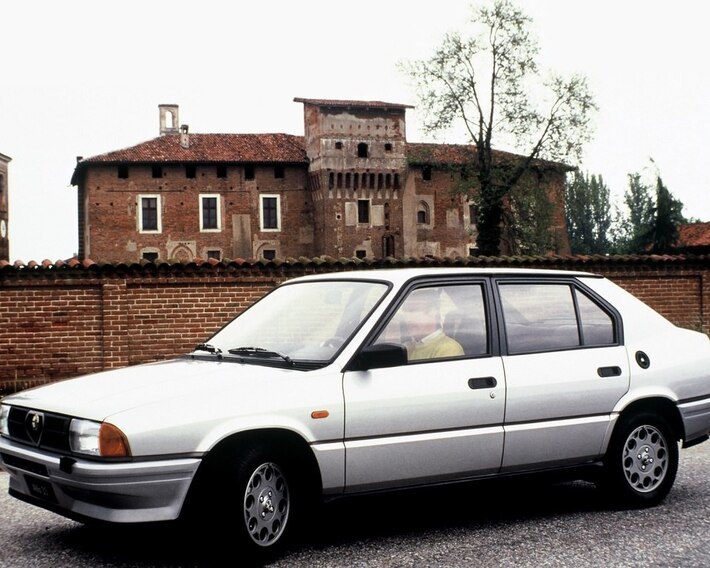
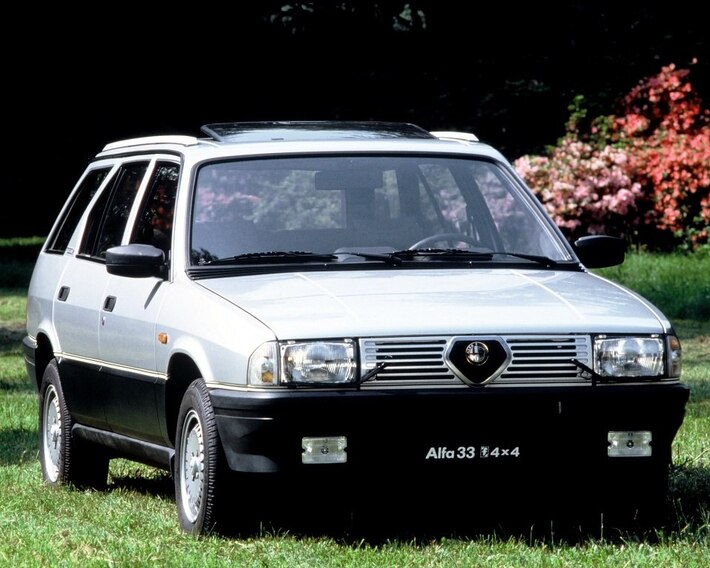
Alfa Romeo 33 in Pictures
The 33’s clean 1980s hatchback styling has gained appreciation with age; the Sport Wagon estate is now particularly sought as a niche collector vehicle combining practicality with genuine Italian character.
Key Specifications
- Flat-four (boxer) engine family: Horizontally-opposed four-cylinder engine with two cylinders on each side; aluminium cylinder head; carburettor or fuel injection (later variants); 1.2L (67 hp, earliest), 1.3L (75 hp), 1.5L (95 hp), 1.7L flat-four (103 hp). The flat-four sits low and slightly behind the front axle, giving the car a lower polar moment of inertia and better handling balance than upright inline-four rivals.
- Inline-four 1.7 16v (late production): 1712cc 16-valve upright inline-four; 136 hp at 6,500 rpm; fuel injection; the most powerful 33 specification. While this engine abandons the boxer configuration, it transforms the 33 into a genuinely rapid compact hatchback. The 1.7 16v 33 was one of the fastest non-turbocharged small hatchbacks available in 1989–1995.
- Platform: Alfasud-derived front-wheel-drive platform with significant updates. MacPherson strut front suspension; torsion beam rear suspension. The fundamental handling balance of the platform — responsive, flat through corners, with the boxer engine’s low mass working in its favour — makes the 33 one of the better-handling small Italian hatchbacks of its era.
- Body variants: 3-door hatchback; 5-door hatchback; Sport Wagon (Giardinetta) estate; 4x4 AWD hatchback (very rare). The Sport Wagon is the only Italian small estate of the period with genuine character; it combines 33 handling and engine options with practical boot space.
- Weight: Approximately 900–980 kg depending on variant — light even by the standards of 1980s compacts. The light weight amplifies the flat-four’s modest power outputs; a 95 hp boxer 33 feels quicker than its figures suggest because the entire car weighs under a tonne.
- Rust vulnerability: All Alfasud-platform cars have a documented rust problem. The 33 improved on the Alfasud’s reputation through improved corrosion protection from the mid-production period onward, but it remains a car that rusts comprehensively if not maintained. Surviving 33s require careful inspection; finding a rust-free example is the primary challenge for buyers.
- Production: 1983–1995; approximately 987,000 total across all variants. The Sport Wagon and AWD variants were produced in smaller numbers and are proportionally rarer in the surviving fleet. Most survivors are the standard 3-door or 5-door hatchback in 1.3 or 1.5 specification.
Variant Comparison
| Variant | Engine | Power | Gearbox | Best For |
|---|---|---|---|---|
| Alfa Romeo 33 1.3 (75 hp) | 1351cc flat-four (boxer) or inline-four, single carburettor | 75 hp | 5-speed manual | The entry-level 33; the flat-four engine’s low centre of gravity is a handling advantage; modest power but authentic Alfasud character; the most affordable point of entry into 33 ownership; ideal for classic car enthusiasts who want the boxer experience on a limited budget |
| Alfa Romeo 33 1.5 (95 hp) | 1490cc flat-four boxer, carburettor or fuel injection | 95 hp | 5-speed manual | The balanced mid-range variant; adequate performance with the unique boxer engine character; fuel-injected variants (1.5 ie) provide smoother performance and easier cold-starting than carburettor versions; the most common 33 specification in the used market |
| Alfa Romeo 33 1.7 16v (136 hp) | 1712cc inline-four 16-valve, fuel injection | 136 hp at 6,500 rpm | 5-speed manual | The performance variant; the inline-four 1.7 16v is not a boxer but delivers significantly more power than the flat-four variants; 136 hp in a car of approximately 950 kg gave the 33 1.7 16v genuinely sporting performance; the most sought specification for driving enthusiasts in the 33 range |
| Alfa Romeo 33 Sport Wagon (Giardinetta) | 1351cc or 1490cc flat-four | 75–95 hp | 5-speed manual | The estate/wagon variant of the 33; the only small Italian estate car of its era with genuine Italian character; practical load space combined with the 33’s handling; increasingly sought as a niche collector vehicle; rarer than the hatchback variants in the used market |
| Alfa Romeo 33 4×4 (AWD) | 1490cc flat-four | 95 hp | 5-speed manual, all-wheel drive | The extremely rare AWD variant; one of very few all-wheel drive Italian hatchbacks of the 1980s; the AWD system provides good wet-weather traction in conjunction with the flat-four’s low centre of gravity; very few survive; sought by collectors interested in unusual drivetrain configurations |
What Makes the 33 Stand Out
The Alfa Romeo 33 is the final expression of a unique Italian engineering tradition that began with the Alfasud in 1971 and ended when the 145 replaced the 33 in 1994.
- The last Alfa boxer engine: No Alfa Romeo built after the 33 used the flat-four horizontally-opposed engine. When the 33 was replaced by the 145 with its conventional upright Twin Spark four-cylinder, a unique chapter in Italian automotive engineering closed. The boxer 33 is the only way to experience this specific combination of Italian hatchback design and flat-four engine character.
- Handling balance from boxer physics: The flat-four engine’s low mounting position genuinely improves the car’s handling. The lower polar moment of inertia (mass closer to the car’s centre) makes the 33 more responsive to steering inputs and more stable through corners than a rival with an equivalent upright engine. This is an engineering advantage that is immediately perceptible when driving the car.
- Sport Wagon uniqueness: The 33 Sport Wagon is one of very few small Italian estate cars of the 1980s with genuine character. The combination of 33 handling, boxer engine options, and practical estate body in a car of Italian design is unique. Well-preserved Sport Wagons are now eagerly sought by collectors who appreciate the niche.
- The 1.7 16v performance in context: The 136 hp 1.7 16v 33 was a remarkably quick small hatchback for 1989. In a car weighing under 1,000 kg, this output translated to performance that matched or exceeded much more expensive rivals. It remains one of the fastest naturally aspirated small hatchbacks of its era.
- Accessible Italian classic ownership: Well-preserved 33s in rust-free condition represent affordable entry into Italian classic car ownership. A good 1.5 boxer or 1.7 16v 33 provides genuine Italian driving character at a purchase price that is accessible to most enthusiasts.
Maintenance & Repairability in Azerbaijan
The 33 is a 30–43 year old car with the specific rust challenges of the Alfasud platform. In Azerbaijan, boxer engine service requires some specialist knowledge but the mechanical design is simpler than the twin-cam inline units.
- Boxer engine service: The flat-four engine is mechanically simpler than the twin-cam inline engines; it uses a conventional overhead valve design (not DOHC). Service items include valve clearance adjustment (more accessible than on a conventional upright engine due to the horizontal cylinder layout), carburettor synchronisation (twin-carb variants), and conventional oil/filter changes. No timing belt on the boxer (uses chain or gears).
- Rust (the primary concern): The 33 must be inspected for structural rust before purchase. Known rust locations: front sills (inner and outer), floorpan, front inner wings and suspension towers, rear wheelarches. A car with structural rust requires welding restoration; costs can equal or exceed the car’s value. Only purchase a 33 that has been thoroughly inspected for rust.
- 1.7 16v inline engine service: The inline-four 16v engine uses a conventional belt-driven system (check if timing belt or chain — verify with model year). Service items are similar to contemporary inline-four engines; fuel injection variants are serviceable with generic European diagnostic equipment.
- Parts availability: Boxer engine parts for the 1.3 and 1.5 variants are available from Italian and European classic Alfa suppliers; the 1.5 ie fuel-injected variant uses Bosch Motronic components widely available. Body parts (particularly sheet metal) are increasingly difficult to source; some require fabrication. The 1.7 16v uses the later generation inline engine with better aftermarket support.
- Sport Wagon-specific considerations: The Sport Wagon’s rear body and loadfloor structure are prone to rust at the rear sill extensions and floor; inspect these areas specifically. The tailgate seal should be checked for water ingress to the boot area.
- Azerbaijan import: The 33 would need to be imported from Italy or Western Europe for Azerbaijan use. Transport by enclosed trailer is recommended for any 33 in good condition. Local mechanics with classic European car experience in Baku can service routine items; specialist Alfa experience will be needed for boxer-specific work.
Alfa Romeo 33 vs. Contemporaries
| Model | Core Strength | Main Compromise |
|---|---|---|
| Alfa Romeo 33 (all variants) | The last Alfa with the traditional flat-four boxer engine from the Alfasud; genuine Italian character in an everyday compact; the 1.7 16v is a genuinely fast small hatchback for its era; the Sport Wagon is a unique collector niche; the boxer engine’s sound and low centre of gravity are distinctive | Alfasud-platform cars are notorious for rust; rust inspection is even more critical than for later Alfa models; the boxer engine is less supported by the aftermarket than the twin-cam four-cylinder; later 33s with inline engines may be less characterful than boxer variants |
| VW Golf II (1983–1992) | The benchmark compact hatchback; reliable; comprehensive worldwide parts network; good build quality; the GTI and G60 variants genuinely quick; strong residual values; familiar to mechanics everywhere including Azerbaijan | No character comparable to the 33; the Golf II is a competent but entirely unexciting car by comparison; the flat-four boxer experience is unavailable in a Golf |
| Peugeot 309 (1985–1993) | Contemporary hatchback; reasonable reliability; comfortable ride; good range of engines; practical; French build quality improving in this era; the GTI variants quick | No Italian character; the 309 is a practical transport solution that offers nothing of the emotional content of the Alfa 33; far less interesting as a collector vehicle |
| Fiat Tipo (1988–1995) | Contemporary Italian compact; practical 5-door available; fuel-injected engine options; Fiat dealer network; affordable to run; the 2.0 16v is a fast hot hatch | Despite being Italian, the Tipo lacks the Alfa 33’s driver engagement and the unique boxer engine; Fiat badge less prestigious than Alfa in the used market; less interesting as a collector vehicle |
| Honda Civic IV/V (1987–1996) | Outstanding reliability; the 1.6 VTEC variants genuinely fast; excellent build quality; practical and efficient; Honda dealer support worldwide; the CRX coupe is a particularly engaging driver’s car | No Italian character; entirely different engineering philosophy; the Honda is excellent but emotionally neutral; no equivalent to the boxer engine experience |
Cost-of-Ownership Calculator (Azerbaijan)
Annual running cost estimates for a well-maintained Alfa Romeo 33. Service budget reflects specialist boxer engine maintenance and international parts sourcing costs.
- Estimated annual fuel use: 1200 litres
- Estimated annual fuel cost: $960
- Total annual ownership estimate: $5260
- Average monthly ownership estimate: $438
Used Buying Checklist
Finding a solid Alfa Romeo 33 requires patience. Most surviving examples have some level of rust; finding a structurally sound car is the primary challenge.
- Structural rust assessment (most critical): The Alfasud-platform cars are notorious for rust. Probe the front sills (inner and outer) with a screwdriver; check the floor pan from below with a light; inspect the front inner wings and rear wheelarches. A car with structural rust in the sills or floor is a major project. Only purchase a car with sound structural metalwork, or factor full structural restoration costs into the purchase price.
- Boxer engine running assessment: Start cold and listen for the distinctive flat-four idle. A healthy boxer should run smoothly after a brief warm-up period; persistent rough running indicates valve issues, carburettor imbalance, or cylinder problems. Listen for bottom-end knock; any knock indicates bearing wear requiring immediate investigation.
- Sport Wagon specific inspection: If buying a Sport Wagon, pay particular attention to the rear body structure and boot floor for rust. The Sport Wagon’s practical rear section concentrates water in areas the hatchback does not have; tailgate seal condition is critical for boot integrity.
- 1.7 16v variant verification: Confirm the 1.7 16v specification from the VIN and registration. The 1.7 16v commands a premium over 1.5 boxer variants; verify the engine specification matches the claimed variant. The inline-four 16v engine is visually distinct from the boxer under the bonnet.
- Parts availability plan: Before purchasing a 33 for Azerbaijan use, establish a supply relationship with an Italian or European classic Alfa specialist who can ship boxer engine parts as needed. The boxer engine’s parts are less universally available than the twin-cam four-cylinder; planning ahead prevents delays when parts are needed.
Alfa Romeo 33 FAQ
Why is the boxer engine considered special?
The horizontally-opposed flat-four has several genuine engineering advantages over an upright inline four: it is naturally balanced (opposing pistons cancel each other’s vibrations), it keeps engine mass lower in the car (lowering the centre of gravity), and its physical layout allows the engine to sit further back in the engine bay, improving front-rear weight distribution. The result is a car that handles more dynamically than its modest power figures suggest. Subaru still uses this engine layout in its current production cars for the same reasons.
Is the 33 genuinely rust-prone or is this reputation exaggerated?
The rust reputation is not exaggerated — it reflects a genuine weakness in the Alfasud platform’s steel specification and surface treatment, particularly in early production years. The 33 improved on the Alfasud’s initial rust problems through better surface treatment from the mid-1980s onward, but remains a car that rusts badly without proper maintenance. Galvanised body sections are not used; the steel requires regular inspection and rust-preventive treatment.
Is the Sport Wagon a practical daily driver?
In good condition, yes — the 33 Sport Wagon has adequate boot space for daily use, the same five-speed manual and engine options as the hatchback, and the same handling advantages. As a daily driver, the main limitations are its age-related maintenance requirements and the difficulty of sourcing parts in Azerbaijan. As a second car or weekend car, the Sport Wagon is an ideal classic Italian estate for enthusiasts who need occasional practicality.
Should You Buy an Alfa Romeo 33?
The Alfa Romeo 33 is a rewarding car for buyers who understand both its considerable strengths and its significant challenges. The boxer engine’s character, the handling balance, and the car’s historical position as the last Italian compact with a flat-four engine give it a special status that no rival from its era can match. The key is finding a structurally sound example: a well-preserved 33 with good metalwork and a healthy boxer engine provides genuine Italian driving pleasure at a very accessible price.
For buyers in Azerbaijan, the 33 is best imported from Italy in sound condition, with rust treatment history documented. As a second or occasional-use car for enthusiasts, the 33 — particularly in 1.5 boxer or 1.7 16v specification — provides an experience that is genuinely distinct from anything available in the current market.
BakuWheels uses cookies to improve your experience, analyse site traffic, and personalise content. By clicking Accept All, you consent to our use of cookies. Learn more in our Cookie Policy.