

Asia Retona
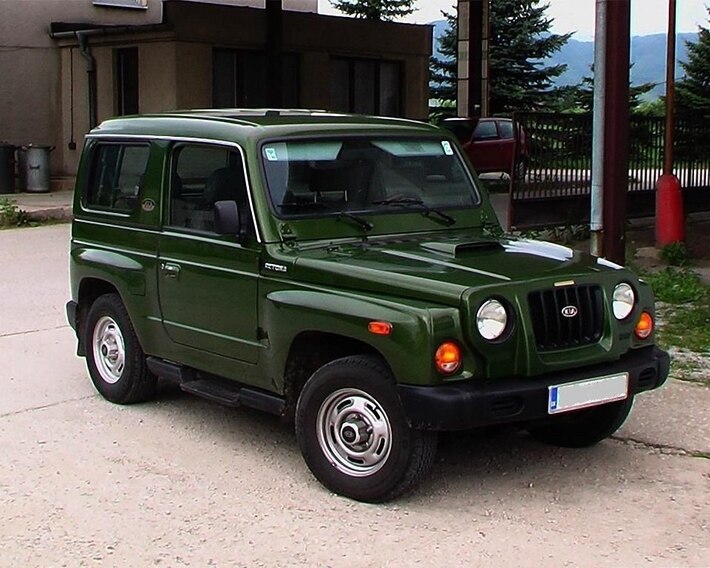
The Asia Retona is a 5-door compact hard-top SUV from Korea's Asia Motors — built on the Kia Sportage platform with diesel and petrol options, designed to compete in the late-1990s compact off-road SUV segment before the Asia brand was discontinued.
Overview
The Asia Retona was launched in 1997 as Asia Motors' flagship compact SUV, positioned to capture buyers seeking a more substantial off-road-oriented vehicle than the company's established Rocsta. Built on the same platform as the first-generation Kia Sportage — Asia Motors was a Kia subsidiary — the Retona offered a practical 5-door hard-top body with seating for five, a functional interior, and the choice between a 2.2-litre diesel and a 2.0-litre petrol engine paired with part-time 4WD.
The Retona's timing was deeply unfortunate. Launched at the very moment the 1997 Asian financial crisis was beginning to devastate Korean industry, it had less than two years of production before Kia's financial collapse led to Hyundai's acquisition of the group in 1998. The Asia Motors brand was subsequently wound down, ending Retona production in 1999 and making it one of the rarest Korean SUVs of the era. For buyers in its intended market, the Retona offered competitive value against the Suzuki Vitara and Honda CR-V at a lower price, though it never had time to establish a significant sales footprint.
In Azerbaijan today, the Asia Retona is an extreme rarity. Its Kia-derived mechanicals make it more maintainable than its badge rarity would suggest — engine and drivetrain components overlap substantially with the 1st-generation Kia Sportage, which is reasonably well supported through aftermarket channels. For the enthusiast of unusual Korean vehicles or rare 1990s SUVs, the Retona represents a genuinely interesting find that rewards careful ownership.
Gallery
Key Specifications
| Production Years | 1997 – 1999 |
|---|---|
| Body Style | 5-door compact hardtop SUV |
| Platform | Kia Sportage (1st generation) derived |
| Engine (diesel) | 2.2L Kia J2 turbo diesel, 61 hp |
| Engine (petrol) | 2.0L Kia FE petrol, 95 hp |
| Drivetrain | Part-time 4WD with manual transfer case |
| Gearbox | 5-speed manual |
| Suspension (front) | Wishbone independent front suspension |
| Suspension (rear) | Live axle with coil springs |
| Brakes | Front disc, rear drum |
| Fuel consumption | approximately 8–11 L/100 km (diesel) |
| Seats | 5 |
| Origin | South Korea (Asia Motors, Kia subsidiary) |
Variant Comparison
| Variant | Engine | Power | Drive | Best For |
|---|---|---|---|---|
| Retona 2.2D (1997) | 2.2L Kia J2 turbo diesel | 61 hp | Part-time 4WD | Frugal diesel running costs — long-distance use |
| Retona 2.0L Petrol (1998) | 2.0L Kia FE petrol | 95 hp | Part-time 4WD | More responsive urban performance — smoother drive |
What Makes the Asia Retona Stand Out
Extreme Rarity
With only two years of production before the Asia Motors brand was wound down, the Retona was never produced in large numbers. Outside South Korea, surviving examples are extraordinarily rare. Any Retona found in Azerbaijan is a genuine collector piece from a chapter of Korean automotive history that very few people know.
Kia Sportage Platform Reliability
Despite the Asia badge, the Retona shares its platform and major mechanicals with the Kia Sportage — a vehicle that was sold globally and developed a reasonable reliability reputation. This means the Retona's engine, gearbox, and suspension components can be sourced through Kia channels, making it more maintainable than its obscurity would suggest.
Practical 5-Door Hard-Top Configuration
Unlike the open-topped Rocsta, the Retona offers a fully enclosed 5-door body with seating for five passengers and a proper boot. This makes it a genuinely usable family SUV rather than a purely recreational vehicle — a significant practical advantage.
Korean Automotive Heritage
Asia Motors represents a chapter of Korean industrial history largely unknown outside the peninsula. The company's transition from military vehicle producer to passenger car and SUV manufacturer during the 1990s Korean economic miracle gives the Retona genuine historical interest for enthusiasts of East Asian automotive development.
Maintenance & Repairability in Azerbaijan
The Asia Retona's maintenance situation in Azerbaijan hinges almost entirely on the shared components with the Kia Sportage. The 2.2L J2 diesel engine is a widely used Kia commercial diesel unit found not only in the Sportage but also in Kia commercial vehicles of the same era. Mechanics familiar with early Kia products will find this engine recognisable, and filters, belts, injector services, and glow plug replacements are all achievable through Kia parts channels or quality aftermarket suppliers.
The 2.0L FE petrol engine is similarly shared with Kia applications of the period and is a straightforward overhead-valve unit without complex variable timing or direct injection systems. Regular oil changes (every 5,000–7,000 km), timing belt replacement at 80,000 km intervals, and standard ignition maintenance are the primary requirements. Fuel quality in Azerbaijan is adequate for both engines.
Asia-specific body trim, badging, and exterior components are the major challenge. These are not shared with any other vehicle and require sourcing from Korean specialist suppliers. Online Korean parts dealers provide the most realistic supply route, with typical shipping times of two to four weeks to Azerbaijan. For a vehicle used regularly, the owner should maintain a small stock of commonly replaced parts to avoid delays. Corrosion is also a significant concern on any vehicle now 25+ years old — particularly in a market where many imported vehicles have unknown storage and previous ownership histories.
Competitor Comparison
| Model | Strength vs. Asia Retona | Compromise vs. Asia Retona |
|---|---|---|
| Kia Sportage (1st gen) | Kia brand mainstream support, wider parts network, more refined road manners | Similar platform — the Retona offers marginal differentiation at a lower price |
| Suzuki Vitara | Japanese reliability, lighter weight, excellent parts availability globally | Higher purchase price, less heavy-duty body-on-frame construction |
| Isuzu Amigo | Isuzu diesel reputation, strong global after-sales network, robust construction | Much rarer in Azerbaijan, higher ownership costs |
| Honda CR-V (1st gen) | Far superior road manners, Honda reliability, better fuel economy | Unibody construction — less capable off-road on serious terrain |
Cost-of-Ownership Calculator
Estimate your annual running costs for an Asia Retona in Azerbaijan. Adjust the values to match your driving profile.
Used Buying Checklist
- Rust and corrosion inspection — At 25+ years old, inspect sills, floor pan, wheel arches, and chassis members for rust. The Retona's Korean body steel of this era was not always heavily galvanised.
- Diesel engine condition — For 2.2D models, check for smoke colour at idle and under acceleration. Blue smoke indicates oil burning; black smoke excess fuelling. Test glow plug warm-up time for cold starts.
- Timing belt status — Confirm the timing belt has been replaced within manufacturer intervals. On a vehicle of this age, this is a critical safety inspection even if mileage appears low.
- 4WD transfer case function — Test engagement of 4WD and low-range with the vehicle moving slowly on a suitable surface. Verify smooth engagement and disengagement with no binding or grinding.
- Front suspension condition — The independent front suspension wishbones, ball joints, and bushings should be inspected for wear. Clunking over bumps is a common indicator of worn front end components.
- Body trim and glass — Specific Asia Retona trim pieces are difficult to source. Assess the condition of all exterior trim, rubber seals, and glass for cracks or deterioration.
- Documentation and provenance — Due to the extreme rarity of the Retona, verify the vehicle's identity documentation carefully. Confirm the chassis number, engine number, and import records are consistent.
Frequently Asked Questions
Should You Buy the Asia Retona?
Reasons to Buy
- Exceptionally rare Korean 1990s SUV with genuine collector appeal
- Kia Sportage platform means many mechanical parts are accessible
- Practical 5-door configuration with seating for five
- Part-time 4WD for genuine off-road capability
- Diesel variant offers economical running costs for the size
- Unique piece of Korean automotive history from the Asia Motors era
Reasons to Consider Alternatives
- Asia-specific exterior trim and body parts effectively unobtainable locally
- Vehicle age (25+ years) means corrosion risk is significant
- Limited workshop familiarity in Azerbaijan with this specific model
- Kia Sportage 1st gen offers near-identical mechanicals with much better support
- Low power output (61 hp diesel) makes this slow by modern expectations
- No airbags or modern passive safety features
Verdict: The Asia Retona is one of the rarest Korean SUVs of the 1990s — a vehicle that barely had time to reach the market before the brand that built it ceased to exist. In Azerbaijan, finding one in running condition is itself a remarkable event. For the enthusiast who values rarity and Korean automotive history, the Retona is a fascinating and rewarding acquisition. For anyone seeking practical, cost-effective SUV transport, the contemporary Kia Sportage offers the same platform with infinitely better support.
BakuWheels uses cookies to improve your experience, analyse site traffic, and personalise content. By clicking Accept All, you consent to our use of cookies. Learn more in our Cookie Policy.