

Asia Rocsta
The Asia Rocsta is Korea's answer to the Jeep — a compact, short-wheelbase body-on-frame 4x4 with Kia diesel or petrol power, available in soft-top and hard-top configurations for the discerning off-road enthusiast.
Overview
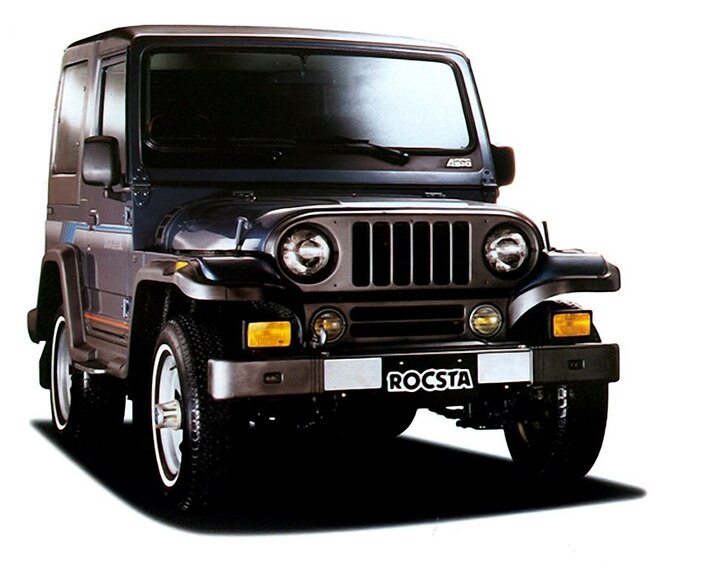
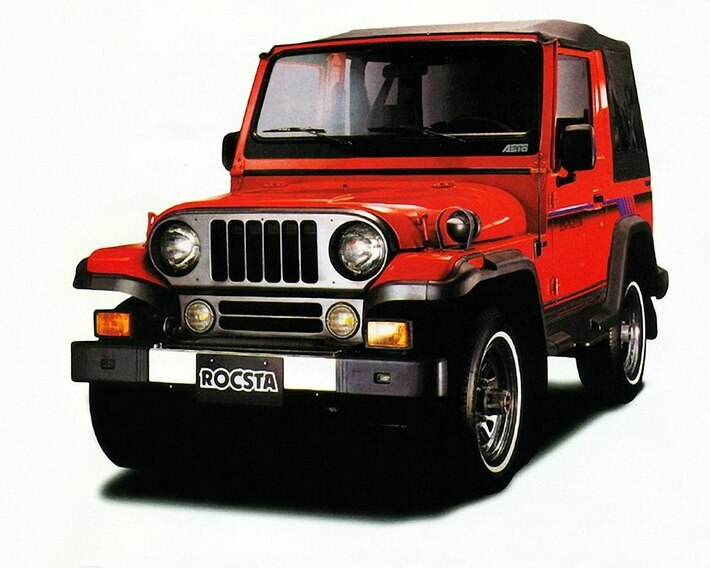
The Asia Rocsta was introduced in 1993 as Asia Motors' compact short-wheelbase 4x4, aimed squarely at the market for affordable recreational and utility off-road vehicles. With a body-on-frame construction, an upright windscreen, and a squared-off body style clearly inspired by the Jeep CJ family, the Rocsta was designed to appeal to buyers seeking a capable, honest 4x4 at a Korean price point. The part-time 4WD system with low-range transfer case gave it genuine off-road credentials rather than merely marketing-level claims.
Powertrain options reflected the commercial priorities of the mid-1990s Korean market: a 2.2-litre Kia J2 turbo diesel producing 61 hp for economical long-distance and rural use, and a 2.0-litre Kia FE petrol producing 95 hp for buyers prioritising responsiveness over economy. Both engines were shared across Kia and Asia Motors commercial and utility vehicles of the period, providing a practical maintenance foundation. The Rocsta was available in both soft-top and hard-top body styles, catering to recreational and year-round users respectively.
The Rocsta's production ended in 1999 when the Asia Motors brand was discontinued following Kia's absorption into the Hyundai Motor Group after the 1997 Asian financial crisis. In Azerbaijan today, surviving Rocsta examples are rare and represent an unusual corner of Korean automotive history. The vehicle's mechanical commonality with Kia commercial products of the era makes it more maintainable than its obscurity would suggest, and its compact dimensions and genuine off-road capability give it real practical value for the right buyer.
Gallery
Key Specifications
| Production Years | 1993 – 1999 |
|---|---|
| Body Styles | Compact 2-door / short-wheelbase, hard-top and soft-top |
| Construction | Body-on-frame ladder chassis |
| Engine (diesel) | 2.2L Kia J2 turbo diesel, 61 hp |
| Engine (petrol) | 2.0L Kia FE petrol, 95 hp |
| Drivetrain | Part-time 4WD with manual transfer case and low range |
| Gearbox | 5-speed manual |
| Suspension (front) | Live axle with leaf springs |
| Suspension (rear) | Live axle with leaf springs |
| Brakes | Front disc, rear drum |
| Kerb weight | approximately 1,100–1,200 kg |
| Fuel consumption | approximately 9–12 L/100 km |
| Origin | South Korea (Asia Motors, Kia subsidiary) |
Variant Comparison
| Variant | Engine | Power | Body | Best For |
|---|---|---|---|---|
| Rocsta 2.2D (1993) | 2.2L Kia J2 diesel | 61 hp | Hard-top | Original diesel Rocsta — lowest running costs |
| Rocsta 2.0L Petrol (1995) | 2.0L Kia FE petrol | 95 hp | Hard-top / soft-top | More responsive performance, better urban driveability |
| Rocsta Soft-Top | 2.2L diesel / 2.0L petrol | 61–95 hp | Soft-top open | Open-air off-road recreational use |
| Rocsta Hard-Top | 2.2L diesel / 2.0L petrol | 61–95 hp | Hard-top enclosed | Year-round use — better security and weather protection |
What Makes the Asia Rocsta Stand Out
Jeep-Inspired Compact Design
The Rocsta's short wheelbase and Jeep-influenced upright body proportions give it an off-road character that modern crossover SUVs cannot replicate. The short wheelbase directly improves breakover angle on rough terrain, and the compact footprint makes it manoeuvrable on narrow mountain tracks.
Part-Time 4WD with Low Range
Unlike many contemporary compact SUVs that offered only part-time or passive 4WD, the Rocsta's transfer case provides a dedicated low-range gear ratio — essential for crawling over rocks, ascending steep inclines, and recovering from mud without over-revving the engine.
Kia Commercial Engine Heritage
The 2.2L J2 diesel engine is a proven commercial vehicle unit used across Kia's truck and van range in the same period. It was designed for longevity in hard-working conditions, making the Rocsta's diesel mechanically more durable than its modest hp figure suggests.
Dual Body Style Availability
The choice between hard-top and soft-top configurations gives the Rocsta flexibility that many rivals lacked. The soft-top is the more characterful choice for summer use; the hard-top provides a practical year-round 4x4 with proper weather sealing.
Korean Automotive History
The Rocsta represents the last generation of compact Korean 4x4s produced before the Asian financial crisis transformed the Korean automotive landscape. It is a genuine artefact of the 1990s Korean economic boom and the ambition of smaller Korean brands to compete in global off-road markets.
Maintenance & Repairability in Azerbaijan
The Asia Rocsta's maintenance prospects in Azerbaijan are surprisingly reasonable for a vehicle of its obscurity, primarily because of its Kia-sourced powertrain. The 2.2L J2 diesel is a pre-common-rail indirect injection unit — mechanically straightforward by modern diesel standards, without electronic fuel management or complex emission systems. Mechanics in Azerbaijan familiar with Korean commercial diesel vehicles from the same era will find this engine recognisable.
Standard service items — oil filters, fuel filters, air filters, belts, and glow plugs — are available through Kia aftermarket channels. The injection pump is the most complex component and requires specialist diesel injection knowledge for overhaul, though replacement units can be sourced through Korean parts importers. The 2.0L FE petrol is an even simpler carburetted or early fuel-injection unit with standard overhead-valve architecture.
Rocsta-specific body panels, trim, and exterior components are the key challenge. These must be sourced from South Korean specialist suppliers or from the small community of Rocsta enthusiasts in Western Europe. Shipping lead times of two to four weeks should be anticipated. The leaf-spring live axle suspension uses standard components that can often be matched locally or through commercial spring suppliers. Corrosion on surviving vehicles is the primary long-term concern — any Rocsta in Azerbaijan should receive comprehensive corrosion treatment.
Competitor Comparison
| Model | Strength vs. Asia Rocsta | Compromise vs. Asia Rocsta |
|---|---|---|
| Suzuki Samurai (SJ410/SJ413) | Superior Japanese reliability, lighter weight, excellent global parts support | More expensive to find in good condition; Suzuki parts costlier in the region |
| Daihatsu Feroza | Fuel-injected engine, better refinement, strong Japanese build quality | Higher purchase price, Daihatsu parts harder to source than Kia components |
| UAZ Patriot | Much better parts supply in Azerbaijan, larger and more capable in extreme terrain | Far heavier, larger footprint, less compact character |
| Isuzu Trooper (short-wheelbase) | More powerful engine options, better build quality, Isuzu diesel credibility | Significantly more expensive, harder to find in compact trim |
Cost-of-Ownership Calculator
Estimate your annual running costs for an Asia Rocsta in Azerbaijan. Adjust the values to match your driving profile.
Used Buying Checklist
- Frame and body rust — Inspect the ladder chassis and body panels for rust penetration. Sills, wheel arches, and floor pan are the highest-risk areas. Structural rust on the chassis is a serious concern.
- Diesel engine smoke test — On 2.2D models, check smoke colour under load. Black smoke suggests fuelling issues; blue smoke indicates oil burning. Test glow plug operation on cold starts.
- 4WD and low-range engagement — Engage 2WD, 4WD, and 4WD-Lo during the test drive. Each position should engage cleanly without grinding or binding. Check the front axle for oil leaks when in 4WD.
- Soft-top condition (if applicable) — Inspect the soft-top material, zips, and sealing strips for tears, perishing, and waterproofing. Replacement soft-tops must be sourced from Korea.
- Leaf spring integrity — Check for broken spring leaves and worn bushings front and rear. Sagging springs affect both load capacity and handling stability.
- Brake inspection — Front discs and rear drums should be within specification. The Rocsta's front disc brakes are more effective than full-drum competitors, but calipers on older vehicles can seize.
- Documentation check — Verify VIN, engine number, and all import documentation. Confirm the vehicle's provenance is traceable.
Frequently Asked Questions
Should You Buy the Asia Rocsta?
Reasons to Buy
- Genuine compact 4x4 capability with low-range transfer case
- Kia J2 diesel engine is proven commercial-grade hardware
- Short wheelbase improves breakover angle and off-road manoeuvrability
- Soft-top variant offers open-air driving enjoyment in warm weather
- Rare Korean automotive heritage piece from the pre-crisis era
- Low purchase cost for a functional 4x4 with real off-road credentials
Reasons to Consider Alternatives
- Specific body and trim parts require Korean sourcing
- Significant corrosion risk on all surviving examples
- 61 hp diesel is genuinely slow, particularly on climbs under load
- Comfort and refinement are poor by any modern standard
- Suzuki Samurai offers comparable capability with far better global parts support
- No safety features — no airbags, no ABS
Verdict: The Asia Rocsta is a compelling classic 4x4 for the enthusiast who appreciates Korean automotive history and wants compact off-road capability at a low cost of entry. The Kia-derived drivetrain provides a more maintainable foundation than the Asia badge alone would suggest. However, it demands an owner willing to invest time in sourcing parts and managing the challenges of a 25–30-year-old vehicle in a market where dealer support is absent. For buyers seeking a practical everyday off-roader, the UAZ or Lada Niva are the pragmatic choices; for the collector seeking something unusual, the Rocsta has genuine character and rarity on its side.
BakuWheels uses cookies to improve your experience, analyse site traffic, and personalise content. By clicking Accept All, you consent to our use of cookies. Learn more in our Cookie Policy.