

Hindustan Motors
The maker of India's most iconic automobile — the Hindustan Ambassador, a car so deeply woven into Indian life that it became a cultural institution as much as a vehicle.
Origins of Hindustan Motors
Hindustan Motors was founded in 1942 in Kolkata (then Calcutta), India, as one of the country's earliest automobile manufacturers. The company began operations by assembling vehicles from imported components, and in 1948 became the first Indian company to produce a fully domestic automobile — initially a version of the Morris Ten. The pivotal moment in Hindustan Motors' history came in 1958 when it began producing the Ambassador, based on the Morris Oxford Series III, a vehicle that would define Indian motoring for generations.
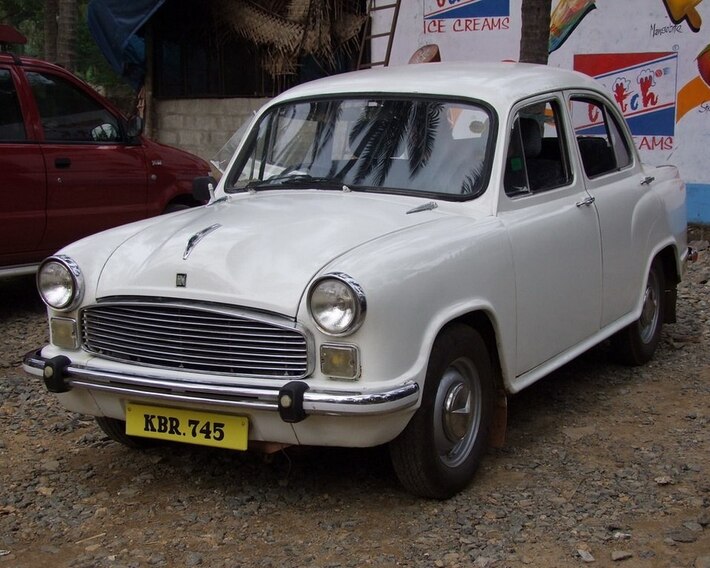
The Ambassador became far more than a mode of transport. It became the car of government officials, taxi fleets, and families across India — a vehicle whose rounded, substantial form was as recognisable a feature of Indian cities as any architectural landmark. The Ambassador's longevity was extraordinary: with periodic updates, the same fundamental design remained in production for over five decades, making it one of the world's longest-running automobile production runs with a single body design. Its robust mechanicals, spacious interior, and relative ease of repair made it ideally suited to Indian conditions.
By the 2000s, increased competition from liberalised automotive imports and domestic models from joint ventures placed Hindustan Motors under severe commercial pressure. The company suspended Ambassador production in 2014, ending a chapter of Indian automotive history that spanned 56 years. Peugeot subsequently acquired the Ambassador trademark in 2017, though no new vehicle bearing the name has yet appeared. Hindustan Motors continues a limited existence focused on contract manufacturing.
Key Milestones
Notable Models
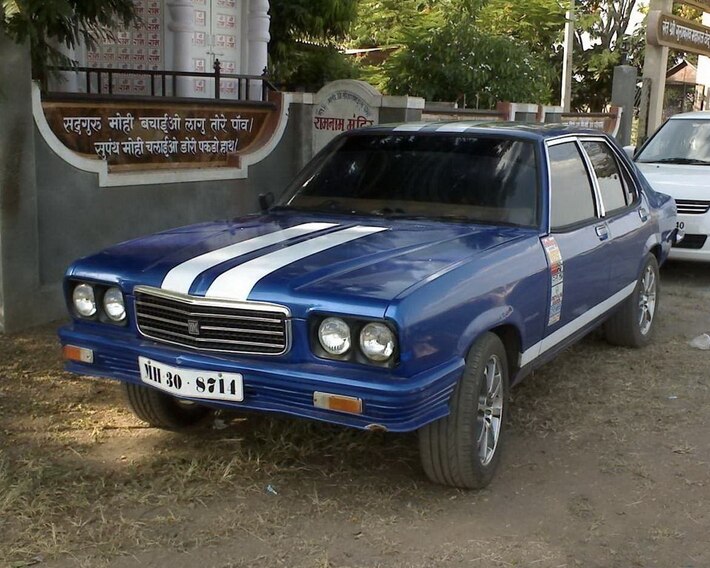
Hindustan Motors' legacy rests predominantly on a single vehicle — the Ambassador — though the company also produced other models that served important roles in Indian automotive history.
Technology & Engineering
Hindustan Motors' engineering philosophy prioritised robustness, repairability, and adaptation to Indian road and maintenance conditions over technological sophistication.
- Body-on-frame construction throughout the Ambassador's production life — providing structural durability and ease of repair in areas with limited workshop facilities, contributing to the model's extraordinary longevity
- Progressive engine updates over five decades — from the original B-series Morris engine through Isuzu diesel units, adapting the Ambassador to changing fuel economics without altering its fundamental character
- Spacious interior dimensions relative to external size — the Ambassador's body design efficiently packaged a genuinely comfortable cabin for four adults with substantial luggage space, ideal for Indian family and official use
- Ease of maintenance by local mechanics — the Ambassador's mechanicals were widely understood across India, with spare parts available in even the smallest towns, enabling ownership far from official service centres
Hindustan Motors in Azerbaijan
Hindustan Motors vehicles have no presence in Azerbaijan. The Ambassador was designed specifically for Indian market conditions and was never exported to Caucasian or Central Asian markets. The few examples that exist outside India are held by specialist collectors in the United Kingdom and other markets with historical connections to the Indian automotive industry.
For Azerbaijani automotive enthusiasts, the Hindustan Ambassador represents one of the most compelling stories in the history of mass-market automobiles — the extraordinary tale of a vehicle that outlasted its original, a British family car that found its ultimate expression not in the country of its design but in a nation that adopted it so completely that it became an inseparable part of its own culture.
Why Hindustan Matters
- Cultural identity through automobiles: Few vehicles in history achieved the cultural resonance of the Ambassador in India — a car that became so embedded in national life that its form was immediately recognisable to generations who had never driven one. Hindustan Motors demonstrates the power of automotive continuity in building genuine cultural connection.
- Longevity record: The Ambassador's 56-year production run with a single body design is one of the most remarkable in automotive history — a record that speaks to both the vehicle's fundamental rightness for its market and Hindustan Motors' understanding of what Indian customers genuinely needed.
- Emerging market pioneering: Hindustan Motors was among the first to demonstrate that a developing nation could establish genuine automobile manufacturing capability, providing a model for other emerging automotive industries worldwide.
- Adaptation over replacement: Rather than replacing the Ambassador as Western competition intensified, Hindustan Motors' gradual adaptation of its core product for changing conditions illustrates a philosophy of continuous improvement over disruptive change — an approach that extended the vehicle's relevance far beyond what its original designers could have anticipated.
Iconic Models in Pictures
Hindustan vehicles — a visual selection of the iconic models produced by this manufacturer.
BakuWheels uses cookies to improve your experience, analyse site traffic, and personalise content. By clicking Accept All, you consent to our use of cookies. Learn more in our Cookie Policy.