
Tata Motors
India's Automotive Giant: From Jamshedpur Trucks to Jaguar Land Rover Ownership.
Origins & Heritage
Tata Motors traces its roots to 1945 when Tata Engineering and Locomotive Company (TELCO) was established in Jamshedpur, Jharkhand, as a partnership between the Tata Group — one of India's most respected industrial conglomerates — and Daimler-Benz AG of Germany. Initially focused on producing commercial vehicles under Mercedes-Benz licence, TELCO quickly became the backbone of India's industrial transport infrastructure, manufacturing heavy trucks and buses that connected the country's rapidly expanding post-independence economy.
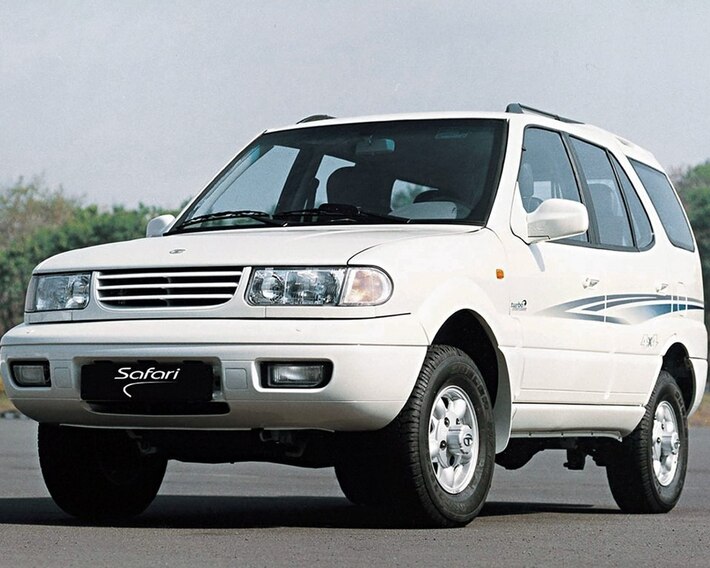
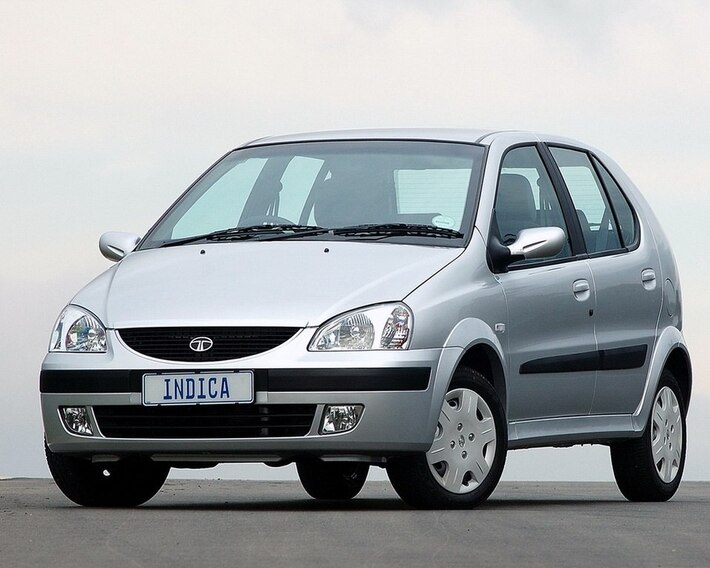
The company's transition from pure commercial vehicle manufacture to passenger cars came with the Tata Sierra in 1991, India's first indigenous multi-utility vehicle, followed in 1998 by the Tata Indica — the first car to be entirely designed and manufactured in India. These vehicles demonstrated that Indian engineering capability had reached the point where globally competitive passenger cars could be developed domestically rather than assembled from foreign designs, marking a watershed moment for the country's automotive ambitions.
The 2008 acquisition of Jaguar Land Rover from Ford Motor Company for $2.3 billion transformed Tata Motors from a primarily domestic Indian automaker into a genuine global automotive force, bringing premium British brands that delivered engineering expertise, global distribution, and brand prestige far beyond what the Indian domestic market alone could provide. Under Tata's stewardship, JLR was revitalised and became the group's most profitable division, with technology development flowing back to benefit the entire Tata Motors portfolio.
Key Milestones
Iconic Models in Pictures
Tata Motors' product range spans India's first indigenous SUV through to Land Rover-platform luxury crossovers, capturing eight decades of automotive development from the workshops of Jamshedpur.
Model Lineup
Tata Motors' passenger car range covers compact hatchbacks through full-size premium SUVs, with a growing electric vehicle portfolio that reflects the brand's strategic commitment to India's EV transition alongside its traditional combustion-engine strengths.
Engineering & Technology
Tata Motors' engineering combines indigenous development capability with strategic acquisition of world-class platforms, most significantly the Land Rover-derived OMEGA Arc architecture that underpins the Safari and Harrier and provides European-standard suspension geometry and crash performance at Indian market price points. The brand's electric vehicle development through Tata.ev has established proprietary battery management systems, motor technology, and thermal management solutions that have made Tata Motors the dominant player in India's EV transition.
- OMEGA Arc platform — derived from the Land Rover Discovery Sport's architecture, providing unibody rigidity, European-standard crash performance, and sophisticated multi-link rear suspension geometry in Tata's premium SUV models at significantly lower price points than equivalent imported platforms
- Tata.ev electric vehicle technology — proprietary battery management systems, permanent magnet AC motors, and thermal management solutions developed for Indian climate conditions, achieving real-world ranges of 300–450 km in the Nexon EV and establishing Tata as India's dominant electric vehicle manufacturer
- Fiat-sourced 1.5-litre Multijet II diesel engine — used across Tata's SUV range, providing the torque delivery, fuel efficiency, and durability that Indian buyers prioritise in SUV applications, with Tata's calibration optimised for Indian driving conditions and fuel quality
- Connect Next infotainment architecture — Tata's proprietary connected vehicle platform provides over-the-air software updates, voice command integration, and multi-device connectivity; the system is continuously developed so older Tata vehicles gain new features without hardware replacement
- Advanced Driver Assistance Systems — Tata's more recent models include ADAS features such as autonomous emergency braking, lane departure warning, and adaptive cruise control, bringing safety technology previously reserved for premium imports into the mainstream Indian market segment
Tata Motors in Azerbaijan
Tata Motors vehicles reached Azerbaijan primarily through the commercial vehicle segment — Tata trucks and light commercial vehicles found a market in Azerbaijan's construction and logistics sectors during the 2000s and 2010s, valued for their durability, diesel economy, and price competitiveness against European commercial vehicles. The Tata Indica also appeared in the Azerbaijani market through parallel imports, where it had been valued as an affordable diesel commuter.
For Azerbaijani buyers considering a used Tata passenger vehicle, the principal advantages are diesel engine durability and broader spare parts accessibility — the Fiat-sourced diesel engines used in many models share components with European vehicles that are more widely serviced in the region, reducing the risk of parts unavailability. Tata does not maintain dedicated dealer infrastructure in Azerbaijan, so buyers should rely on independent mechanics familiar with European diesel technology and verify maintenance history before purchase.
Why Consider a Tata Motors Vehicle?
- Land Rover-platform SUV capability: Tata's Safari and Harrier are built on Land Rover-derived architecture, delivering European-standard suspension and chassis engineering in vehicles priced significantly below equivalent Land Rover products — genuine premium engineering at Indian market pricing.
- Proven diesel engine durability: The Fiat-sourced Multijet II diesel used in Tata's SUV models is a well-established unit with a service network and a reputation for longevity under demanding conditions — a relevant advantage for Azerbaijani buyers who prioritise diesel economy and engine reliability.
- Pioneer EV credentials: Tata's position as India's electric vehicle market leader has driven substantial investment in EV technology — buyers interested in electric vehicles can access Tata's expertise in the Nexon EV, which combines practical range with the cost advantages of a volume-produced Indian EV.
- Commercial vehicle heritage: Eight decades of commercial vehicle manufacture have given Tata's engineering culture a focus on durability, reliability under demanding conditions, and total cost of ownership that permeates the passenger car range — these are vehicles designed to work, not just to impress at the point of sale.
- JLR ownership advantage: Tata's ownership of Jaguar Land Rover has provided access to premium automotive engineering, advanced manufacturing processes, and global quality systems that have progressively improved Tata Motors' own vehicle quality — the brand today builds significantly better vehicles than its historical reputation might suggest.
BakuWheels uses cookies to improve your experience, analyse site traffic, and personalise content. By clicking Accept All, you consent to our use of cookies. Learn more in our Cookie Policy.