
Rimac
Rimac is the most technically advanced electric hypercar manufacturer in existence — a Croatian company built from scratch by one engineer with a converted 1984 BMW that sparked a revolution in electric vehicle performance. Today, Rimac Automobili produces the world's fastest production car in the Nevera, supplies electric powertrain technology to major manufacturers including Porsche and Hyundai, and operates the Bugatti Rimac joint venture that shapes the future of Bugatti.
Origins & Heritage
Mate Rimac founded Rimac Automobili in 2009 as a 21-year-old student after his 1984 BMW 3 Series blew its engine. Rather than replacing the engine, he converted the car to electric power — and discovered that properly engineered electric drivetrains could deliver performance that petrol engines could not match. That insight became the foundation of a company that would eventually partner with Porsche AG and take ownership of one of the most storied names in automotive history.
The Concept One, revealed at the 2011 Frankfurt Motor Show, demonstrated what was possible: a fully electric hypercar producing 1,073 hp, accelerating to 100 km/h in 2.8 seconds, and covering 600 km on a charge. It was built primarily from components Rimac had developed himself, in a workshop in Zagreb. The automotive establishment took notice — Porsche made its first investment in 2018, followed by Hyundai.
By 2021, Rimac had partnered with Volkswagen Group to create Bugatti Rimac, combining Bugatti's legacy and brand with Rimac's electric vehicle technology and engineering culture. Mate Rimac became CEO of the combined entity. The Nevera, launched as a replacement for the Concept Two, immediately claimed the world record for electric vehicle acceleration with a 0–100 km/h time of 1.81 seconds — and set 23 world performance records in a single testing session.
Key Milestones
Model Lineup
Rimac's production car range is deliberately minimal — each model represents a complete engineering statement rather than an incremental update, built in strictly limited numbers for collectors worldwide.
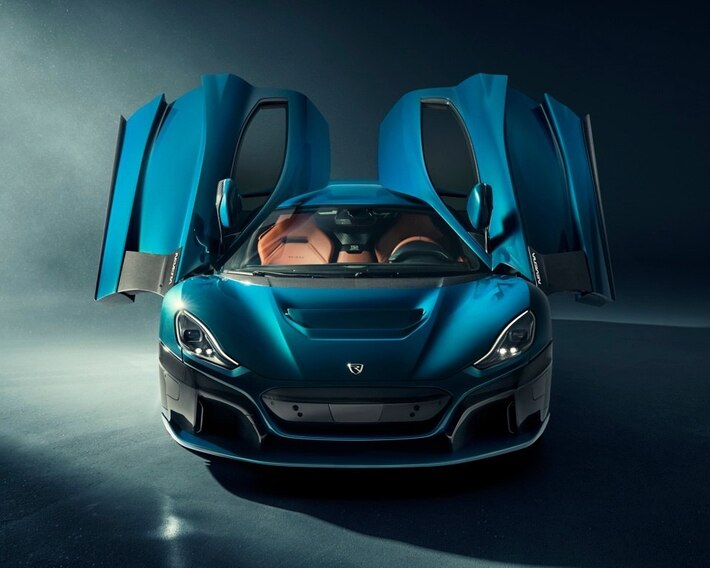
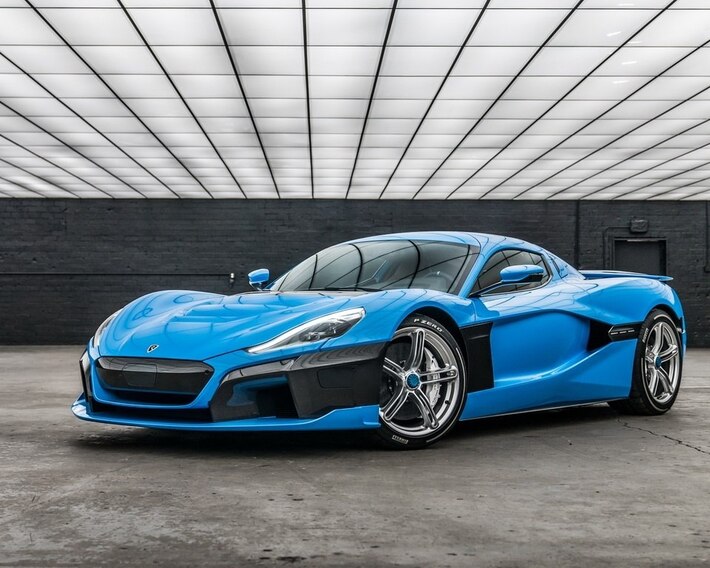
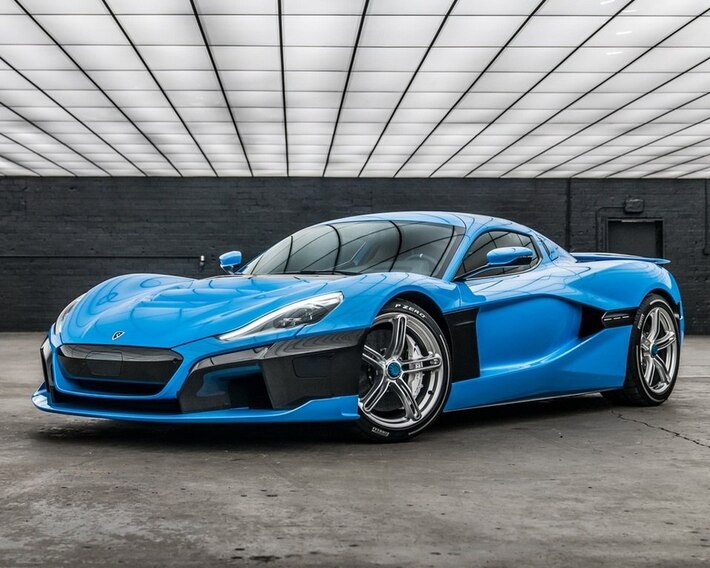
Rimac in Pictures
From the hand-built Concept One that launched the brand to the record-shattering Nevera, Rimac's history is a series of electric performance benchmarks that the wider industry has consistently failed to match.
Engineering & Technology
Rimac's engineering approach treats electric vehicle technology not as a compromise but as a performance advantage. The Nevera's four electric motors — one per wheel — allow instantaneous, independent torque vectoring at each corner, delivering handling precision that mechanical differentials cannot replicate. The 120 kWh battery system is engineered for both peak discharge performance and sustained high-speed operation, managing thermal load with active cooling systems.
Beyond its own cars, Rimac supplies electric powertrain technology to manufacturers including Porsche (Taycan development), Hyundai (high-performance electric platform), Aston Martin, and others. This technology business has become as significant as the car business — and the combination of production car development and technology supply creates a unique feedback loop where real-world hypercar performance drives advances in commercial electric vehicle technology.
- Four-motor all-wheel drive — independent electric motors at each wheel provide simultaneous torque vectoring and traction management beyond what any mechanical differential system can achieve
- Torque vectoring at millisecond response speeds — Rimac's control software can vector torque between all four wheels faster than any mechanical system, providing handling stability and cornering precision
- In-house battery technology — Rimac develops its own battery cells and management systems optimised for hypercar discharge rates rather than adapting commercial EV cells
- Active aerodynamics — the Nevera's adjustable aerodynamic elements respond in real time to speed, steering input, and braking demand to maintain optimal downforce and stability
- Rimac Driving Mode System — four driver-selectable modes tune the balance between performance, range, stability, and track-focused behaviour, adapting the car's character to its purpose
Rimac in Azerbaijan
Rimac's global production volume is extremely limited — only 150 Nevera hypercars are being produced for the entire world. Like other elite hypercars, Rimac ownership in Azerbaijan is reserved for a very small number of collectors and enthusiasts with the means to acquire and maintain such a vehicle. However, Rimac's technological story — a single engineer building a world-record-breaking car from scratch — has made the brand an inspiration across Azerbaijan's growing automotive and technology communities.
Azerbaijan's increasing engagement with premium electric vehicle technology, visible in the growing presence of Tesla, Polestar, and other EVs on Baku's streets, reflects the same shift in automotive culture that created the market for Rimac's technology business. As the global electric transition accelerates, Rimac's position as the world's leading electric hypercar company gives it a cultural significance beyond its production numbers.
Why Rimac?
- <strong>Verified world performance records:</strong> The Nevera holds 23 world records including the fastest 0–100 km/h time (1.81 s) and 0–400 m time for any production car — records independently verified by specialist performance testing organisations.
- <strong>Genuine technological leadership:</strong> Rimac does not buy in electric motors, batteries, or control systems from established suppliers — every critical performance component is developed in-house, producing capabilities that no supplier currently offers commercially.
- <strong>Extraordinary exclusivity:</strong> With only 150 Nevera examples in existence, a Rimac is among the rarest production automobiles ever built — significant as a collector's piece and as a piece of automotive history.
- <strong>Established industry credibility:</strong> Porsche AG and Hyundai Motor Group's investment in Rimac, followed by the Bugatti Rimac partnership, confirms that the automotive establishment recognises Rimac's technology leadership.
- <strong>Pioneer of the electric performance era:</strong> Rimac demonstrated that electric vehicles could exceed the performance of petrol supercars before any other manufacturer — a first-mover position that continues to define the brand's identity.
BakuWheels uses cookies to improve your experience, analyse site traffic, and personalise content. By clicking Accept All, you consent to our use of cookies. Learn more in our Cookie Policy.