

Rivian
Rivian is America's most exciting electric vehicle startup — building the R1T pickup truck and R1S SUV that redefine the adventure segment with Amazon and Ford backing. Rivian isn't competing with Tesla for the city commuter; it's combining the limitless outdoors with electric power.
Origins & Heritage
Rivian Automotive was founded in Florida in 2009 by Robert "RJ" Scaringe, who holds a mechanical engineering PhD from MIT. Scaringe believed the most compelling application of electric vehicle technology was not the urban daily driver but the adventure-focused pickup truck and SUV. He established the company first as Mainstream Motors in Florida, then relocated to Michigan, the heart of American automotive manufacturing, and later to Normal, Illinois, where Rivian acquired a former Mitsubishi plant that would become its primary manufacturing facility.
Rivian's profile remained relatively low-key until November 2018, when the company presented the R1T pickup truck and R1S SUV at the Los Angeles Auto Show — revealing two technologically advanced vehicles unlike anything else in the developing EV market. The automotive press, outdoor enthusiasts, and investors immediately recognised that Rivian was building something genuinely different. Amazon's $700 million investment in early 2019 — followed by an order for 100,000 electric delivery vans — transformed Rivian overnight from an interesting startup into a major player in the EV industry.
Rivian went public on Nasdaq in November 2021, becoming one of America's largest IPOs with a market capitalisation that briefly surpassed both Ford and GM despite having delivered fewer than 200 vehicles. The company subsequently experienced the production ramp-up challenges typical of new automotive manufacturers, but Rivian established itself as the clear leader of the premium electric adventure vehicle segment — a category it largely invented.
Key Milestones
Iconic Models in the Gallery
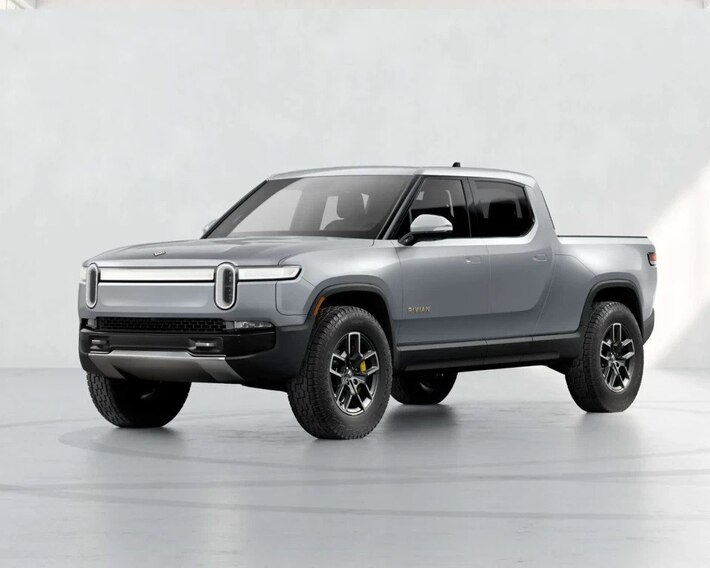
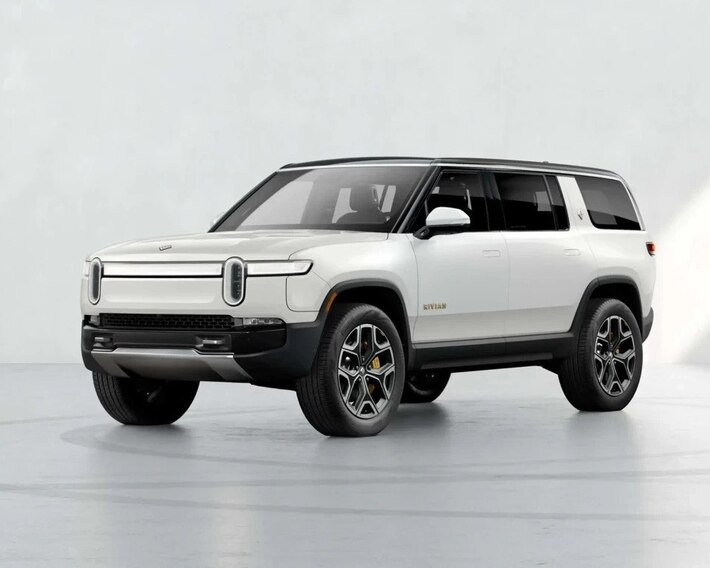
Rivian's R1T and R1S are instantly recognisable on the road — the angular, adventure-ready design language and quad-motor performance capability set them apart from anything else in production.
Model Lineup
Rivian's consumer range is deliberately narrow — two related models on a single platform (pickup truck and SUV), both targeting the premium adventure vehicle buyer who refuses to choose between electric capability and outdoor performance.
Technology & Innovation
Rivian's "skateboard" platform is the company's most critical technical asset — a fully electric vehicle architecture that integrates battery pack, motors, suspension, brakes, and thermal management into a single structural unit that forms the vehicle's floor. This approach allows multiple body styles to share the same underlying engineering while achieving a lower centre of gravity and higher structural rigidity than traditional body-on-frame or monocoque approaches.
The quad-motor R1T and R1S use independent motors at each wheel — a configuration that enables millisecond torque vectoring at every corner, creating handling precision to rival sports cars while maintaining the load distribution required for serious off-road use. "Tank Turn" — running left and right motors in opposite directions to spin the vehicle on its own axis — generated enormous social media interest and vividly demonstrated the unique capabilities of quad-motor architecture.
- Skateboard platform — fully integrated EV architecture enabling multiple body styles and class-leading low centre of gravity
- Quad-motor system — independent torque vectoring at each wheel for both sports car dynamics and extreme off-road control
- Tank Turn — spin the vehicle on its own axis: a unique capability demonstrating the flexibility of quad-motor architecture
- Gear Tunnel — patented pass-through storage system unique to the R1T pickup
- Rivian Adventure Network — dedicated DC fast-charging network positioned at adventure destinations
Rivian in Azerbaijan & the Caucasus
Rivian's presence in Azerbaijan is currently more aspirational than commercial — the brand's vehicles are not yet officially distributed in the Azerbaijani market, but its reputation has reached automotive enthusiasts through international media and global EV discourse. The R1T and R1S hold strong appeal for Azerbaijan's growing adventure sports enthusiast and outdoor-oriented buyer segment, who combine city presence with mountain exploration — after all, the Caucasus Range is among the world's most spectacular off-road territories.
As Rivian scales production and the brand matures toward international expansion, the Azerbaijani market — with its aspirational buyer base, developing EV infrastructure, and dramatic mountain geography — represents an interesting future prospect. The R1S's combination of family practicality and off-road capability is particularly well-suited to the driving conditions Azerbaijani buyers face: navigating Baku's urban environment during the week, then heading into the Greater Caucasus's mountain terrain on weekends.
Why Choose Rivian?
- Electric adventure pioneer: Rivian created the premium electric adventure pickup category — the R1T and R1S have no direct rivals combining this level of EV range with this level of off-road capability.
- Quad-motor performance: 835 hp and independent torque vectoring at each wheel — both sports car dynamics and rock-climbing capability from a single powertrain architecture.
- Amazon backing: $5.2 billion in Amazon investment and the 100,000-van order validate Rivian's commercial viability and engineering capability at a scale a startup cannot prove on its own.
- Unique features: The Gear Tunnel, frunk, and built-in air compressor give the R1T practical functionality no other pickup can offer.
- Adventure Network: Rivian's dedicated charging network is strategically positioned near trailheads, national parks, and outdoor recreation destinations — perfectly aligned with the brand's adventure identity.
BakuWheels uses cookies to improve your experience, analyse site traffic, and personalise content. By clicking Accept All, you consent to our use of cookies. Learn more in our Cookie Policy.