

Wanderer
Wanderer is one of Germany's most storied pre-war automotive brands — a Chemnitz manufacturer whose journey from bicycle production in 1885 through motorcycles, typewriters, and precision tools to sophisticated passenger cars makes it one of the most versatile engineering enterprises in German industrial history. As one of the four founding marques of Auto Union AG in 1932, Wanderer's legacy is literally embodied in the four interlocking rings that today adorn every Audi automobile worldwide — a continuous thread of engineering heritage stretching from the workshops of Saxony to the present day.
Origins & Heritage
Wanderer was founded in 1885 in Schönau bei Chemnitz, Saxony, by Johann Baptist Winklhofer and Richard Adolf Jaenicke, initially as a manufacturer of bicycles. The company's name — "Wanderer" meaning "wanderer" or "traveller" in German — captured both the spirit of personal mobility that bicycles represented in the 1880s and the broader aspirations of the enterprise. From bicycles, Wanderer moved into motorcycle production in 1902, establishing itself as a significant player in the German two-wheel market before the automobile age had fully arrived.
Wanderer's transition to automobile manufacturing came in 1913 with the launch of its first car — a modest but well-engineered vehicle that demonstrated the company's characteristic commitment to precision craftsmanship. Through the 1920s and into the 1930s, Wanderer developed an increasingly sophisticated range of passenger cars, including the elegant W10 of the late 1920s and the handsome W23 of the 1930s. The pinnacle of Wanderer's automotive ambition came with the W25K — a supercharged sports model that represented the brand's most performance-oriented expression and is among the most desirable Wanderer models for collectors today.
The decisive moment in Wanderer's history came in 1932, when economic pressures and the catastrophic impact of the Great Depression on the German automotive industry forced four struggling manufacturers — Audi, Horch, DKW, and Wanderer — to merge into a single corporate entity: Auto Union AG, headquartered in Chemnitz. Each of the four rings in the Auto Union logo — and in the current Audi four-ring badge — represents one of these founding brands. Wanderer contributed its manufacturing facilities, engineering expertise, and mid-range product heritage to the new group. After World War II, the Chemnitz factories were nationalised by the Soviet occupation authorities, and the Wanderer name disappeared from automotive production permanently.
Key Milestones
Iconic Models in Pictures
From the elegant lines of the W10 to the supercharged drama of the W25K, Wanderer's automotive output captured the sophistication of Weimar-era and early National Socialist Germany's most refined engineering — vehicles that combined German precision with genuinely pleasing aesthetics.
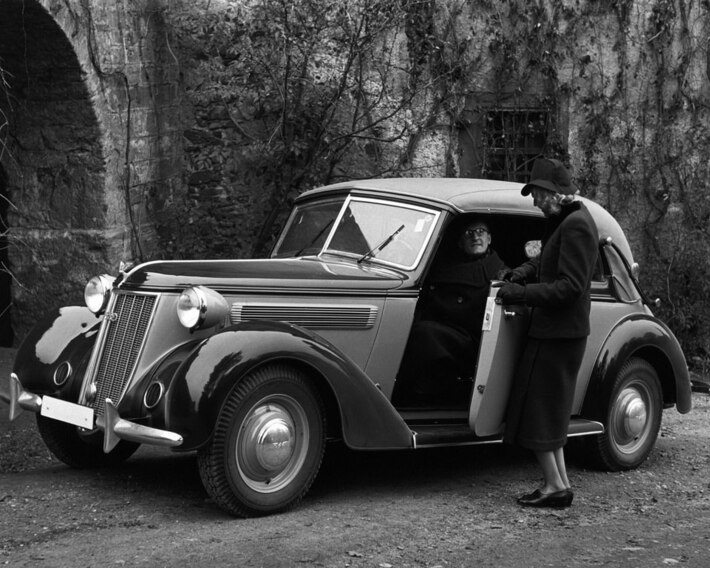
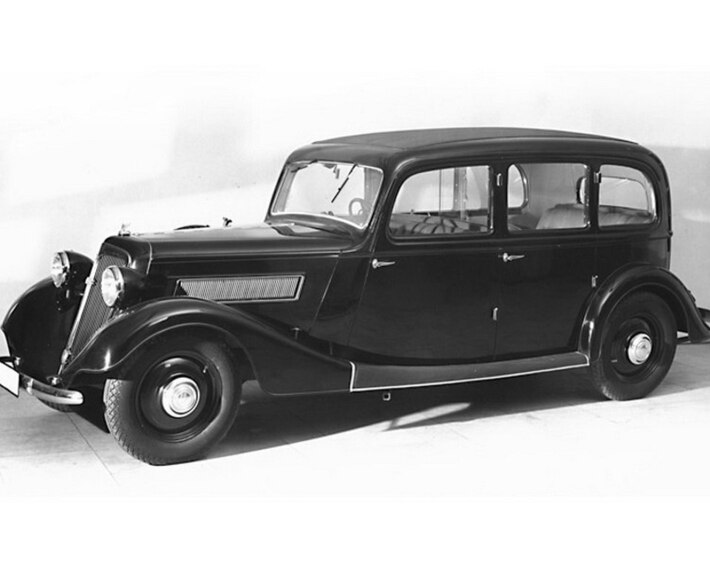
Model Lineup
Wanderer's automotive range spanned from modestly sized tourers of the 1910s and 1920s through to increasingly sophisticated pre-war saloons and sports models in the 1930s, always maintaining the precision engineering character that defined the brand across all its product lines.
Engineering & Technology
Wanderer's engineering philosophy was rooted in the precision manufacturing traditions of Chemnitz — a city known across Germany for the quality of its metalworking and mechanical engineering. Wanderer vehicles of the 1920s and 1930s were built to standards that reflected the company's origins in precision instruments and bicycles: tight tolerances, quality materials, and attention to detail that separated Wanderer products from lower-tier manufacturers. Ferdinand Porsche — before his own company and before his work with Volkswagen — was engaged as a consulting engineer by Wanderer in the early 1930s, contributing to the development of the W50 project that was ultimately not produced due to the Auto Union merger.
- Six-cylinder in-line engines of 1.7L–2.0L displacement in 1930s models, producing 40–60 hp with the smooth power delivery characteristic of multi-cylinder pre-war German engineering
- Supercharger installation on the W25K providing a significant power increase over naturally aspirated variants, enabling genuine sports car performance from a production passenger car platform
- All-steel closed body construction in 1930s saloon models — transitioning from earlier fabric-and-wood coachwork to modern all-steel monocoque-adjacent body structures that improved rigidity and weather protection
- Hydraulic brakes on later 1930s models — a significant safety advancement over the cable-operated mechanical brakes found on many competitors of the same era
- Precision-machined components throughout, reflecting Wanderer's heritage in instrument and tool manufacturing — with tolerance levels and finish quality that distinguished Wanderer from budget-oriented contemporaries
Wanderer & the Auto Union Legacy in Azerbaijan
Wanderer automobiles as original pre-war vehicles have never had a meaningful presence in Azerbaijan — the brand ceased production in 1945, and the geopolitical separation of the Soviet sphere from Western European collector car markets during the Cold War meant that no significant number of pre-war German automobiles of any kind reached the Caucasus through normal channels. However, the Wanderer name resonates in Azerbaijan through a different and more direct connection: the four-ring Audi badge that adorns the modern Audis found across Baku today is a direct descendant of the Auto Union logo that Wanderer helped create when it merged in 1932.
For Azerbaijani automotive enthusiasts interested in pre-war European automotive history, Wanderer represents a fascinating chapter in the development of what became Audi — today one of the premium brands most visible on Baku's roads. Collectors and historians who want to understand the full depth of the Audi heritage story will find Wanderer's history essential reading. Original Wanderer vehicles occasionally appear at specialist European auction houses, and well-documented examples — particularly the W25K — command serious prices among pre-war German car collectors globally.
Why Wanderer Matters to Automotive History
- Audi's direct ancestor: Wanderer is one of the four founding brands of Auto Union — the corporate predecessor of modern Audi. Every Audi sold in Azerbaijan today carries the four-ring badge whose rings represent Wanderer, Audi, Horch, and DKW — making Wanderer's history inseparable from the origins of one of the world's great premium automotive brands.
- Ferdinand Porsche connection: Ferdinand Porsche — later founder of Porsche AG and designer of the Volkswagen Beetle — served as a consulting engineer for Wanderer in the early 1930s, contributing design work that demonstrates Wanderer's position at the highest levels of pre-war German automotive engineering.
- Exceptional pre-war craftsmanship: Wanderer vehicles of the 1920s and 1930s are consistently praised by collectors for the quality of their engineering and construction — a reflection of the brand's Chemnitz precision manufacturing heritage that placed Wanderer above many contemporaries in build quality.
- Supercharged W25K rarity: The W25K is one of the most exciting and desirable pre-war German sports cars in existence — a genuine collector's trophy whose combination of supercharged performance, elegant pre-war styling, and direct historical connection to the Auto Union story makes it extraordinarily sought-after at major international auctions.
- Complete industrial heritage story: Wanderer's journey from bicycle manufacturer to motorcycle producer to precision typewriter maker to automobile manufacturer is one of the most complete and compelling industrial heritage narratives in German engineering history — a story that resonates with anyone interested in the development of German manufacturing excellence.
BakuWheels uses cookies to improve your experience, analyse site traffic, and personalise content. By clicking Accept All, you consent to our use of cookies. Learn more in our Cookie Policy.