

Hispano-Suiza
From pre-war Grand Prix victories to a 1,019 hp electric hypercar — Hispano-Suiza's century-spanning story is one of Europe's greatest automotive resurrection narratives.
Origins of Hispano-Suiza
Hispano-Suiza — 'Spanish-Swiss' — was founded in Barcelona, Spain, in 1904 by Catalan entrepreneur Damián Mateu and Swiss engineer Marc Birkigt. Birkigt's engineering genius shaped the company from its earliest days; his designs were celebrated for their technical sophistication and refined luxury. Within a decade, Hispano-Suiza had established itself as one of the world's premier automobile manufacturers, producing cars of exceptional quality for royalty, heads of state, and the social elite of early 20th-century Europe.
The company's H6 model, introduced in 1919, is considered by many automotive historians to be the first truly modern luxury automobile — featuring a sophisticated overhead-camshaft six-cylinder engine designed by Birkigt and servo-assisted brakes that set new benchmarks for the industry. Hispano-Suiza also produced aircraft engines of exceptional quality, including the Hispano-Suiza 8 aero engine used widely in World War I Allied aircraft and the subsequent V12 aero engines that powered some of the most advanced interwar aircraft. The outbreak of the Spanish Civil War in 1936 effectively ended Spanish production, and World War II brought the final curtain on automotive operations. The company refocused on defence and aerospace.
In 2019, Hispano-Suiza was dramatically revived by descendants of the Mateu family with the Carmen — a 1,019 hp all-electric grand tourer that honours the company's heritage while embracing 21st-century automotive technology. Named after the grandmother of the current chairman, the Carmen is produced in extremely limited numbers and represents one of the most prestigious electric hypercars in the world. Its revival demonstrates how a legacy of engineering excellence can transcend a gap of seven decades to establish genuine contemporary credibility.
Key Milestones
Notable Models
Hispano-Suiza's automotive legacy spans two eras separated by 70 years — pre-war masterpieces of engineering and a modern electric hypercar that honours their memory.
Technology & Engineering
Hispano-Suiza has always occupied the forefront of engineering innovation — from Marc Birkigt's aluminium engines in the 1920s to the advanced EV architecture of the Carmen a century later.
- Original H6: advanced aluminium construction and single overhead camshaft — technologies that would not become common in the industry for decades, illustrating how far ahead of its time Birkigt's engineering was
- H6 four-wheel servo-assisted brakes — a safety innovation adopted by competitors reluctantly and slowly, representing a significant advance in driving safety at a time when braking performance was a genuine limitation of automotive design
- Carmen: 80 kWh battery delivering 1,019 hp to a rear-wheel-drive powertrain — combining hypercar performance with zero-emission operation and a claimed range of over 400 km in a carbon-fibre body weighing under 1,700 kg
- Carmen aerodynamic body design — developed using computational fluid dynamics to achieve both visual drama and genuine aerodynamic efficiency, with active elements managing downforce and cooling across the performance envelope
Hispano-Suiza in Azerbaijan
Hispano-Suiza vehicles have no current presence in Azerbaijan. The pre-war models are among the rarest and most valuable automobiles in existence, held exclusively in major private collections and museums worldwide. The revived Carmen hypercar, at over €1.5 million and limited to 19 examples, is beyond the reach of all but the most exceptional collectors.
For Azerbaijani automotive enthusiasts, Hispano-Suiza represents one of the great European prestige narratives — a Spanish manufacturer that competed at the very pinnacle of early automotive art and engineering, disappeared for seven decades, and returned as a creator of some of the world's most exclusive electric hypercars. The brand's story illustrates that genuine engineering heritage, once established, can outlast even the longest periods of dormancy.
Why Hispano-Suiza Matters
- Pioneering luxury engineering: The Hispano-Suiza H6 was genuinely ahead of its era — its overhead-camshaft engine, servo brakes, and aluminium construction represented innovations that competitors would take years to match, establishing the brand as a benchmark for technical ambition in luxury cars.
- Cross-industry excellence: Hispano-Suiza's aviation engine production — including the iconic Hispano-Suiza 8 that powered Allied World War I fighters — demonstrated a level of engineering excellence that transcended categories, establishing the brand as one of the premier precision engineering enterprises of the early 20th century.
- Successful revival after 70 years: The Carmen's launch in 2019 represents one of the most credible automotive brand revivals in history — not a cynical badge-engineering exercise, but a genuine engineering statement that honours its heritage through performance and exclusivity rather than nostalgia.
- Electric hypercar leadership: The Carmen and Carmen Boulogne place Hispano-Suiza at the forefront of the emerging ultra-luxury EV supercar segment, demonstrating that a brand historically associated with combustion excellence can authentically lead in the electric era through genuine engineering commitment.
Iconic Models in Pictures
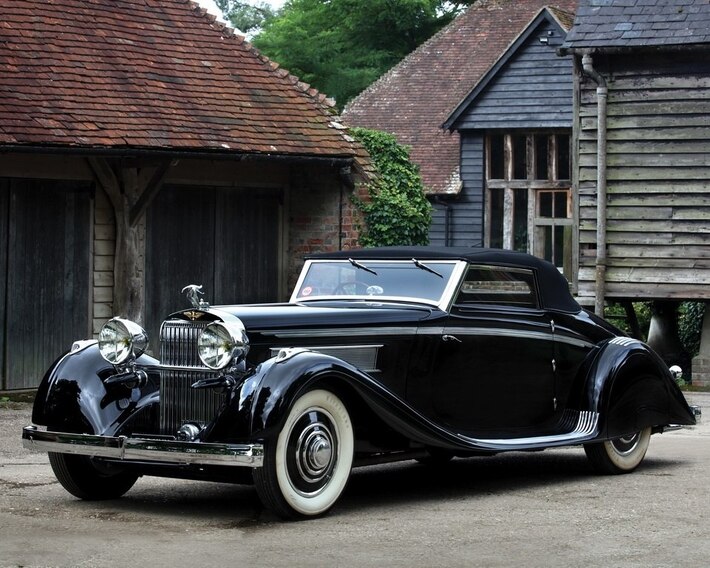
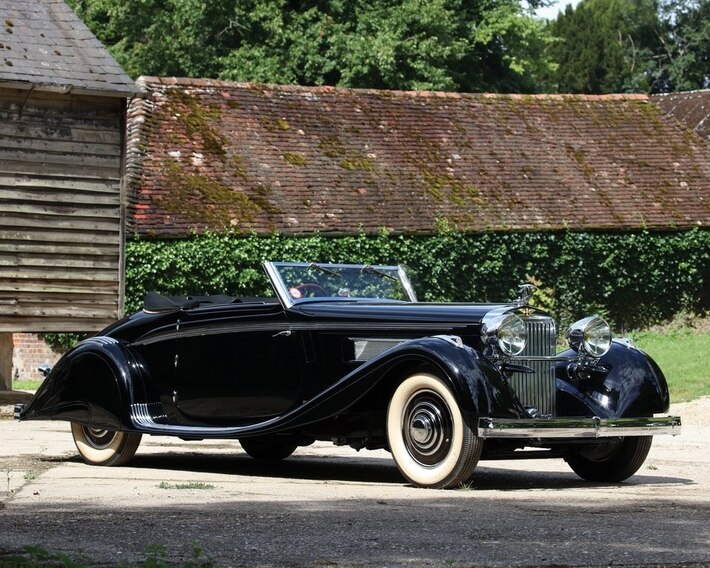
Hispano Suiza vehicles — a visual selection of the iconic models produced by this manufacturer.
BakuWheels uses cookies to improve your experience, analyse site traffic, and personalise content. By clicking Accept All, you consent to our use of cookies. Learn more in our Cookie Policy.