

IJ (Иж)
IJ (Иж) was a Soviet automobile manufacturer based in Izhevsk, Udmurtia — a city as famous for producing the AK-47 as it was for its cars. From 1966 until the mid-2000s, the IJ plant produced compact estate cars, pickup trucks, and panel vans that became essential working vehicles across the Soviet Union and its successor states. Although closely related to IZH (the Cyrillic transliteration), IJ remains a distinct marque in the international market, synonymous with robust Soviet practicality and a uniquely functional approach to automotive design.
Origins & Heritage
The IJ automobile story began in 1966 when the Izhevsk Mechanical Plant — already a major Soviet manufacturer of motorcycles — turned its engineering expertise towards passenger cars. The plant was embedded in the Soviet military-industrial complex, located in a strategically important closed city deep in the Ural region of Udmurtia. Its automotive venture produced vehicles based on Moskvich designs, adapted to meet the practical demands of Soviet citizens who needed utility rather than comfort, and reliability above all else.
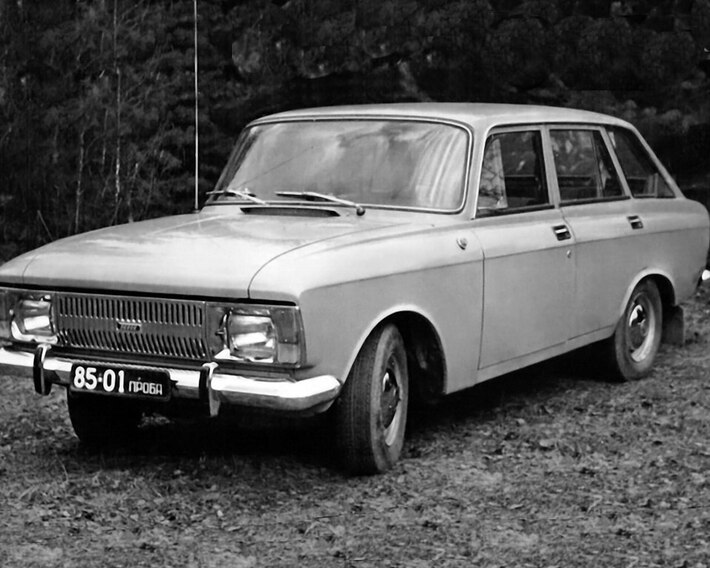
The breakthrough model was the IJ-2125 Kombi — a three-door estate car built on the Moskvich 412 platform, offering something genuinely different in the Soviet market: a practical load-carrier with a folding rear seat that could serve both family and work duties. The Kombi's raised roofline and generous boot space made it the preferred choice of rural workers, craftsmen, collective farm managers, and small traders — anyone who needed a vehicle that could carry people and cargo equally well. Production continued with incremental updates for more than two decades.
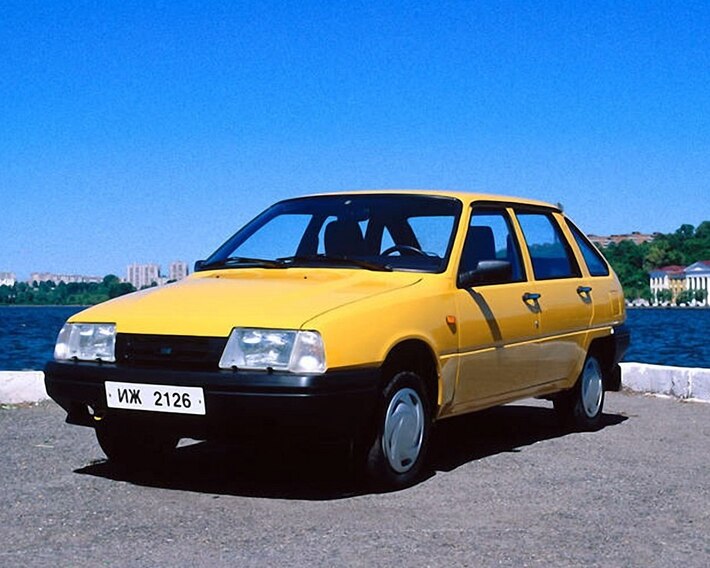
In the final Soviet years, IJ engineers developed the 2126 Ode — a more modern front-wheel drive hatchback representing the plant's most ambitious independent design. The Ode entered production in 1991, just as the USSR dissolved, and survived through the turbulent 1990s under changing ownership structures. By the mid-2000s, competition from imported vehicles and ageing production facilities brought independent IJ production to an end, though the legacy of the Kombi estate and its derivatives lives on in used car markets across the CIS.
Key Milestones
Iconic Models in Pictures
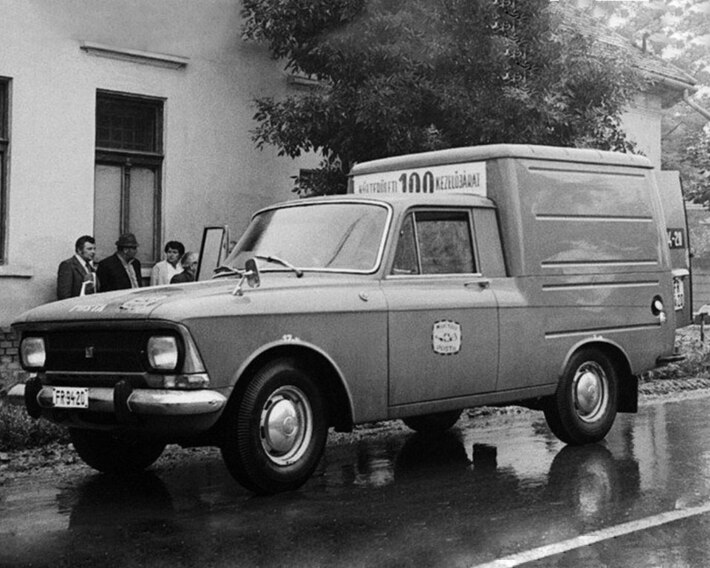
IJ's most enduring models were defined by practicality over aesthetics — the Kombi estate's cavernous body, the pickup truck used across Soviet industry, and the Ode hatchback that bridged the Soviet and post-Soviet eras.
Model Lineup
IJ produced a focused range of compact estates, hatchbacks, panel vans, and pickup trucks throughout its history — all sharing the same core philosophy of mechanical simplicity, durability, and ease of repair.
Engineering Philosophy
IJ vehicles were engineered around Soviet operational priorities: maximum simplicity, repairability with basic tools in the field, tolerance of overloading and poor roads, and the use of components that could be manufactured and supplied reliably within the planned economy. The Moskvich-derived platform employed conventional rear-wheel drive with a proven OHV petrol engine that required no specialist knowledge to maintain. Later, the 2126 Ode introduced front-wheel drive, but maintained the same philosophy of mechanical accessibility — any competent mechanic could service an IJ.
- Moskvich-derived 1.5L OHV petrol engine — simple, robust, and serviceable by any mechanic across Soviet and post-Soviet territory
- Rear-wheel drive layout with conventional suspension — tolerant of overloading, rough roads, and extended service intervals common in rural Soviet operation
- Four-speed manual gearbox with straightforward linkage — entirely mechanical operation, no electronics, fully repairable with basic tools
- Steel body construction with large panel sections — easy to repair after minor accidents, with body panels available through the Soviet and post-Soviet parts distribution network
- Full parts interchangeability with Moskvich 412/2140 models — IJ Kombi owners could source mechanical components through the extensive Soviet spare parts supply chain
IJ in Azerbaijan
IJ vehicles, particularly the 2125 Kombi estate and its commercial van and pickup derivatives, were a familiar presence across Soviet Azerbaijan. The practical body styles made them the preferred working vehicles of agricultural cooperatives, rural traders, and light commercial operators during a period when alternatives were scarce. Many examples remained in daily service well into the 1990s and beyond, maintained by mechanics thoroughly familiar with Moskvich-derived drivetrains.
Today, IJ vehicles occasionally surface in Azerbaijan's used car market, primarily as working vehicles in rural areas and increasingly as collector's items among Soviet automotive heritage enthusiasts. Mechanics in Azerbaijan familiar with AvtoVAZ (Lada) and Moskvich mechanical systems will find IJ powertrains and drivetrains fully within their competence. For buyers interested in Soviet automotive history, a well-preserved IJ Kombi represents a genuinely rare piece of CIS industrial heritage available at modest cost.
Why Consider an IJ?
- Authentic Soviet heritage: The IJ Kombi is one of the most recognisable Soviet utility vehicles — a tangible piece of CIS automotive history that tells the story of an era.
- Mechanical simplicity: IJ vehicles use conventional, well-understood Moskvich-derived drivetrains that any mechanic familiar with Lada or Moskvich technology can maintain at low cost.
- Genuine practicality (Kombi & Pickup): The estate body with its folding rear seat and the pickup's open flat bed provide working utility that modern vehicles costing far more cannot replicate for rural and agricultural use.
- Parts compatibility: Moskvich-derived components remain available through CIS spare parts suppliers, keeping older IJ vehicles maintainable for years to come.
- Collector and investment potential: Original IJ Kombi estates in good condition are increasingly appreciated as Soviet automotive heritage items, with a dedicated enthusiast community across Russia and the CIS.
BakuWheels uses cookies to improve your experience, analyse site traffic, and personalise content. By clicking Accept All, you consent to our use of cookies. Learn more in our Cookie Policy.